A night latch on its own is usually not enough to secure a front door. Because this type of lock sits on the surface of the door rather than inside the wood, a second lock such as a British Standard mortice deadlock is normally fitted alongside it. Your insurer may also ask what locks are fitted, so check your own policy wording.
What a night latch is
A night latch is a type of lock usually found on traditional timber front doors. The Master Locksmiths Association glossary defines it as a latch with a single bevel latch bolt that is operated internally by a knob and externally by a key, and which automatically engages when the door is shut. In everyday speech people often call it a Yale lock or a deadlatch.
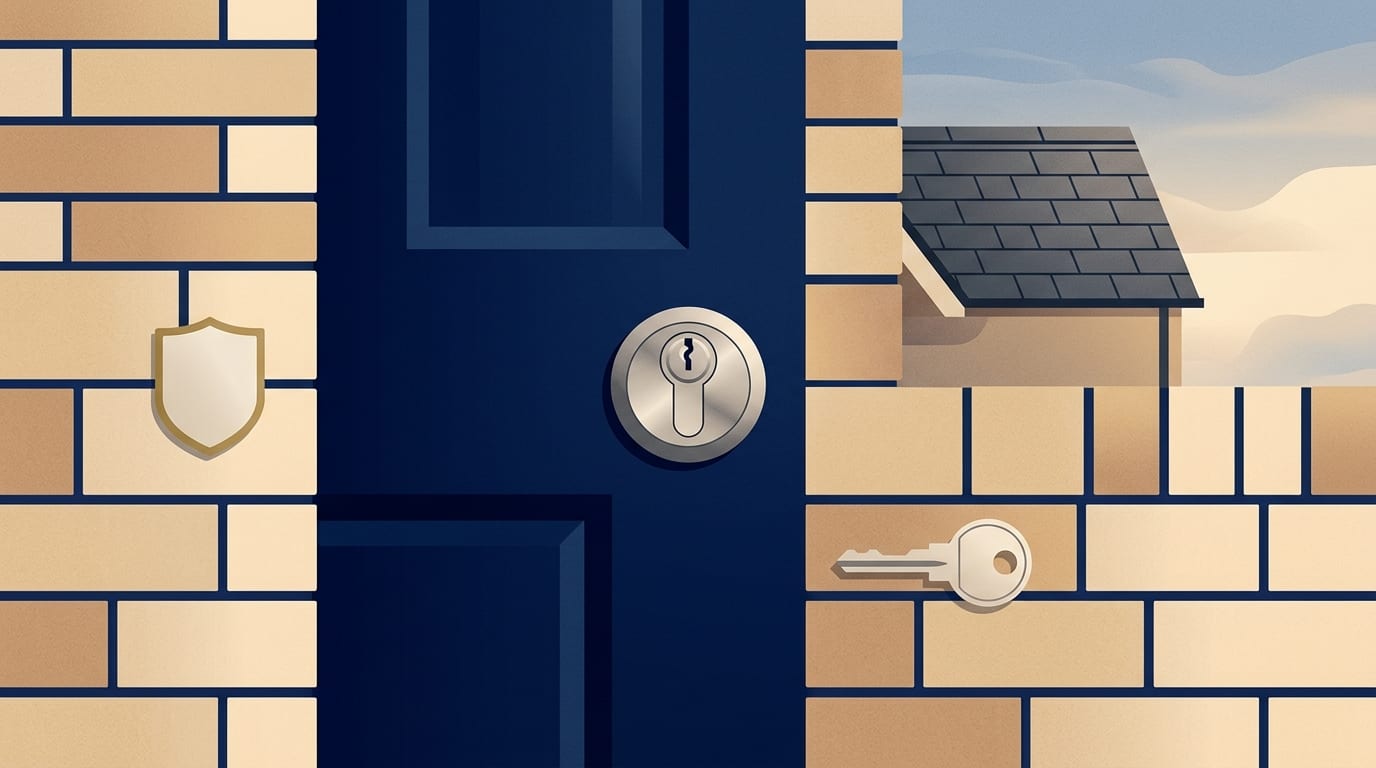
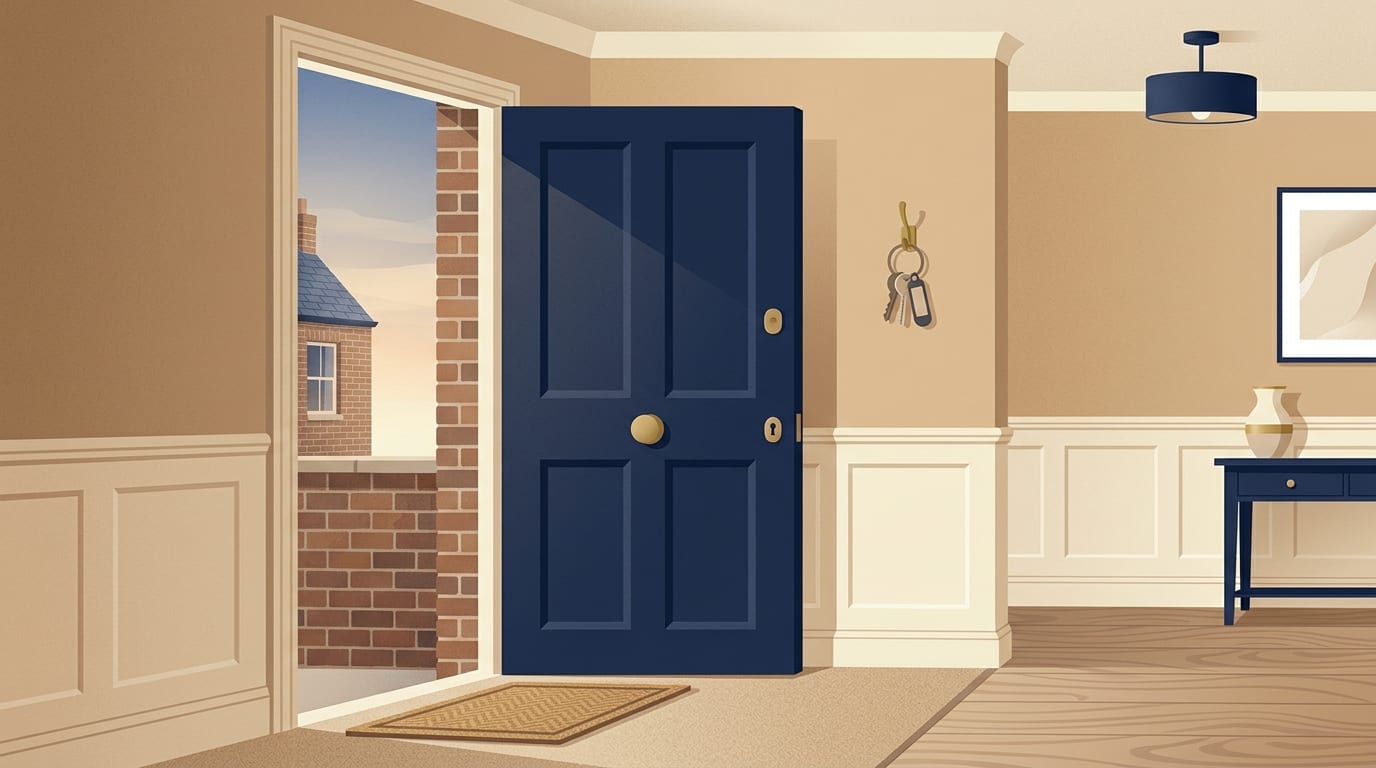
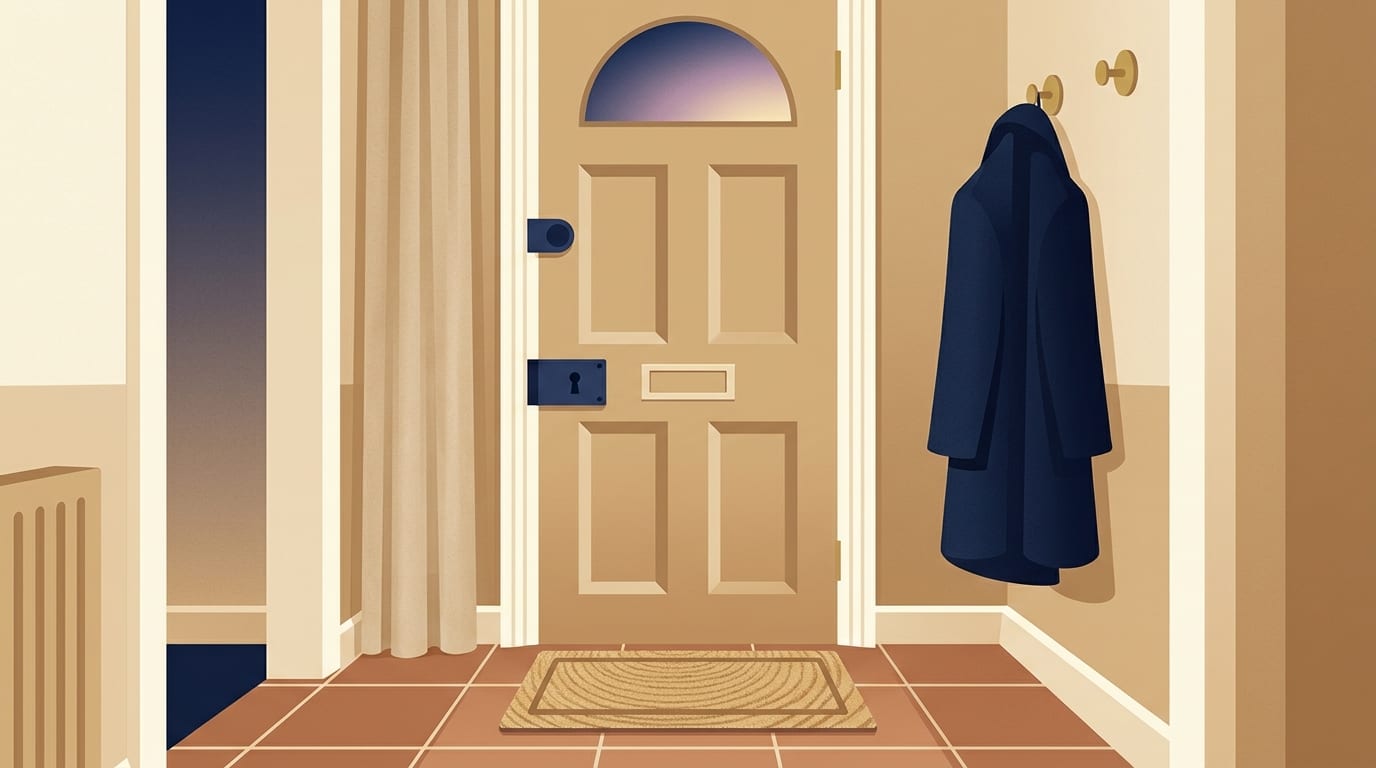
You can identify this type of lock by looking at how it sits on the door. It is a painted or metal casing fixed directly to the inner surface of the wood. On the outside of the door you will only see a round metal keyhole, which is known in the trade as a rim cylinder.
You probably have a night latch if your door meets these criteria:
- The door is made of timber rather than plastic or composite materials.
- The main lock body is screwed to the inside surface of the door.
- The door locks itself automatically behind you when you pull it shut.
- You open the door from the inside by turning a small knob or handle.
- The lock outside is a small round circle where the key goes in.
How a night latch works day to day
The main purpose of this lock is convenience. When you leave the house and pull the door behind you, the single bevel latch bolt hits the metal strike plate on the door frame. The angled shape of the bolt pushes it back into the casing, and a spring pushes it out again into the hole in the frame once the door is fully closed. This means the door locks itself when it is shut.
To get back inside you turn the key in the rim cylinder. This rotates a flat metal tailpiece that travels through the wood of the door and turns the mechanism inside the latch casing. To leave the house from the inside you simply turn the knob, which pulls the bolt back without needing a key.
Most models also have a small button or slider on the inside casing called a snib. You can use the snib to hold the latch bolt back inside the casing when you want to pop outside without locking yourself out. You can also use the snib at night to lock the bolt into the frame so that a key cannot open it from the outside.
Why a night latch is not usually the only lock
For this reason the Master Locksmiths Association states clearly that a night latch will not be the only lock on your door, and a mortice lock is usually fitted alongside it. Unless your surface latch is BS3621 rated, it requires an additional lock fitted to your door.
The police share this view on domestic security. The Police Crime Prevention Handbook states that ideally the door and frame should be of solid construction with a British Standard mortice lock and an automatic deadlocking rim latch. You must use both locks and check the mortice lock is engaged every time you leave the house.
If a door is damaged, a locksmith can secure the property by boarding up, which means fitting temporary cover until a permanent repair can be made.
Is a night latch the same as a rim lock?
People often use the terms interchangeably, but they describe the way the lock is fitted. A rim lock is fitted on the surface of the door, while a mortice lock is fitted in the door edge. A night latch is a specific type of rim lock that locks automatically.
It helps to understand how these traditional timber door locks differ from the locks on modern plastic doors. If you have a uPVC or composite door, you will not normally have a night latch. Instead you will have a multipoint locking mechanism, which is the strip of hooks and bolts worked by lifting the handle. The central part of that mechanism is called a gearbox. The barrel that takes the key on uPVC and composite doors is called a euro cylinder.
Older timber doors operate completely differently. The primary security comes from a mortice deadlock or a sashlock, which are locks fitted inside a hole cut into the timber door itself. The surface latch provides secondary security and convenience. If you have multiple timber doors, you can even ask a locksmith to provide locks that are keyed alike, which means all the locks work off the exact same key.
What BS3621 means for a night latch
British Standard 3621 is the main security benchmark for locks on domestic timber doors. A BS3621 lock is tested rigorously against common burglar techniques such as lock picking and drilling. You can tell if a lock meets this standard because it has the British Standard Kitemark engraved clearly on the faceplate.
The MLA's guide cites BS3621:2017+A1:2024 and says the amendment does not invalidate existing certified locks. Unless a night latch is BS3621 rated, the MLA says it needs an additional lock.
If you want the convenience of a surface latch with the strength of a mortice lock, you can buy high security versions. The Master Locksmiths Association confirms that locks that can be upgraded to BS3621 standard include night latches. A locksmith can tell you whether your latch can be upgraded.
To check a lock, look for these points:
- The British Standard Kitemark engraved on the faceplate.
- The standard number, BS3621, on the lock or its packaging.
- Whether the latch is only a night latch or is paired with a mortice lock.
What your insurer may ask
The Master Locksmiths Association points out that insurance providers or comparison sites will ask what type of door locks are on your front door when you apply for a policy.
Answer these questions accurately. The MLA also says that if a locking system does not lock properly, your insurance may not cover your losses.
Never guess what your insurer requires. Read your own policy wording, or ask your insurer, to see what applies to your property.
When to upgrade or add a mortice lock
If your front door only has a basic surface latch, you should ask a locksmith about adding a mortice lock. A 5-lever mortice deadlock is commonly fitted to wooden doors and is key operated from both sides.
The table below shows the MLA's supply only prices. These figures do not include the locksmiths labour charge, which varies depending on your area and the time of day.
|
Lock type |
Typical supply price |
|---|---|
|
5-lever mortice deadlock |
From £28 |
|
BS3621 5-lever mortice deadlock |
From £36 |
These are MLA supply only estimates, and prices vary by lock standard and brand. Local quotes will differ. When you ask a locksmith to quote for adding a lock, check that their total price includes both the lock and the time taken to cut the hole in the door.
You should also consider what is a 5-lever mortice lock and why does BS3621 matter before you make a decision. If you live in a flat or a house in multiple occupation, you should also think about fire safety. A lock that needs a key to open from the inside can trap you during a fire. In those situations read the guide on fire door locks and fire exits before any upgrade.
Common questions
What is a night latch cylinder?
The cylinder is the round metal keyhole on the outside of the door. If you lose your keys or move into a new house, a locksmith can often replace just this outer cylinder rather than changing the whole lock casing on the inside.
What is a night latch deadlock?
A deadlocking version has an automatic deadlocking feature. The police handbook says the ideal is a British Standard mortice lock plus an automatic deadlocking rim latch, using both.
Can I fit a night latch on a uPVC door?
Night latches are normally fitted to timber doors. Modern uPVC and composite doors normally use a multipoint locking mechanism and a euro cylinder instead. If you have a modern door, you can rely on the multipoint locking mechanism and ensure you compare the types of front door lock to find a secure euro cylinder.
Are Yale locks and night latches the same thing?
In everyday speech, yes. People often call a night latch a Yale lock or a deadlatch. A rim lock is any lock fitted on the surface of the door.
What to do next
If you are locked out, have lost your keys, or want to upgrade your front door security, you will need to hire a local locksmith. The locksmith industry in the UK has no government licensing, which means anyone can legally trade as one. You must vet the person you hire to protect your home and your wallet.
Follow these steps to find a reliable professional:
- Check if the firm is approved by the Master Locksmiths Association. This is a voluntary approval scheme where companies are vetted, have criminal record checks, employ locksmiths who have passed an exam, and are inspected regularly.
- Ask for a total price before they travel to you. This must include labour, parts, VAT, and any out-of-hours charge. Evenings, nights, weekends and bank holidays always cost more. London and the South East are also more expensive.
- Ask if they charge a separate call-out fee just for turning up. Many do not, but you must ask to avoid surprises.
- Ask how they plan to gain entry if you are locked out. Non-destructive entry means opening the lock without drilling it, so ask whether it is likely.
- Check their legal trading details. Avoid national call centres that pretend to be local and pass the job to whoever is nearest. Look for a real local address and consistent reviews over a long period.
- Ask for identification when they arrive. Be wary of tradespeople who arrive in an unmarked vehicle and demand cash only with no written invoice.
You have strong legal rights when hiring a tradesperson. Under the Consumer Rights Act 2015 a service must be carried out with reasonable care and skill, at a reasonable price if none was agreed, and within a reasonable time. You have a right to have poor work put right or get your money back. Under the Consumer Contracts Regulations 2013 you normally have a 14-day cancellation period for work arranged at home or by phone. This does not apply if you specifically asked for a visit for urgent repairs, though any extra work sold during that visit is not covered by the exception.
Rented homes carry different rules. A landlord who changes the locks to keep a tenant out without a court order commits illegal eviction, which is a criminal offence. Tenants should check their tenancy agreement and get the landlord's permission before changing any locks, or speak to Citizens Advice or Shelter for guidance.
If you have a uPVC door, ask about snap-resistant cylinders. If your keys are stolen along with your car, you will need two different professionals. Auto locksmiths are a separate specialism covering vehicle entry, key cutting, transponder and remote programming. To secure your front door today, you can search our directory to find a locksmith near you who can advise on a mortice lock for your door.
Find a top rated locksmith near you
1,831 locksmiths across the UK, each ranked on their Google rating and the number of reviews behind it. Start with your county: