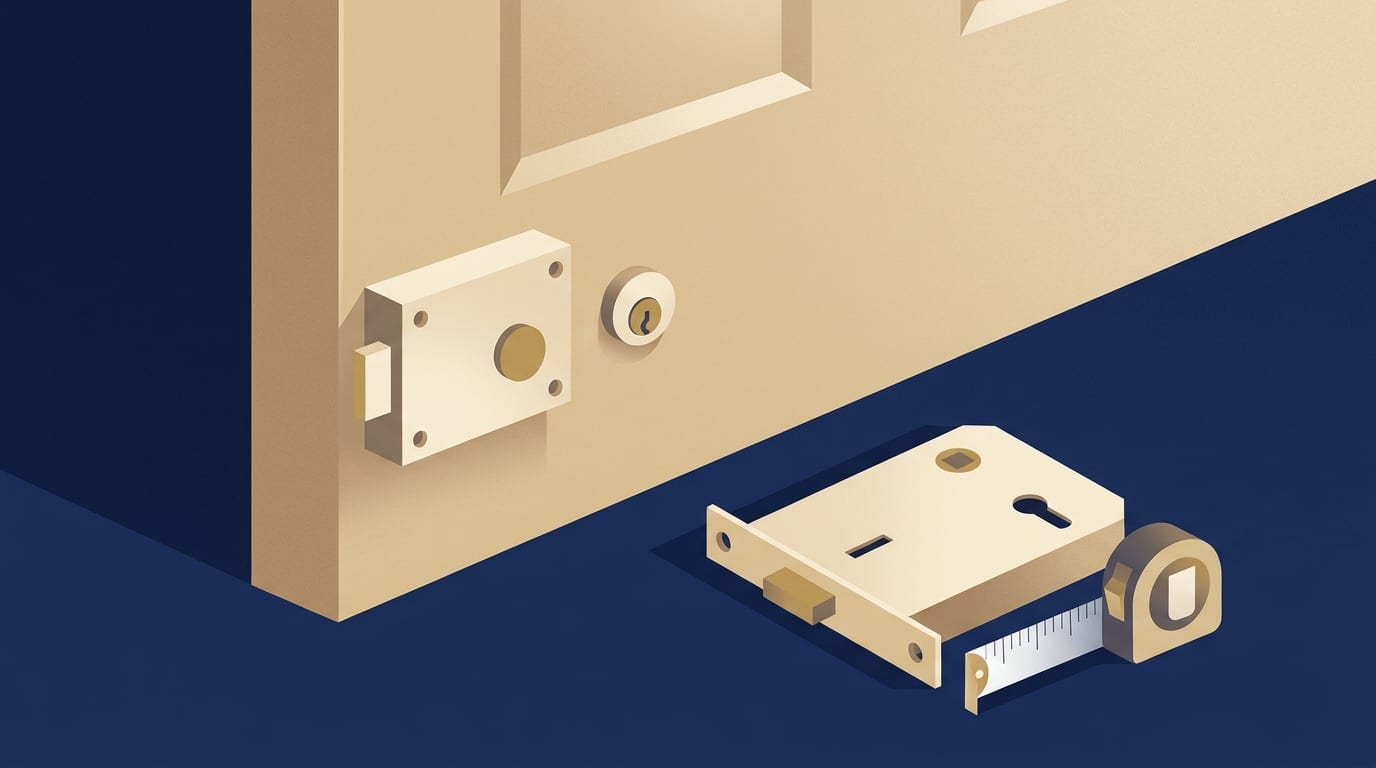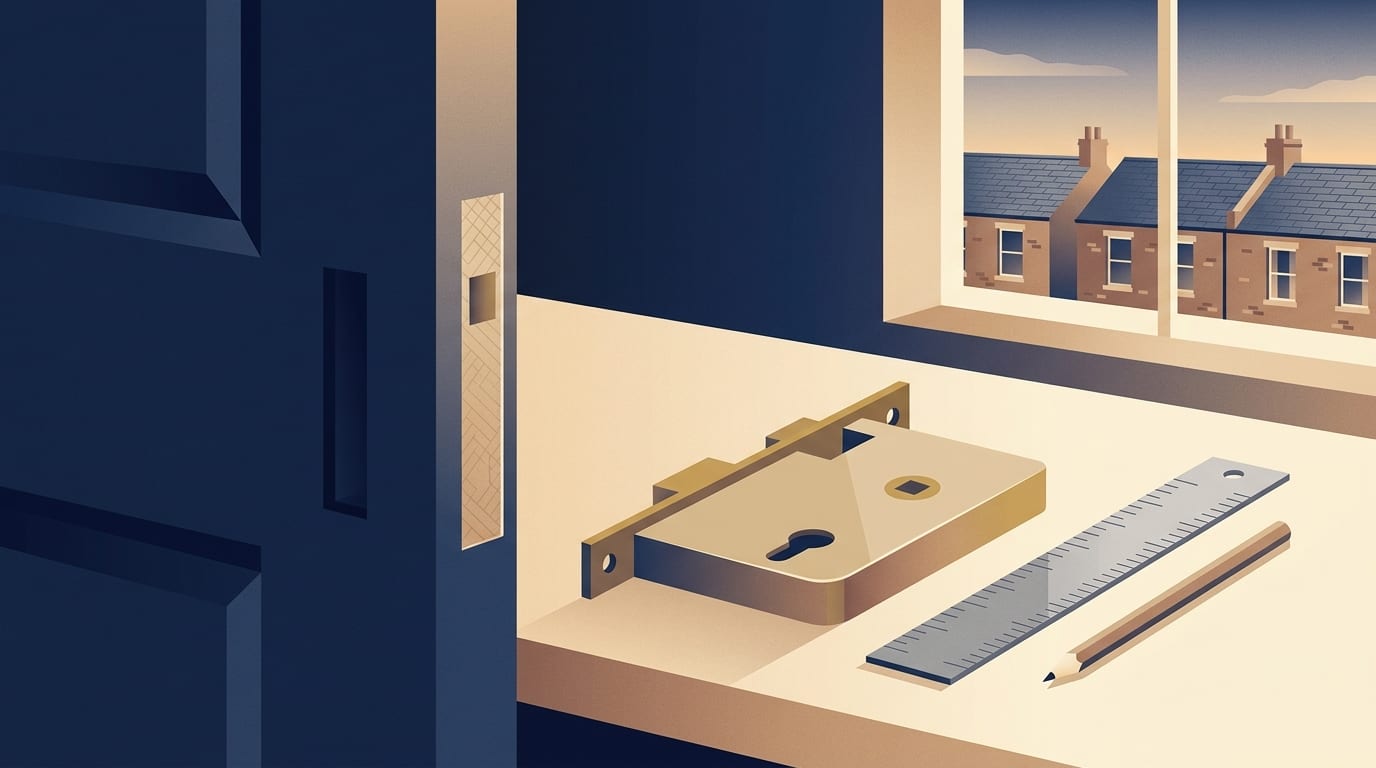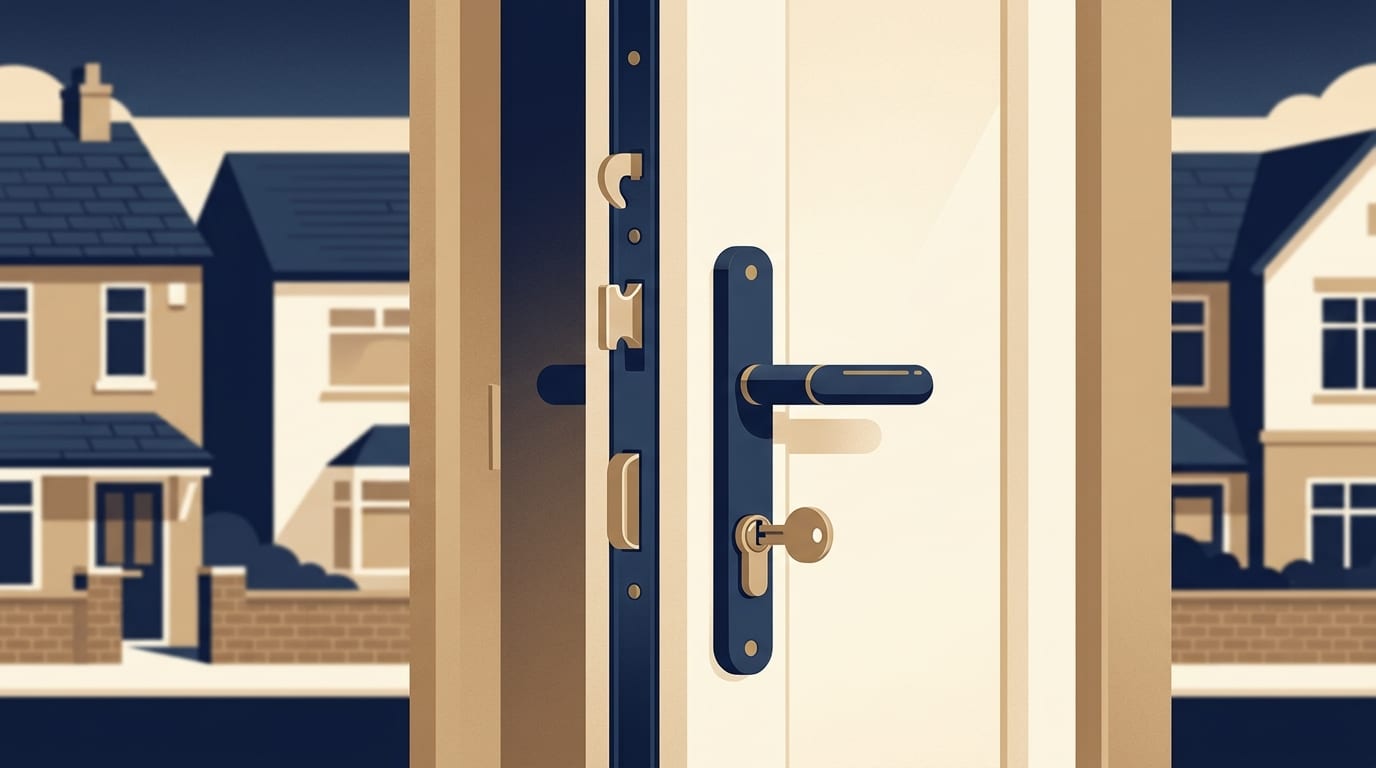
A multipoint lock is a strip fitted into the door edge that locks the door into the frame at several points, usually at least three and sometimes four or five. You work the system by lifting the handle to engage the locking points and then turning the key to secure them in place. The MLA says this type of system is commonly found on uPVC front and back doors and uPVC patio doors.
What a multipoint lock is and where it is used
A key operated multi-point locking system is commonly found on uPVC front and back doors and uPVC patio doors. You will also see them fitted on the exterior doors of newer homes. The mechanism is fitted directly into the body of the door and locks securely into the door frame when engaged.
Inside the door is a central gearbox, which is the main part of the mechanism that connects the door handle to the locking points. The system is operated by a euro cylinder, which is the barrel the key goes into. Multipoint systems cost more than standard single-point locks.
How lifting the handle and turning the key lock the door
When you pull your door shut, the latch holds it in the frame but the door is not yet secure. You must lift the handle to engage the multipoint system. Lifting the handle throws the hook bolts into their keeps in the doorframe. Turning the key then locks them in place so the handle cannot be pushed back down.
The recommended routine to secure your home is simple.
- Close the door so the latch engages.
- Lift the handle to throw the hook bolts into the frame.
- Turn the key to lock the bolts securely in place.
- Remove the key and keep it out of sight.
You turn the handle up to double lock it, which is an action that is easy to miss if you are unfamiliar with it. Turning the key matters, because bolts that are not key locked can be disengaged by pressing down the handle.
Hooks, bolts and rollers on the locking points
A multipoint system bolts the door into the frame at the top, centre and bottom. The mechanism secures the door by engaging with usually a minimum of three points and sometimes four or five points along the door edge.
These locking points can include bolts, hooks or rollers that extend outwards from the body of the door. They lock into metal strikes or keepers fitted securely into the frame.
Split spindle and solid spindle handles
The spindle is the square metal bar that connects your inside and outside handles through the door gearbox. There are two main types of spindle used on multipoint doors, and they change how the outside handle behaves.
With a split spindle, the outside handle engages only the hook bolts and is detached from the latching bolt. This means that pulling the door shut leaves you needing the key to get back in. With a solid spindle, the outside handle operates the latching bolt normally. A solid spindle is often found in blocks of flats.
Why a lifted handle alone does not lock the door
Many people pull the door shut and lift the handle, assuming their home is now secure. If you do not key lock the bolts they can be disengaged by simply pressing down the outside or inside handle. Crime prevention advice describes a burglary victim who believed lifting the handle was all she needed to do to lock her home.
The Master Locksmiths Association warns that if your locking system does not lock properly, your insurance may not cover for your losses. You should always check your own policy wording to see what it says about your locks.
Which cylinder standard goes with a multipoint lock
The Master Locksmiths Association says a euro cylinder is commonly fitted to uPVC and composite doors. When fitted to the correct lock standard, this cylinder will help to prevent lock snapping, drilling, lock bumping or picking. If an incorrect security standard is fitted the lock is at risk of snapping and other forced attacks.
It is essential that the cylinder meets one of the following tested standards.
- Tested to the Sold Secure SS312 Diamond standard.
- Tested to the TS 007 three-star standard.
- A minimum one-star cylinder fitted alongside two star PAS 24 handles.
Kitemarked lock cylinders are independently certificated as resistant to attacks including lock bumping. Doors certificated to PAS 24 2016 come with additional security features including strengthened handle assemblies, and you can read more about anti-snap locks.
Flats and multi-occupancy homes
If you live in a shared building, the Master Locksmiths Association says that in multi-occupancy properties a thumb turn cylinder must be fitted for easy egress in an emergency. A thumb turn cylinder lets you leave without a key.
What a multipoint repair or replacement costs
A lock may need attention if you notice misalignment or difficulty locking or unlocking the door. The fault may be the gearbox or a full strip rather than the cylinder failing. These jobs are usually better left to a professional locksmith.
Locksmith jobs are usually priced as labour plus parts, either by the hour or as a fixed price per job. Estimates vary, and the sets below are kept separate. Some 2026 price lists put a uPVC multipoint job at £150 to £350 including VAT, with standard daytime labour at £65 to £95 per hour, a single euro cylinder at £75 to £140 and an anti-snap three-star cylinder at £110 to £200. Others put a uPVC multipoint mechanism at £120 to £250, taking 45 to 90 minutes, and a euro cylinder change at £90 to £180, taking 20 to 30 minutes, with an out-of-hours surcharge of £40 to £120. A third set puts a total multipoint job at £150 to £300 or more, with gearbox or strip parts at £60 to £130 and multipoint labour at £80 to £150.
Price is driven by the time of day, location, the security grade of the lock and how entry is gained. London and the South East cost more, and evenings, nights, weekends and bank holidays cost more than a weekday visit.
The table below shows the multipoint job totals and times from those three sets of 2026 estimates, kept separate.
|
Estimate set |
Multipoint job |
Time |
|---|---|---|
|
First set, including VAT |
£150 to £350 |
Not stated |
|
Second set |
£120 to £250 |
45 to 90 minutes |
|
Third set |
£150 to £300 or more |
Not stated |
Local quotes will differ, so compare at least three written quotes. Many locksmiths charge no separate call-out fee but some do, and VAT may or may not be included, so you must always ask before booking a visit.
Consumer protection and trade regulation
There is no government licensing of locksmiths in the UK, meaning anyone can trade as one. This is why checking a locksmith's credentials matters before you hire them. The Master Locksmiths Association runs a voluntary approval scheme, not a licence.
Under the Consumer Rights Act 2015, a service must be carried out with reasonable care and skill. It must be provided at a reasonable price if none was agreed, and within a reasonable time, giving you a right to have poor work put right or your money back. Under the Consumer Contracts Regulations 2013 there is normally a 14-day cancellation period for work arranged at home or by phone. This does not apply where you specifically asked for a visit for urgent repairs, although extra work sold during that visit is not covered by the exception.
For rented homes, tenants should check their tenancy agreement and get the landlord's agreement before changing locks. A landlord who changes the locks to keep a tenant out without a court order commits illegal eviction, which is a criminal offence. You should contact Citizens Advice or Shelter for guidance on your own housing situation.
Common problems and scams to avoid
Because the trade is unregulated, you must watch out for poor practices and scams when you need emergency help with your door.
- National call centres advertising as a local locksmith and passing the job to whoever is nearest.
- A very low price quoted on the phone that multiplies on the doorstep.
- Drilling a lock that could have been opened without damage.
- Replacing a whole multipoint mechanism when replacing the central gearbox was enough.
- Fitting cheap cylinders at premium prices.
- Refusing to give a price before starting the work.
- Demanding cash only with no invoice, no company name and no address.
- Arriving with no ID and driving an unmarked vehicle.
Common questions
What causes a multipoint lock to stop working?
A lock may need attention if you notice misalignment between the door and the frame, or difficulty locking or unlocking. Do not force the door or the key. Call a locksmith.
Can you replace just the gearbox on a multipoint door?
It depends on the fault. A locksmith can tell you whether the gearbox, a full strip or only the cylinder has failed. Typical 2026 prices put gearbox or strip parts at £60 to £130 and a full strip at £120 to £250 for parts.
How long does it take to fit a new multipoint mechanism?
Replacing a uPVC multipoint mechanism typically takes 45 to 90 minutes, and a euro cylinder change 20 to 30 minutes. Most single lock changes and lockouts take well under an hour to complete.
Do you need a special key for a multipoint lock?
The key goes into the euro cylinder, the barrel on the door. The cylinder itself should meet one of the standards above, because an incorrect security standard leaves the lock at risk of snapping and other attacks.
What should I do if the handle feels stiff or the door is hard to lock?
Do not force the handle or the key. A lock may need attention if you notice misalignment or difficulty locking or unlocking, and the fault may be the gearbox or a full strip rather than the cylinder. Realigning a door and replacing mechanism parts are jobs for a locksmith, who can tell you which part has failed before you agree to a replacement.
Why do people miss the key locking step?
You turn the handle up to double lock the door, which is easy to miss if you are unfamiliar with the system. If the bolts are not key locked they can be disengaged by pressing down the outside or inside handle, so the routine is to close the door, lift the handle, turn the key, remove it and keep it out of sight.
What to do next
When you are ready to hire a locksmith to repair or replace your multipoint lock, use this checklist to ensure you get a fair and professional service.
- Get a total price including parts, VAT and any out-of-hours charge before work starts.
- Ask how entry will be gained and whether drilling the lock is likely.
- Ask what standard the new lock meets and ensure it is snap resistant.
- Check the business has a real local address and positive reviews over time.
- Check any Master Locksmiths Association approval claim on the official website.
- Ask for ID on arrival and insist on a written invoice when the job is done.
If your door is difficult to lock, it is best to call a locksmith early. You can find a locksmith near you to have the lock checked.
Find a top rated locksmith near you
1,831 locksmiths across the UK, each ranked on their Google rating and the number of reviews behind it. Start with your county: