
Anti Snap Locks Explained and How to Tell If You Have One
TopRatedLocksmiths.co.uk · 6 October 2026
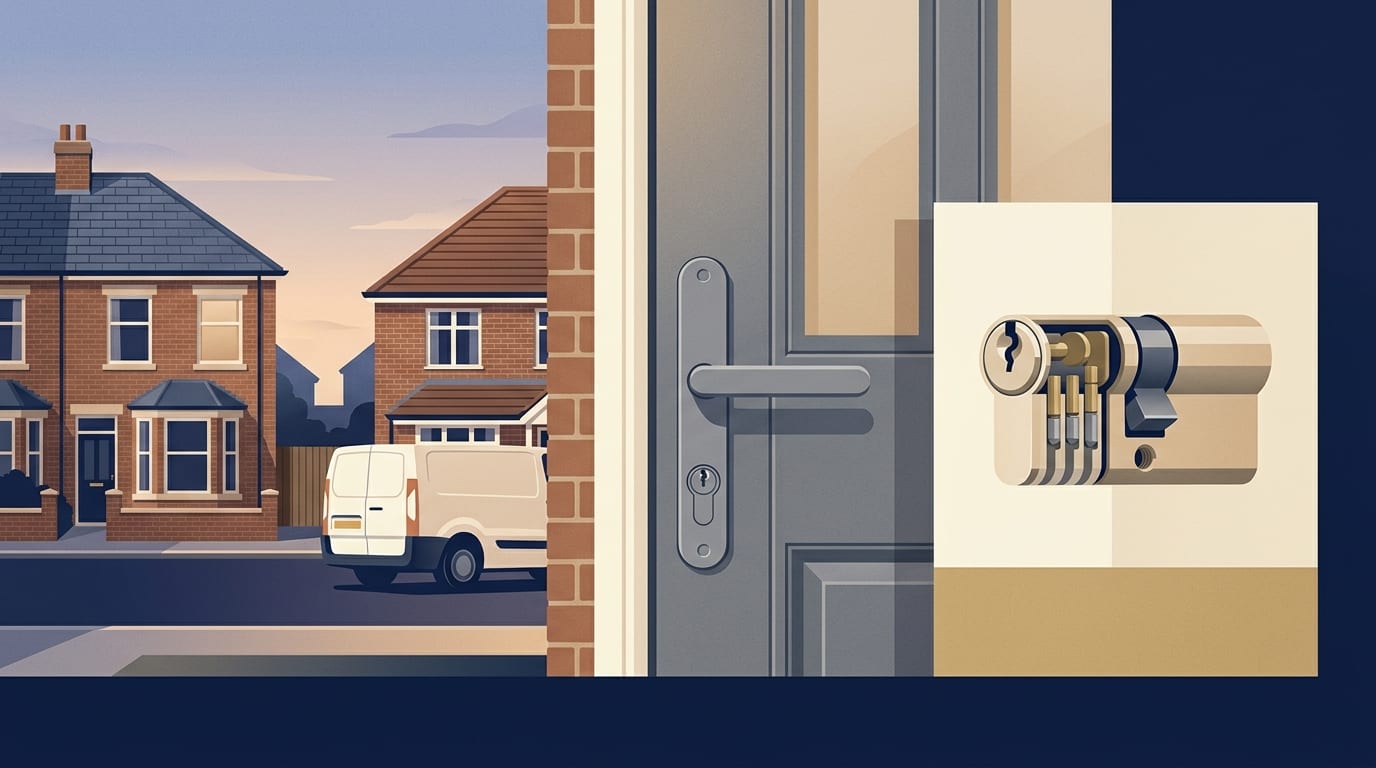
Anti snap locks protect uPVC and composite doors from a common method of entry that takes just five to ten seconds. Upgrading a standard barrel to an anti snap euro cylinder usually costs between £110 and £260 depending on where you live. You can often tell if you already have one by looking for a British Standard Kitemark and three stars stamped on the metal face of the lock.
Lock snapping is a common method burglars use on properties with euro cylinder locks. A euro cylinder is the metal barrel that the key slides into, most often found on modern plastic or composite doors. Snapping breaks the cylinder so that the lock can be operated, and the MLA says it needs no specialist tools or knowledge.
This is why the MLA recommends anti snap cylinders, and why police Secured by Design advice is to have a cylinder that sticks out beyond the handle replaced with a shorter, security accredited one.
An anti snap cylinder is one that has been tested and certified to resist snapping. There are three accepted ways to get that protection, explained below.
Which doors are at risk
Euro cylinders are fitted to almost all uPVC, composite and aluminium doors. You will also find them on some modern wooden doors. If your door has a multipoint locking mechanism, which is the metal strip of hooks and bolts worked by lifting the handle, it will almost certainly be operated by a euro cylinder.
The cylinder is the central point of security for the entire door. It sits inside a component called the gearbox. When you turn the key, the cylinder turns the gearbox, which locks the hooks and bolts in place. If the cylinder is broken, the entire multipoint locking system is compromised.
Single cylinders, double cylinders and thumbturn cylinders are all at risk without anti snap certification. A thumbturn cylinder has a keyhole on the outside and a twisting knob on the inside, often used for easy fire escape. These are just as vulnerable to snapping from the outside as standard key operated barrels.
If your door is difficult to lock or the handle feels stiff, the multipoint mechanism or gearbox may already be failing. You can read more about when a repair is enough to fix a stiff door. However, a failing gearbox is a separate issue from cylinder snapping, and fixing a stiff handle will not make a standard cylinder resistant to snapping.
What makes a cylinder anti snap
A cylinder is only classed as anti snap if it has been tested and certified to specific security standards. You cannot tell how strong a lock is just by looking at the metal. It must carry the right marks to show it has been tested against snapping.
There are three accepted routes to achieving anti snap security on a door. The first is fitting a Sold Secure SS312 Diamond approved cylinder. The second is fitting a TS007 three star Kitemarked cylinder. The third is fitting a TS007 one star Kitemarked cylinder alongside two-star security door handles.
Upgrading to an anti snap lock does not usually mean replacing the whole multipoint locking mechanism. A three-star or Diamond cylinder is normally a cylinder change only, while the one-star route also needs two-star handles. A single cylinder change usually takes well under an hour.
TS007 star ratings in plain English
The TS007 standard is a security specification developed to combat lock snapping. It uses a star rating system to show how much protection a product offers. You will see these stars stamped on the product alongside the British Standard Kitemark, which is a heart shaped logo indicating the product meets official quality standards.
A TS007 three-star cylinder provides the maximum level of protection on its own. It has been tested to withstand snapping, drilling, picking and bumping. If you fit a three-star cylinder, you do not need to upgrade your door handles.
A TS007 one-star cylinder has been tested against drilling, picking and bumping, but it is not designed to withstand snapping on its own. A one-star lock is only anti snap if it is fitted with two-star door furniture. This usually means heavy duty security handles or thick metal security escutcheons that protect the cylinder from being grabbed.
The crucial rule is that the TS007 route must achieve a total of three stars to be secure against snapping. You can achieve this with a three-star cylinder, or by combining a one-star cylinder with a two-star handle. Fitting a one-star cylinder with standard handles leaves the door vulnerable.
Sold Secure Diamond cylinders
Sold Secure is an independent testing facility owned by the Master Locksmiths Association. They test security products to destruction. Their standard for euro profile cylinders is called SS312 Diamond, and it is the highest grade a lock cylinder can achieve.
An SS312 Diamond cylinder is deemed equivalent to a British Standard Kitemark three-star cylinder. If you fit an SS312 Diamond approved cylinder, you have achieved the recommended level of protection against lock snapping. It is a complete cylinder change solution that does not require upgraded handles.
The SS312 Diamond standard applies only to euro profile cylinders. You will not find this specific Diamond rating on mortice deadlocks or sashlocks, which are the traditional locks fitted inside timber doors. For those timber door locks, the relevant security standard is BS3621.
How to check the cylinder in your door
You can usually check the security level of your current lock from the outside of your property without removing anything. The markings are stamped on the flat metal face of the cylinder, right where the key goes in.
- Look for the British Standard Kitemark on the face of the cylinder.
- Look for three stars stamped next to or below the Kitemark.
- If you see a brand name but no stars, check if the model is on the SS312 Diamond approved list on the Sold Secure website.
- Look at how far the cylinder sticks out from the handle or door frame.
- Check if your door handles are thick security handles marked with two stars.
If your cylinder has no stars, no Kitemark, and is not on the Sold Secure approved list, it is almost certainly a standard barrel. This means it offers no tested protection against lock snapping and should be upgraded.
Why the right size and fitting matter
Fitting the correct size cylinder matters just as much as the star rating. The outside of the cylinder should not protrude more than 3mm from the door or the handle. Ideally, it should sit completely flush with the surrounding metal.
A cylinder that sticks out too far is more prone to snapping, even if it is a certified lock. If your current cylinder protrudes beyond the handle, you should have it changed for a shorter one that is both the correct length and security accredited.
The type of handle you have also affects the security of the fitting. Handles should be the bolt-through type fixed from the inside only. This means there are no screw heads on the outside of the door for a burglar to unscrew. Incorrectly fitted handles or incorrectly sized cylinders leave the door prone to snapping, regardless of how much you paid for the lock.
What an anti snap upgrade costs
Locksmith jobs are normally priced as labour plus parts. You can pay by the hour or agree a fixed price for the whole job. The price is heavily driven by the time of day, with evenings, nights, weekends and bank holidays costing significantly more than a weekday booking.
Location also changes the price. Rates in London and the South East are higher than in the rest of the UK. The table below shows typical costs for a locksmith to supply and fit a new euro cylinder.
These are typical published prices for 2026 showing the supply and fitting costs.
|
Job type |
Outside London |
London and South East |
|---|---|---|
|
Supply and fit standard euro cylinder |
£75 to £140 |
£95 to £180 |
|
Supply and fit anti snap three-star cylinder |
£110 to £200 |
£140 to £260 |
These figures represent average professional rates, but local quotes will differ. If you only want to buy the parts, a budget euro cylinder costs from £27, while an anti snap euro cylinder costs from £64. Labour rates in London start from £95 per hour.
Many locksmiths do not charge a separate call-out fee, meaning you only pay for the labour and parts once they arrive and start work. However, some do charge just to attend, so you must always ask. You should also check whether the quoted price includes VAT. You can read more about hourly rates and fixed prices to understand what a local service should cost.
Anti snap locks and home insurance
Home insurance comparison sites and direct insurers will ask what type of locks are on your external doors. They use this information to decide whether to offer cover and at what price. Insurers often ask specifically about the standards your locks meet.
You must check your own policy wording to see exactly what your insurer requires. If your locking system does not lock properly, or if you have declared a high security lock but actually have a standard barrel, your insurance may not cover your losses after a break-in.
Having the right lock is only half the requirement. You must also use it correctly. You should always double-lock uPVC and multipoint doors by lifting the handle, turning the key, and removing the key. If you only lift the handle without turning the key, the door is not locked and the outside handle can simply be pushed down to open it.
Locksmith regulation and common scams
There is no government licensing of locksmiths in the UK. Anyone can buy some tools, print a uniform, and trade as a locksmith. This lack of legal regulation is why vetting the person you hire matters so much.
The Master Locksmiths Association is the main trade body. It runs a voluntary approval scheme, not a legal licence. MLA approved companies are vetted, have criminal record checks, employ locksmiths who have passed an exam, and are inspected regularly. Choosing an approved firm reduces the risk of poor workmanship.
Because the industry is unlicensed, rogue traders and scams are common. You should watch out for these warning signs when booking a locksmith.
- National call centres advertising as a local locksmith and passing the job to whoever is nearest.
- A very low price quoted on the phone that multiplies into hundreds of pounds on the doorstep.
- Drilling a lock immediately when it could have been picked or bypassed without damage.
- Replacing the entire multipoint mechanism when only the cylinder needed changing.
- Fitting cheap standard cylinders but charging premium anti snap prices.
- Refusing to give a total price before starting work.
- Demanding cash only, refusing to provide an invoice, or arriving in an unmarked vehicle with no ID.
Under the Consumer Rights Act 2015, a service must be carried out with reasonable care and skill, at a reasonable price if none was agreed, and within a reasonable time. You have a right to have poor work put right or get your money back. Pointing this out to a rogue trader is rarely easy, which is why agreeing a firm price beforehand is essential.
Under the Consumer Contracts Regulations 2013, there is normally a 14-day cancellation period for work arranged at home or by phone. However, this cooling-off period does not apply if you specifically ask a tradesperson to visit for urgent repairs. Extra work sold to you during that visit that you did not ask for is not covered by the exception, but the emergency lock change itself is.
Common questions
What are anti snap locks?
Anti snap locks are replacement cylinders for uPVC, composite and aluminium doors designed to withstand a specific physical attack. They have been tested and certified to resist snapping, shown by a TS007 three star Kitemark or Sold Secure SS312 Diamond approval.
What is the best anti snap lock?
The most secure options are cylinders that have achieved either the Sold Secure SS312 Diamond standard or a TS007 three-star rating. These are the grades the MLA recommends, and SS312 Diamond is the highest grade a cylinder can achieve.
Do I need anti snap locks for uPVC doors?
The MLA recommends an anti snap cylinder on any door with a euro cylinder, because cylinders without anti snap certification are at risk. Upgrading to a three-star or Diamond rated cylinder gives tested resistance to snapping.
Can a one-star cylinder be anti snap?
A one-star cylinder is not anti snap on its own. To achieve anti snap protection, a one-star cylinder must be paired with two-star security door handles or escutcheons. The TS007 security route requires the cylinder and the handle ratings to add up to three stars.
Getting the upgrade done
If you have checked your door and found a standard cylinder, getting it upgraded is a fast and simple job for a professional. Follow these steps to ensure you get the right lock at a fair price.
- Check your door to see if the current cylinder sticks out from the handle.
- Decide if you want a three-star cylinder or an SS312 Diamond cylinder, as both are cylinder-change-only solutions.
- Call a local locksmith and ask for a total price, including parts, VAT and any call-out fee.
- Ask the locksmith to confirm they will fit a lock meeting the TS007 three-star or SS312 Diamond standard.
- Ask for ID on arrival and ensure you get a written invoice once the job is complete.
Unless your door is completely broken and you cannot secure your home, a lock upgrade is not an emergency. You can save money by booking the job during normal weekday hours rather than paying evening or weekend rates. When you are ready to book, you can find a locksmith near you to get a firm quote for the work.
Related Guides
Window Restrictors and How They Keep Children Safe
What window restrictors do, which windows need them, how far a window should open, how to keep a fire escape route and what landlords should know.
Garden Gate Locks and How to Secure a Side Gate
Why the side gate matters, the main types of garden gate lock, how to make a gate hard to climb, the planning height limits and what to ask a locksmith.
Sash Window Locks and How to Make Sash Windows Secure
How sash windows are locked, why the central catch is not enough, how many locks each window needs, how sash stops work and what to know in a listed home.