
UPVC Door Lock Problems and When to Call a Locksmith
TopRatedLocksmiths.co.uk · 30 September 2026
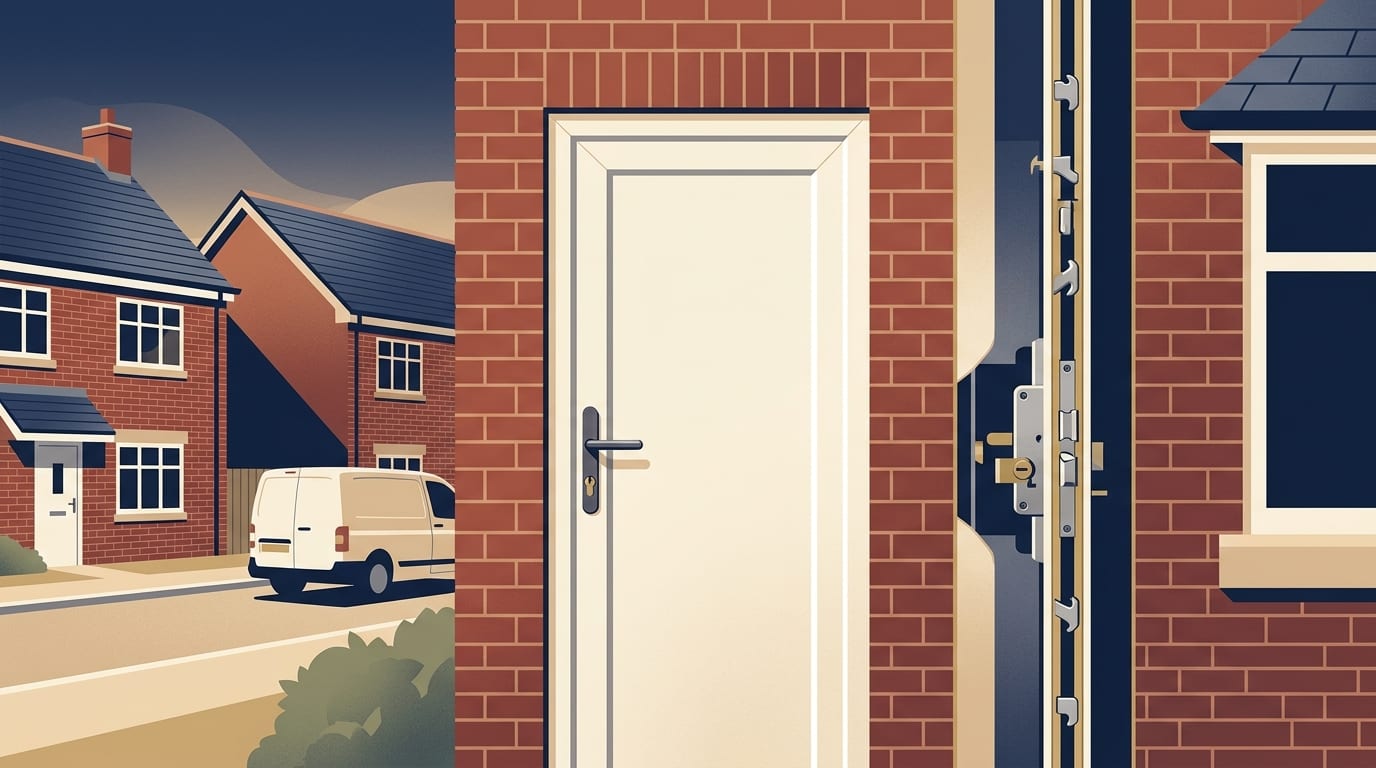
Most uPVC door lock problems are caused by a misaligned door putting strain on the internal parts, or by a euro cylinder that has worn out. A locksmith can usually realign the door, swap the cylinder or replace a shattered gearbox without needing to change the whole door. Typical 2026 prices run from around £70 for a repair or a cylinder change to around £175 for a replacement multipoint mechanism, and more out of hours.
How a uPVC door lock works
A uPVC or composite door relies on two main parts to keep your home secure. The first is the euro cylinder, which is the metal barrel you put your key into. The second is the multipoint locking mechanism, which is the long metal strip running down the edge of the door containing hooks and bolts. At the centre of that strip is the gearbox, the block that the handle and the cylinder both operate.
When you lift the door handle, the gearbox throws the hooks and bolts out of the door and into the metal keeps on the frame. Turning the key inside the euro cylinder then locks the gearbox in place. This prevents the handle from being pushed back down from the outside. Understanding these parts makes it much easier to explain your problem to a locksmith.
Handle will not lift or the door will not lock
If your door handle feels incredibly stiff and requires force to lift, the door has likely fallen out of alignment. This means the metal hooks on the multipoint locking mechanism are hitting the metal keeps on the frame instead of sliding smoothly into them. You can test this by opening the door and lifting the handle while the door is open. If the handle lifts easily and smoothly when open, alignment is the likely problem. Some doors have a feature that stops the handle lifting while the door is open, in which case this test will not work.
You should never force a stiff handle upward to lock the door. Forcing the handle puts massive pressure on the internal gearbox, which can eventually fail and leave you locked out. A locksmith will fix this by adjusting the hinges to square the door back into its frame. Catching a stiff handle early is a cheap adjustment that saves you from a much more expensive mechanism replacement later.
Key will not turn or is stuck in the lock
When a key refuses to turn, gets stuck, or spins completely around in a circle, the fault usually lies inside the euro cylinder. The exception is a key that will not turn fully after you lift the handle, which can mean the door is misaligned and the hooks have not gone all the way home. The small brass pins inside the barrel wear down over time, especially if you use poorly cut replacement keys. If the key spins without doing anything, the cylinder may have failed and need replacing.
Do not try to force a jammed key with pliers, as it will snap off inside the lock and make the job harder. If you are locked out because of a jammed cylinder, a locksmith will try non-destructive entry first, picking or bypassing the lock so that the door opens without damage. A cylinder that has failed internally sometimes has to be drilled instead. Either way, once the door is open they will fit a new cylinder.
Door has dropped or catches on the frame
Modern uPVC and composite doors are heavy, and over time their weight can cause the hinges to drop. Changes in the weather also cause the plastic to expand in the summer heat and shrink in the winter cold. This movement means the door no longer sits squarely in its frame, causing the bottom corner to catch on the threshold. You will find yourself having to shove the door with your shoulder just to get it shut.
A locksmith can adjust the hinges to move the door sideways and up or down within the frame. If a glazed uPVC door has dropped further than the hinges can correct, the glazed panel can be repacked so that it braces the door and lifts the dropped corner, a technique known as toe and heeling. This is a job for a locksmith or door repairer and not something to attempt yourself.
Failed gearbox or multipoint mechanism
The gearbox is the central metal block that connects your door handle to the long strip of locking hooks. A broken gearbox can be the result of forcing a misaligned door over a long period. The constant strain of pushing the hooks into keeps that do not line up wears the parts inside the block until they fail. When this part fails, the handle usually drops down and feels completely loose.
You can usually tell the gearbox has failed if you notice any of these signs.
- The door handle drops down and feels completely floppy
- A crunching or grinding sound comes from inside the door panel
- The key turns normally but the door will not open
- The handle lifts freely but the locking hooks do not move
A locksmith will need to open the door first, which takes time if the mechanism has failed in the locked position. Once the door is open, they can usually replace just the central gearbox rather than charging you for a whole new multipoint locking strip. This saves money and restores the door to full working order.
Cylinder replacement or full mechanism replacement
It is important to understand the difference between changing a cylinder and replacing a multipoint mechanism. Replacing a single euro cylinder is a straightforward job that does not require dismantling the whole door. Most single lock changes and emergency lockouts take well under an hour to complete. If you have just moved into a new property or lost your keys, it is important to know when to change door locks to keep your home secure.
Replacing a full multipoint locking mechanism takes longer and costs more because the entire metal strip must be removed from the edge of the door. The locksmith will need to unscrew the handles, remove the cylinder, and take out the long metal locking strip. They will then match the exact measurements of the hooks, rollers and gearbox to ensure the new part fits the existing holes in your door.
Lock snapping and anti-snap cylinders
Lock snapping is a well-known method of breaking into uPVC doors, in which force is applied to the exposed end of a standard euro cylinder until it breaks. The Master Locksmiths Association explains that lock snapping affects euro cylinders on uPVC, composite and aluminium doors. Once the cylinder is broken the mechanism can be operated to release all the locking points.
The best protection against this method is fitting a snap-resistant lock. You should look for a cylinder that meets the Sold Secure SS312 Diamond standard or the TS007 three star standard, which is shown by a Kitemark on the cylinder itself. Alternatively, a one-star cylinder can be used if it is protected by two-star security handles. Whatever lock is fitted, the cylinder should not protrude more than 3mm from the outside handle, and ideally it sits flush.
What uPVC door lock repairs cost
The final price you pay is driven by several factors. Evenings, nights, weekends and bank holidays cost more than a standard weekday appointment. Location also matters, with London and the South East typically costing more than other parts of the UK. The price will also increase depending on the security grade of the lock and how difficult it is to gain entry.
Many locksmiths do not charge a separate call-out fee, but some businesses still apply one for attending your property. You must also check whether the quoted price includes VAT, as this can add a significant amount to your final bill. If you need emergency work at night or on a bank holiday, learning how much a locksmith costs out of hours will help you budget.
The table below shows expected price ranges for different uPVC door lock jobs.
|
Type of lock work |
Typical published price |
|---|---|
|
Euro cylinder parts only |
From £27 for a budget cylinder, from £64 for an anti-snap one |
|
Standard euro cylinder change |
£70 to £105 |
|
Anti-snap euro cylinder change |
From £137 |
|
Front or back door lock repair |
£70 to £150 |
|
Multipoint mechanism replacement |
Around £175 |
|
Standard labour per hour |
Up to £80 |
These figures are typical published prices for 2026, and your local quotes will differ based on your area and the exact parts required. The Master Locksmiths Association price guide lists a standard euro cylinder change from £105 and an anti-snap euro cylinder from £137.
How to spot a bad locksmith
When you are locked out or dealing with a broken door, it is easy to fall victim to rogue traders. Some national call centres advertise heavily online to appear as a local locksmith business. They quote a very low fixed price on the phone to secure the job, and then pass the work to whichever subcontractor is nearest. When the subcontractor arrives, that low price multiplies rapidly into hundreds of pounds.
A bad locksmith will often drill a lock immediately because it is faster and allows them to sell you a replacement cylinder. A skilled professional will always attempt non-destructive entry methods first, such as picking or bypassing the lock, before resorting to a drill. Knowing how to find a local locksmith you can trust means looking for a real local address and consistent reviews.
Common signs of a bad locksmith include the following.
- Refusing to give a total price or an hourly rate before starting work
- Quoting a very low initial price on the phone that multiplies on the doorstep
- Arriving in an unmarked vehicle with no clear company identification
- Drilling a lock immediately without trying non-destructive entry methods first
- Asking for cash only and refusing to provide a written invoice
- Replacing a whole multipoint mechanism when only the cylinder or gearbox had failed
Your rights and consumer protection
There is no government licensing of locksmiths in the UK. Anyone can buy the tools and trade as a locksmith without any legal requirement for training or background checks. This is why vetting the person you hire is so important for your own safety and security. The Master Locksmiths Association runs a voluntary approval scheme where approved companies are vetted, have criminal record checks, employ locksmiths who have passed an exam and are inspected regularly.
Under the Consumer Rights Act 2015, any lock repair must be carried out with reasonable care and skill. The work must be completed within a reasonable time and at a reasonable price if no fixed figure was agreed beforehand. If the work is poor, you have a legal right to ask the locksmith to put it right or to claim your money back.
The Consumer Contracts Regulations 2013 normally give you a 14-day cancellation period for work arranged at home or over the phone. This cooling-off period does not apply if you specifically asked the locksmith to visit for urgent repairs. However, any extra work they sell you during that visit that was not part of the emergency is still covered by the cancellation right.
If you rent, report a faulty door lock to your landlord or letting agent before paying for a repair yourself, and check your tenancy agreement and get the landlord's agreement before changing any lock. Citizens Advice or Shelter can help if there is a dispute.
Looking after a uPVC door lock
Maintaining a uPVC door lock requires very little effort. The most important step is keeping the door correctly aligned so the handle lifts smoothly without resistance. You should also keep the metal locking strip free of dirt and grit, wiping it down occasionally with a dry cloth. Do not spray a general-purpose oil into the cylinder or the mechanism, as it attracts dirt that can clog the moving parts. The Master Locksmiths Association recommends a lubricant containing PTFE for uPVC door mechanisms.
You must remember to turn the key every time you leave the house or go to sleep. The Master Locksmiths Association's guide to door lock types advises lifting the handle and double locking a multipoint mechanism with the key before bed or leaving home, because if the door is not properly locked your insurance may not cover losses. Lifting the handle engages the hooks, but only turning the key actually locks the door.
When to call a locksmith straight away
You should call an emergency locksmith immediately if your home is unsecured or if you are locked out on the doorstep. If your door will not lock at night, you cannot safely go to sleep or leave the property to go to work. In these situations, paying the higher out-of-hours rate is necessary for your safety and peace of mind.
If your door handle is just starting to feel stiff but still locks, or if the door catches slightly on the frame, the job can wait. Booking a locksmith for a scheduled weekday appointment will save you money and prevent the problem from turning into an emergency. Catching a fault early means you will likely only pay for a simple alignment rather than a completely shattered gearbox.
Common questions
Can a locksmith open a uPVC door without a key?
Yes, a trained locksmith can usually open a uPVC door without a key using non-destructive entry methods. They do this by picking or bypassing the euro cylinder to release the mechanism without causing damage. If the lock is severely broken and must be drilled, they will replace the cylinder for you afterwards.
Do uPVC window locks work the same way?
uPVC window locks use a smaller version of the multipoint locking system found on doors. A handle turns a central gearbox that moves small bolts or rollers into keeps on the window frame. Window mechanisms can also fail or jam and are repaired in much the same way as door locks.
Can you change just the lock on a uPVC door?
You can change just the euro cylinder without replacing the handles or the internal multipoint locking mechanism. This is a quick job that usually takes less than an hour and is the standard way to upgrade your security or replace lost keys.
What is the best lock for a uPVC door?
The most secure option is an anti-snap euro cylinder that meets the Sold Secure SS312 Diamond standard or the TS007 three-star standard. These cylinders are tested against snapping, drilling and picking, and a TS007 three-star cylinder carries a Kitemark, usually on the front or side of the cylinder.
Next steps to fix your door lock
Take these sensible steps before you agree to any lock repairs.
- Ask for a total price that includes parts, labour, VAT and any call-out fee
- Explain your door symptoms clearly so the locksmith knows what parts to bring
- Ask how they plan to gain entry and whether drilling is likely to be necessary
- Confirm what security standard the new cylinder will meet before they fit it
- Ask to see their identification when they arrive at your property
- Check their business has a real local address and consistent customer reviews
You can use our directory to find a locksmith near you who can resolve your uPVC door problems quickly and safely.
Related Guides
Window Restrictors and How They Keep Children Safe
What window restrictors do, which windows need them, how far a window should open, how to keep a fire escape route and what landlords should know.
Garden Gate Locks and How to Secure a Side Gate
Why the side gate matters, the main types of garden gate lock, how to make a gate hard to climb, the planning height limits and what to ask a locksmith.
Sash Window Locks and How to Make Sash Windows Secure
How sash windows are locked, why the central catch is not enough, how many locks each window needs, how sash stops work and what to know in a listed home.