
Garden Gate Locks and How to Secure a Side Gate
TopRatedLocksmiths.co.uk · 7 October 2026
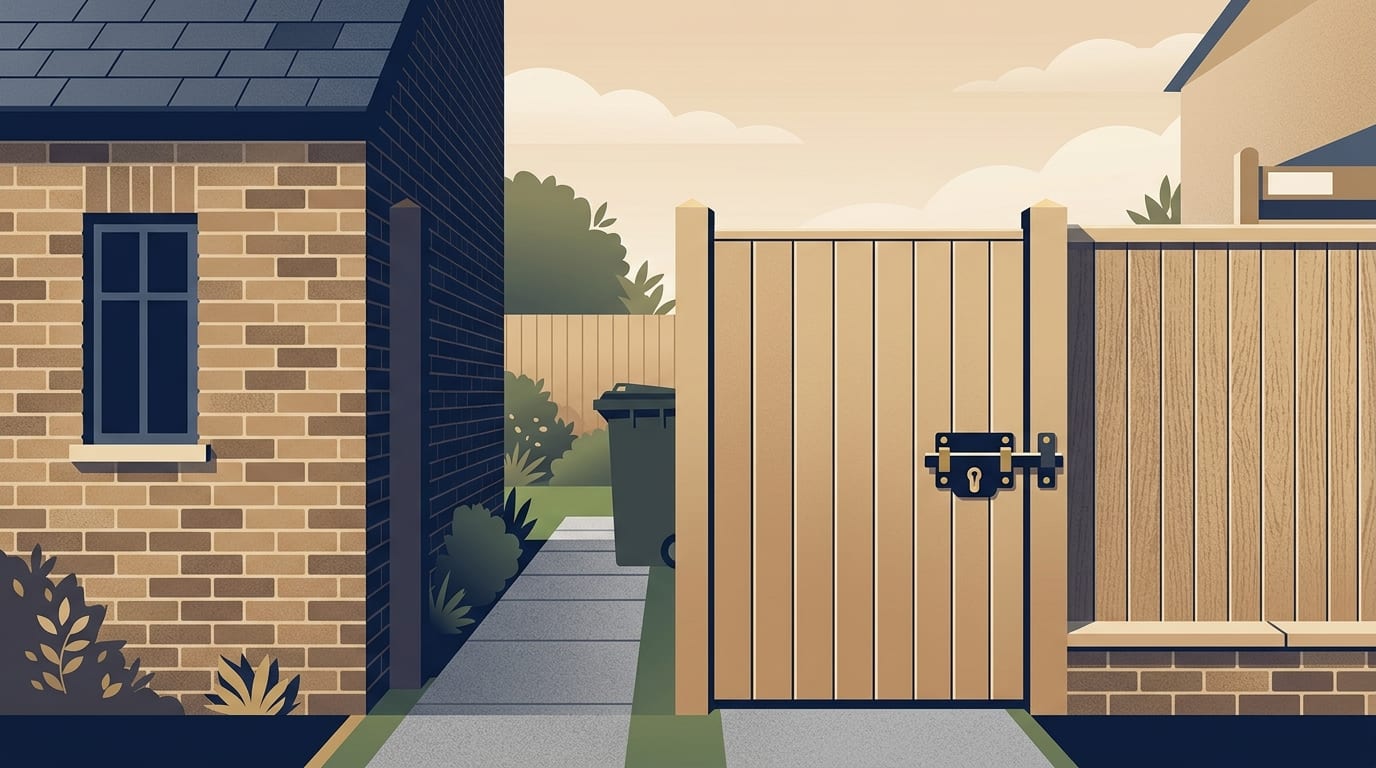
Police crime prevention advice recommends looking at your home security in layers, starting with the boundary and working inwards. A locked side gate that is not recessed forms a vital part of a secure home. Securing this first barrier makes it harder for anyone to reach your back doors and windows unseen.
Why the side gate matters
Police advice on conducting a home security survey asks you to approach the task with the mindset of a potential burglar. You should use a layered approach that starts at the boundaries and works inwards towards the contents at the centre of the house. The three aims of this approach are to deter, to delay and to detect.
Most criminals will not target a home if the risk of being seen, noticed and caught is too great. The side gate is often the first physical barrier to the back of the house. A secure side gate makes it much harder for someone to reach the private areas of your property.
Secured by Design lists a wheelie bin left in front of a side gate as one of the opportunities burglars look for in houses.
Moving your bins behind a locked gate removes this climbing aid and keeps your boundary secure. Ladders and tools can also be used to break into your home, so tidy them away rather than leaving them near the gate.
Where the gate should sit and how high it should be
The position of your gate affects how well it protects your property. A secure side gate sits flush with the front building line rather than being set back in an alleyway. Recessed gates create a hidden space where someone can work on a lock without being seen from the street.
Front and rear boundaries need different approaches to height. Lower fences at the front of a property around one metre high are better than high fences. This lower height allows natural vision over the boundary and does not provide cover for someone hiding.
At the rear and sides of your property taller fencing is recommended to stop people climbing over. A minimum height of 1.8 metres is advised for these boundaries. The gate itself should match the height of the fence it sits in so there are no low points to exploit.
You should contact your local planning office to find out exactly how high your rear and side boundaries can be. Local rules can vary and it is best to check before you install a new tall gate.
Types of garden gate lock
A keyed gate lock operates with a key on the outside and usually features a handle or a thumb turn on the inside. This allows you to open the gate easily from the garden without needing your keys. The mechanism is built to withstand outdoor weather and keep the gate firmly shut.
Keypad or combination gate locks are a practical choice for households that share access with other people. You can give the code to a gardener or window cleaner and change it later if you need to. These locks do not require a physical key which removes the risk of lost copies.
Long throw gate locks feature a longer bolt designed specifically for the gap between a gate and its post. Standard door locks often have short bolts that barely reach across this gap. The longer bolt helps the gate stay locked as the wood shrinks or swells with the weather.
Lockable gate latches upgrade a basic garden latch by adding a key cylinder. You simply shut the gate to latch it and then turn the key to lock the latching arm in place. This provides a simple way to secure a side gate without fitting a heavy mechanism.
When choosing a lock you can look for independent security testing. Sold Secure tests security products at four levels which are Bronze, Silver, Gold and Diamond. Bronze is aimed at opportunist crime while Silver tackles a more determined attack with an enhanced tool list.
Gold level products are tested against a dedicated tool list aimed at dedicated attacks. Diamond is the highest level and includes testing with specialist tools. Sold Secure was established in 1992 by Northumbria and Essex Police with Home Office backing and is now administered by the Master Locksmiths Association.
The MLA minimum security guidelines also list SS 323, the Sold Secure specification for external perimeter fencing and gates, which you can ask your locksmith about.
Locks you can open from both sides
Some households need to unlock their gate from the street and also lock it securely from the garden. Locks that can be keyed from both sides allow you to use the same key whether you are coming or going. This stops anyone reaching over the top of the gate to turn an inside handle.
If the gate is the only way out of the back garden, you might need to escape quickly in an emergency. Looking for a key to unlock the gate from the inside could slow you down. In this situation, ask the locksmith about a lock that opens from the garden side without a key.
A thumb turn on the inside provides a safe exit route while keeping the outside locked. You must balance the need for a quick escape with the risk of someone reaching over the gate. A tall gate with no gaps makes it much harder for an intruder to reach an inside thumb turn.
Bolts, latches and padlocks
A bolt used with a padlock requires a specific type of fitting to be secure. A hasp and staple is a two-piece fastening secured by a padlock. For real security it is essential to use a hasp and staple with concealed fixing.
Concealed fixing means the heads of the fixing screws are completely covered when the padlock is locked. Otherwise the fitting can easily be removed by withdrawing the screws from the wood. You can find more details in the Master Locksmiths Association terminology guide.
A closed shackle padlock has a body built up so that the minimum amount of shackle is visible when locked. This offers improved security against forcing or bolt croppers. For advice on choosing the right padlock you can read our guide on keeping your garden shed secure.
Wooden and metal gates need different fittings
Wooden gates need through bolts or fixings that cannot be unscrewed from the outside. Carriage bolts feature smooth domed heads on the outside and tighten from the inside. This stops an intruder from simply using a screwdriver to remove the lock entirely.
Wood swells in the winter and shrinks in the summer due to changes in moisture and temperature. A lock fitted to a wooden gate needs enough tolerance to handle this movement without jamming. This is why standard door locks often fail when fitted to garden gates.
Metal gates need locks specifically made for metal frames. These often clamp around the frame or bolt right through the metal profile. The lock housing must match the thickness of the metal frame to remain secure and stable over time.
Making the gate hard to climb
A strong lock is useless if an intruder can simply climb over the gate or fence. You can make climbing difficult by adding light trellis to the top of a solid boundary. Light trellis cannot support a person's weight and makes a loud cracking noise if it breaks.
Thorny plants grown up the side of a fence or gate provide an excellent natural deterrent. You can also use a suitable anti-climb topping such as small rigid plastic cones screwed to the top of the wood. Barbed wire or broken glass is not recommended on walls or fences.
You should check the area around your gate for things that could help someone climb. Wheelie bins belong behind the locked side gate where they cannot be stood on. Ladders and garden tools should be locked away in a secure shed.
Planning rules for gates and fences
In England, you will not need planning permission to put up, alter or replace a fence, wall or gate if it is no more than one metre high where it is next to a highway used by vehicles or its footpath. It can be no more than two metres high elsewhere. This allows most rear and side garden gates to be tall enough for good security.
This applies provided no part of the site is a listed building or within its curtilage. It also must not form a boundary with a neighbouring listed building. The right must not have been removed by an article four direction or a planning condition.
You can read the full details for England on the Planning Portal rules for fences, gates and garden walls. In a conservation area you might need permission to take down a fence, wall or gate.
This guidance relates to the planning regime for England. The policy in Wales may differ. If you live elsewhere in the UK you should check with your local planning authority before starting work.
Getting a locksmith to fit a gate lock
There is no government licensing of locksmiths in the UK, which means anyone can trade as one. This makes vetting the person you hire essential. The Master Locksmiths Association is the main trade association and runs a voluntary approval scheme for the industry.
Its approved companies are vetted, have criminal record checks, employ locksmiths who have passed an exam and are inspected regularly. You can check any approval claim on the association's own website. Checking these details helps you avoid national call centres that advertise as a local locksmith and pass the job to whoever is nearest.
Locksmiths usually price jobs as labour plus parts, either by the hour or as a fixed price per job. Prices vary with the time of day, where you live, the lock fitted and the travel distance. Evenings, nights, weekends and bank holidays cost more, and London and the South East carry higher rates.
The table below shows average hourly labour rates for a locksmith.
|
Time and location |
Average hourly labour |
|---|---|
|
Standard daytime rate |
From £85 |
|
London daytime rate |
From £95 |
|
Out of hours (after 8pm) |
From £105 |
These figures are typical published prices for 2026 and your local quotes will differ.
You must ask whether VAT is included because not all locksmiths charge it. Get a total price including the lock, the labour and any out-of-hours charge before work starts. This protects you from very low prices quoted on the phone that multiply on the doorstep.
Under the Consumer Rights Act 2015 a service must be carried out with reasonable care and skill, at a reasonable price if none was agreed, and within a reasonable time. You have a right to have poor work put right or get your money back. Under the Consumer Contracts Regulations 2013 there is normally a 14-day cancellation period for work arranged at home or by phone.
This cancellation period does not apply where you specifically ask for a visit for urgent repairs. Extra work sold during that visit is not covered by the exception.
Before you book, check these points:
- Ask for a total price including parts, labour, VAT and call-out fees before work begins.
- Ask what standard the new lock meets and whether it is suitable for outdoor weather.
- Check the business has a real local address and positive reviews over time.
- Ask for identification on arrival and check for a marked company vehicle.
- Ask for a written invoice showing the company name, address and what was fitted.
Common questions
What is a long throw gate lock?
A long throw gate lock features a longer locking bolt designed to bridge the gap between a garden gate and the fence post. The longer bolt helps the gate stay locked as the wood moves with the weather.
How do you secure a wooden gate?
You secure a wooden gate by fitting a lock with through bolts that cannot be unscrewed from the outside. Carriage bolts with smooth domed heads are often used because an intruder cannot grip them with a tool. You should also ensure the gate itself is tall enough and sits flush with the front of the house.
Can you get a lockable gate latch?
You can get a lockable gate latch that combines a basic garden latch with a key cylinder. You shut the gate to latch it normally and then turn the key to lock the arm in place. This offers a simple way to secure a side gate without installing a heavy locking mechanism.
What is the best lock for a metal gate?
The best lock for a metal gate is one specifically designed to fit metal frames. These locks either clamp around the metal profile or bolt completely through it. Locks made for wooden gates usually do not suit metal frames, so ask the locksmith for one made for your gate.
Can you lock a garden gate from both sides?
You can lock a garden gate from both sides by fitting a lock that takes a key on the inside and the outside. This stops someone reaching over the top of the gate to open an inside latch. If the gate is your only escape route from the back garden, you should ask a locksmith about safe exit options.
Next steps before fitting a garden gate lock
- Check your side and rear fences are tall enough to make climbing difficult.
- Move any wheelie bins, ladders or tools away from the gate area.
- Decide whether you need a key on both sides or a thumb turn on the inside.
- Check with your local planning authority if you plan to install a completely new boundary fence or a much taller gate.
- Contact a vetted local locksmith to quote for a lock that suits the material of your gate.
A locked side gate makes it harder for an intruder to reach the back of your property unseen. A locksmith can fit hardware that suits the weather and the movement of a wood or metal gate. You can start by checking our directory to find a locksmith near you who can fit the right lock for your home.
Related Guides
Window Restrictors and How They Keep Children Safe
What window restrictors do, which windows need them, how far a window should open, how to keep a fire escape route and what landlords should know.
Sash Window Locks and How to Make Sash Windows Secure
How sash windows are locked, why the central catch is not enough, how many locks each window needs, how sash stops work and what to know in a listed home.
Door Chains and Door Viewers to Check Who Is at the Door
How door chains, door limiters and door viewers work, which ones are police approved, how to use a chain safely when someone knocks and what fitting costs.