
When to Change Door Locks and What It Should Cost
TopRatedLocksmiths.co.uk · 30 September 2026
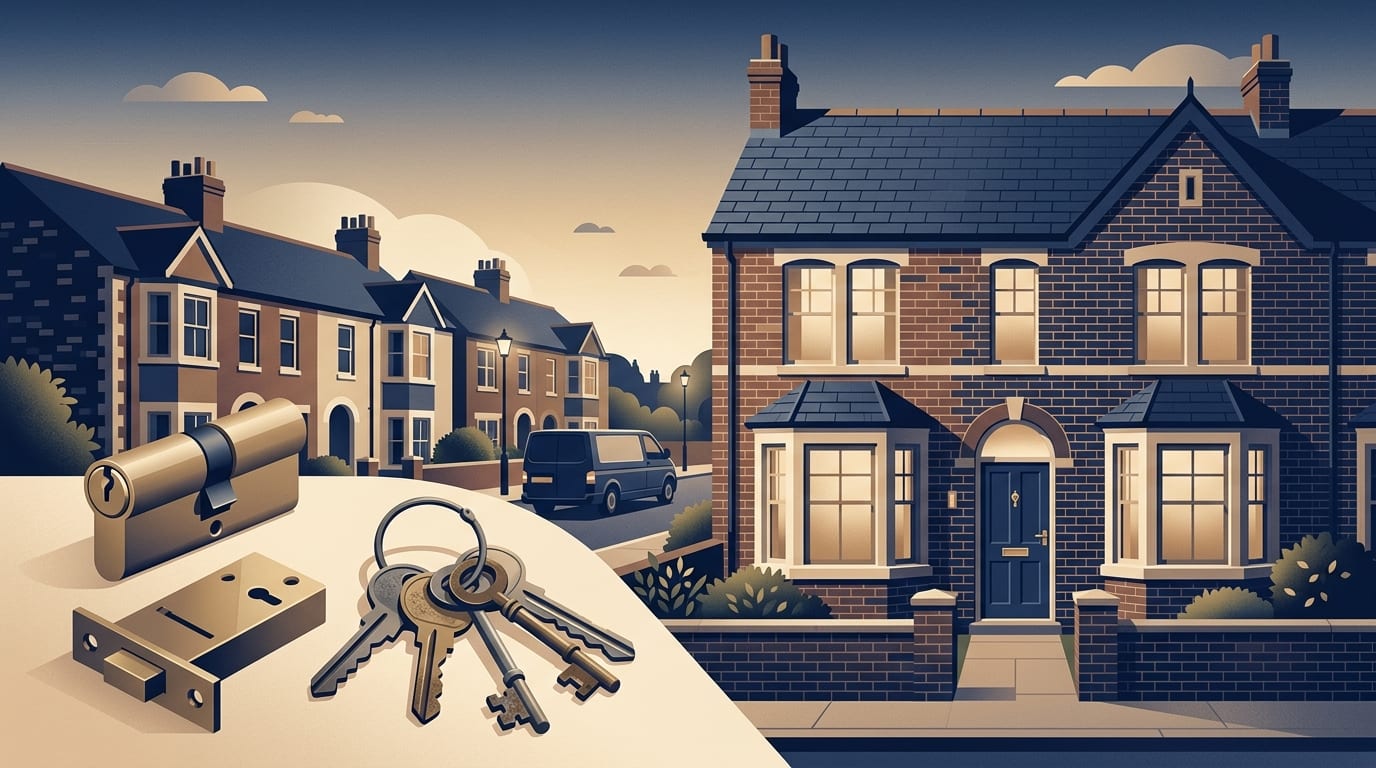
Changing a door lock usually costs between £75 and £170 supplied and fitted. Replacing all the locks in a property costs around £450 including materials and labour. The exact price you pay depends on the type of door, the security grade of the new lock, your location and the time of day.
Good reasons to change your door locks
Changing a lock is usually a planned job rather than an emergency. Planning ahead means you can book a locksmith during normal working hours and pay standard daytime rates. There are several common situations where fitting new locks is the most sensible way to protect your property.
- Moving into a new home where you do not know who holds spare keys.
- Losing your keys or having a bag stolen while you are out.
- Suffering a break-in where the door was forced or keys were taken.
- A tenant or lodger moving out without returning all the keys.
- A front door lock becoming stiff, grinding or failing to latch.
- Upgrading older uPVC door barrels to modern snap-resistant standards.
If your lock is simply stiff or difficult to turn, it might just need servicing or adjusting. A good locksmith will tell you when a repair is enough and when a replacement is the only safe option.
Should you change the locks when you move into a new home?
You should always change the locks when you buy a new house. You have no way of knowing how many spare keys the previous owners had cut. Spare keys are often given to neighbours, family members, cleaners and tradespeople over the years.
Changing the locks on your move in day gives you complete control over who has access to your new home. Because you know your moving date in advance, you can book a locksmith for a weekday afternoon. This avoids the higher labour rates charged for evening and weekend call outs.
If you have multiple doors, you can ask the locksmith to provide locks that are keyed alike. Keyed alike means all the locks are pinned to match, allowing you to open your front door, back door and patio doors with the same single key.
Lost or stolen keys and after a break-in
Losing your keys can be an emergency or a minor inconvenience. If you drop a single house key in a busy town centre with nothing to identify your address, the risk of a burglary is very low. You can normally wait until the next day to have the lock changed at standard rates.
If your bag is stolen containing both your keys and a driving licence or letters showing your address, treat it as urgent. A thief knows where you live and has the means to open your front door, so have the locks changed the same day, even if that means paying an out-of-hours rate.
If you lose your car keys at the same time, a standard domestic locksmith cannot help with your vehicle. Auto locksmiths are a separate specialism covering vehicle entry, key cutting, transponder and remote programming. You will need to call an auto locksmith to get your car running again.
After a break-in, the priority is making the property safe. If the door or frame is badly damaged, the locksmith may need to carry out boarding up. This means securing the entrance temporarily with heavy timber until a permanent repair or a new door can be fitted.
Replacing the cylinder or the whole lock
The price of changing a lock depends heavily on whether you need to replace the entire unit or just the part that takes the key. The parts you need depend on the material your door is made from.
Modern uPVC and composite doors use a multipoint locking mechanism. This is the long metal strip of hooks and bolts hidden in the edge of the door, worked by lifting the handle. The central part of that mechanism is called the gearbox. The part where you insert the key is a separate barrel called a euro cylinder.
If you have lost your keys or want to upgrade your security, you only need to change the euro cylinder. You do not need to replace the expensive multipoint locking mechanism or the gearbox. Changing a euro cylinder is a fast and straightforward job.
Timber doors usually have different hardware. They often feature a mortice deadlock or a sashlock, which is a heavy metal box fitted deep inside the wood of the door. Changing these means replacing the whole metal box.
Timber doors also frequently have a night latch fitted on the inside surface. This is the latch that clicks shut behind you, often called a Yale lock. The key goes into a round metal rim cylinder on the outside of the door. If you just want to change the keys, a locksmith can often replace just the rim cylinder while keeping your existing night latch casing on the inside.
Which lock standards to ask for
There is no government licensing of locksmiths in the UK. Anyone can buy some tools and trade as a locksmith. This means it is your responsibility to check that the person you hire is fitting locks that meet recognised security standards.
For mortice and rim locks on timber doors, the standard to ask for is BS3621. The current version is BS3621:2017+A1:2024. This is the British Standard for locks tested against drilling and picking. Compliant locks carry a British Standard Kitemark engraved clearly on the metal faceplate. You can check the Master Locksmiths Association door lock types guide for more details on identifying these locks.
For euro cylinders on uPVC and composite doors, the main threat is lock snapping. This is a technique where a burglar applies force to snap the cylinder in half and manipulate the mechanism inside. To defeat this, you need an anti-snap cylinder.
The Master Locksmiths Association recommends a euro cylinder tested to either the SS312 Diamond standard or the TS007 three star Kitemark standard. Alternatively, a one-star cylinder combined with two-star security handles provides the same level of protection. You can read more about this on the Master Locksmiths Association lock snapping guide.
What changing locks costs by lock type
Jobs are usually priced as labour plus parts, either by the hour or as a fixed price per job. Many locksmiths charge no separate call-out fee but some do, and VAT may or may not be included. You must ask the locksmith to clarify exactly what is included before they travel to your home.
Prices are driven by the time of day, your location, the type of lock and its security grade. Evenings, nights, weekends and bank holidays cost significantly more than weekday afternoons. If you live in London or the South East, expect prices to be 20 to 30 per cent higher than in the rest of the UK.
The table below shows the typical cost of supplying and fitting a new lock. These are typical published prices for 2026 and your local quotes will differ.
|
Type of lock |
Typical supply and fit price |
|---|---|
|
Standard euro cylinder |
£70 to £100 (from £105 in the Master Locksmiths Association guide) |
|
Anti-snap euro cylinder |
From £137 |
|
Mortice deadlock |
£120 to £150 (from £148 in the Master Locksmiths Association guide) |
|
Night latch or rim deadlatch |
£50 to £80 (from £116 in the Master Locksmiths Association guide) |
|
uPVC multipoint lock |
Around £175 |
|
All locks in a property |
Around £450 |
The typical published prices for 2026 show that a standard lock replacement costs between £75 and £170 supplied and fitted, with VAT included where applicable. The Master Locksmiths Association 2026 price guide notes that standard euro cylinder changes start from £105, while anti-snap euro cylinders start from £137.
The locks themselves cost much less than the fitted price. Without labour, euro cylinders start from £27 for a budget cylinder and from £64 for an anti-snap one, mortice deadlocks start from £24 for a basic three-lever lock and from £38 for a five lever BS3621 lock, and night latches start from £32, or from £100 for a BS3621 model.
You can read more about labour rates and regional differences in our guide to how much a locksmith costs in the UK.
How long the job takes
Most single lock changes take well under an hour. A straightforward euro cylinder swap on a uPVC door can be completed in 20 minutes if the door is in good condition and the mechanism is working properly.
Replacing a mortice lock in a timber door can take up to an hour. It takes longer when the new lock case is a different size, because the locksmith has to trim the wood so that the case fits flush and the door closes smoothly.
If you are moving house and want to replace all the locks in a property, the job will typically take between 2 and 4 hours. This allows time for the locksmith to change the front door, back door, patio doors and any side gates.
Common problems and scams to avoid
Because the industry is unregulated, there are rogue operators who use deceptive tactics to overcharge customers. A common problem is national call centres advertising online as a local locksmith. They take your booking and pass the job to whoever is nearest, taking a cut of the fee.
These call centres often quote a very low price on the phone to win the job. When the subcontractor arrives on your doorstep, that price multiplies rapidly. They may claim your lock is a special size or requires expensive custom parts.
Another common scam is unnecessary damage. If you are locked out, a trained locksmith will use non-destructive entry methods. This means picking or bypassing the lock without breaking it. A rogue operator will immediately resort to drilling a lock that could have been opened without damage, forcing you to buy a replacement cylinder from them.
You should also watch out for tradespeople replacing a whole multipoint mechanism when only the cylinder or gearbox had failed. This turns a cheap repair into a very expensive job. Always be suspicious of someone fitting cheap cylinders at premium prices, refusing to give a total price before starting, demanding cash only, providing no invoice, or arriving with no ID in an unmarked vehicle.
Rules for landlords and tenants
Lock changes in rented homes involve strict legal rules. A landlord who changes the locks to keep a tenant out without a court order commits illegal eviction, which is a criminal offence. In England, only court bailiffs can lawfully carry out an eviction, and only after notice and a court order. The process differs in other parts of the UK.
If a private landlord or someone acting for them changes the locks while the tenant is out, the tenant can contact their local council, and the police if there are threats or violence or if someone is trying to remove them without a court order. Lodgers who share living space with their landlord have fewer protections. Shelter's guide to illegal eviction explains the position in England.
Tenants who want to change the locks themselves must check their tenancy agreement first. Most standard agreements prohibit altering the property without permission. Tenants should always get the landlord's agreement in writing before asking a locksmith to change any barrels or latches.
Consumer rights and cancellation periods
Under the Consumer Rights Act 2015, a locksmith service must be carried out with reasonable care and skill. It must be done at a reasonable price if no fixed fee was agreed beforehand, and within a reasonable time. If the work is poor, you have a statutory right to have it put right or to get your money back.
The Consumer Contracts Regulations 2013 also protect you. There is normally a 14-day cancellation period for work arranged at home or by phone. However, this cooling-off period does not apply where you specifically asked for a visit for urgent repairs.
If you call a locksmith out to fix a broken front door late at night, the 14-day right to cancel does not apply to that repair. However, any extra work sold during that visit that is not part of the urgent repair is not covered by the exception.
What to check with your home insurer
Home insurance providers usually ask what type of locks are fitted to your front door and other external doors. The answer can affect your premium, and some policies make a minimum standard of lock a condition of theft cover.
You must check your own policy wording carefully to see exactly what your insurer expects. Policy questions commonly refer to a five-lever mortice deadlock conforming to BS3621 on timber doors and to a multipoint locking system on uPVC and composite doors, but the wording differs between insurers.
Do not guess what your insurer requires. If you tell them you have a BS3621 lock and you actually have a basic unrated latch, they may reduce or refuse a claim if you are burgled. A good locksmith will supply a written invoice stating the exact standard of the locks they have fitted, which you can show to your insurer if asked.
Questions to ask the locksmith before they start
The Master Locksmiths Association is the main trade association for the industry. Its approved companies are vetted, have criminal record checks, employ locksmiths who have passed an exam and are inspected regularly. This is a voluntary approval scheme, so you should check any claims of membership on the association's own website.
Whether you use an approved company or an independent local tradesperson, you should ask a few clear questions before you agree to the work.
- What is the total price including parts, labour, VAT and any out-of-hours charge?
- Will you need to drill the lock or can you gain entry without damaging it?
- What British Standard or star rating will the new lock meet?
- Do you have a real local business address and photo ID?
- Will you provide a written invoice with a company name and address when the job is done?
Common questions
How much does a locksmith cost to change locks?
A standard lock replacement usually costs between £75 and £170 supplied and fitted. Replacing all the locks in a typical house costs around £450 including materials and labour. The price depends on the type of lock, the security standard, your location and whether you need an emergency evening call-out.
Should you change the locks when you buy a house?
Yes, you should change the locks on your move in day. You do not know how many spare keys exist or who the previous owners gave them to. Changing the barrels ensures that only you and your family have access to your new home.
Can a landlord change locks?
A landlord cannot change the locks to exclude a tenant without a court order. Doing so is an illegal eviction and a criminal offence. In England, only court bailiffs can carry out an eviction, and only after notice and a court order.
Can tenants change locks?
Tenants should read their tenancy agreement before changing any locks, as most agreements forbid unauthorised alterations. You should always speak to your landlord and get their written permission before hiring a locksmith to change the barrels.
Next steps
If you have decided to change your locks, taking a few simple steps will help you get the right security at a fair price.
- Identify whether your door is timber or uPVC, so you can tell the locksmith what type of lock you currently have.
- Decide if the job can wait until normal working hours to avoid paying expensive evening or weekend rates.
- Contact three local locksmiths and ask for a total price that includes parts, labour and VAT.
- Confirm that any new euro cylinders will be anti-snap and any mortice locks will meet BS3621.
- Check your home insurance policy to ensure the new locks meet their specific requirements.
When you are ready to get quotes, you can use our directory to find a locksmith near you.
Related Guides
Window Restrictors and How They Keep Children Safe
What window restrictors do, which windows need them, how far a window should open, how to keep a fire escape route and what landlords should know.
Garden Gate Locks and How to Secure a Side Gate
Why the side gate matters, the main types of garden gate lock, how to make a gate hard to climb, the planning height limits and what to ask a locksmith.
Sash Window Locks and How to Make Sash Windows Secure
How sash windows are locked, why the central catch is not enough, how many locks each window needs, how sash stops work and what to know in a listed home.