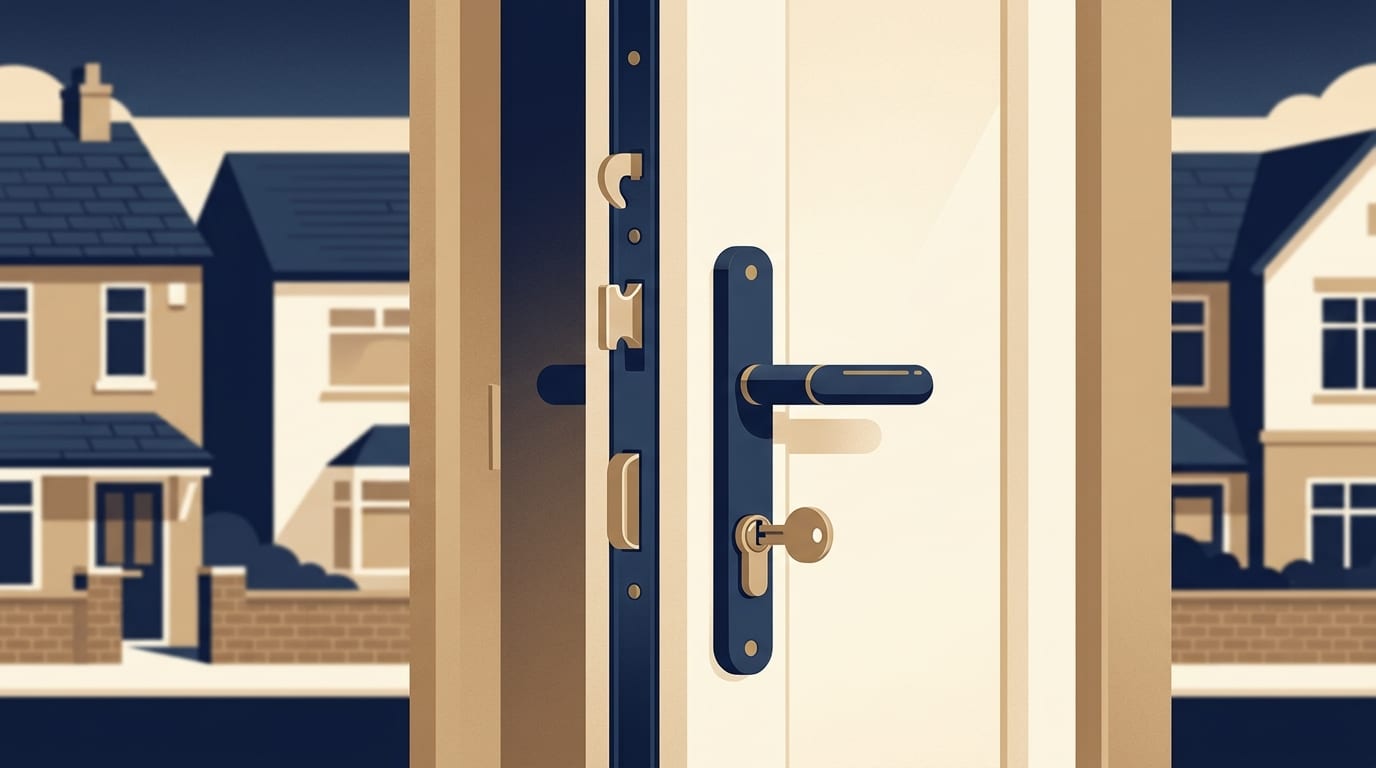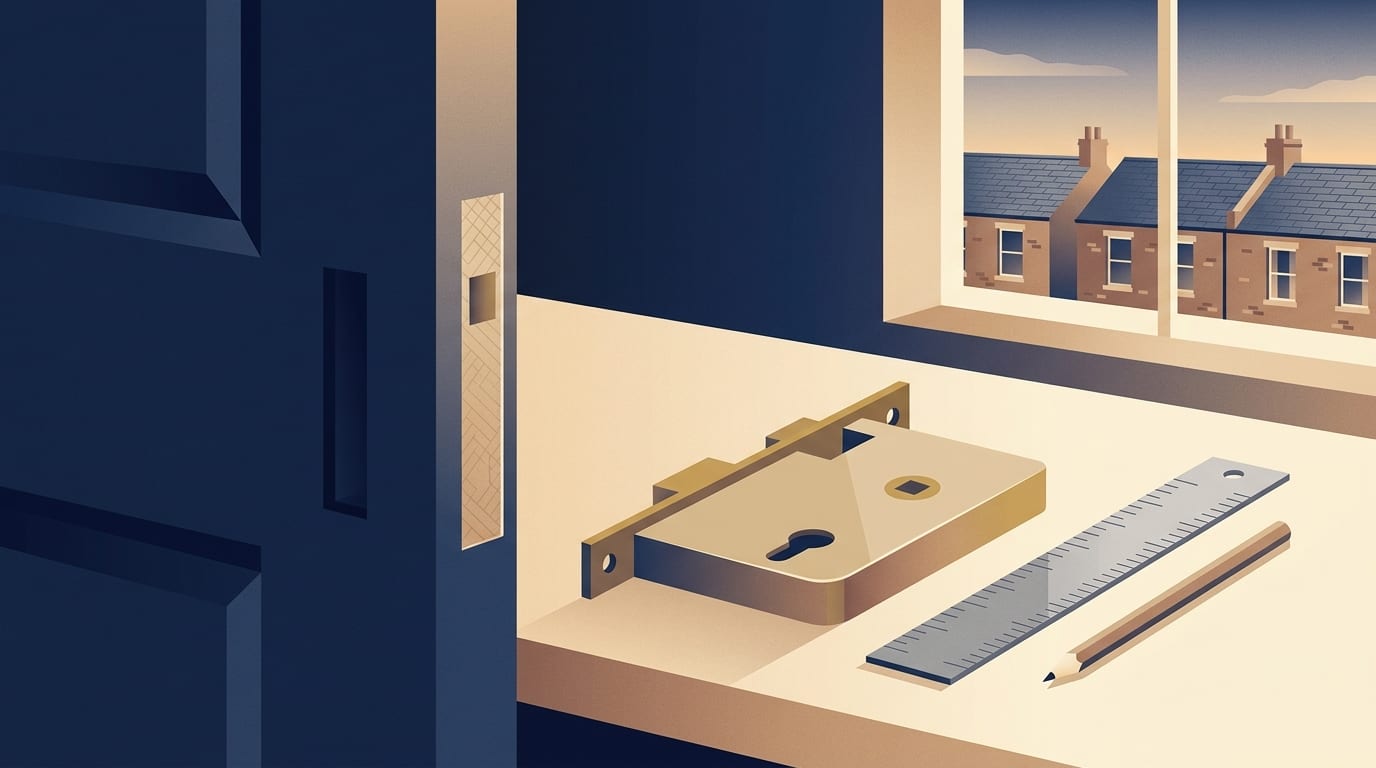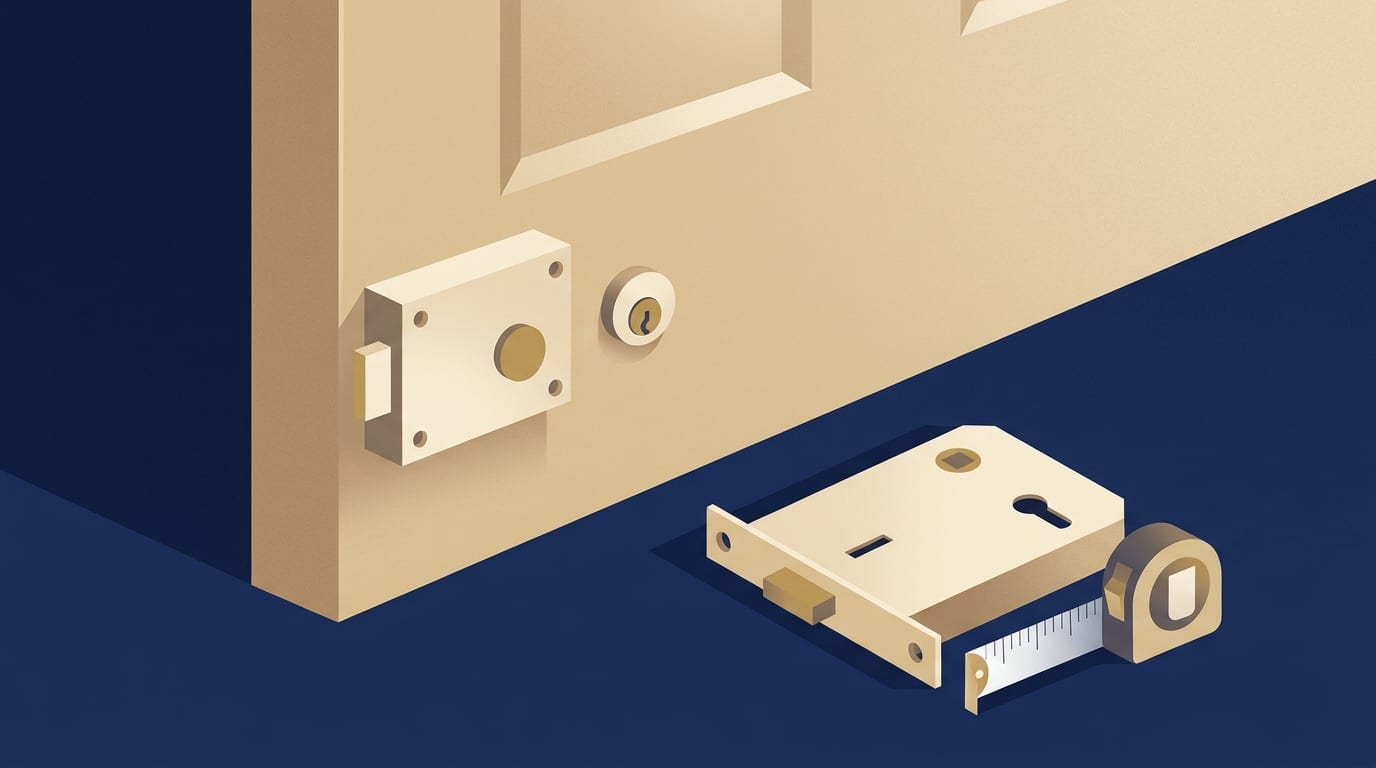
A rim lock is fitted on the surface of the door, whereas a mortice lock is fitted in the door edge. The familiar night latch is the commonest rim lock found in the UK. If you are locked out, moving into a new home, or dealing with a door that will not lock at night, knowing exactly what a rim lock is will help you understand the problem. It also ensures you know what to ask when you hire a locksmith to repair or replace one.
What a rim lock is
A rim lock is a locking mechanism that sits entirely on the surface of your door. Instead of being hidden inside a hole cut into the timber, the main body of the lock is screwed directly to the inside face of the door.
The most familiar type of rim lock is the standard night latch. This is the surface latch that you often see on traditional front doors. It allows you to pull the door shut behind you without needing to turn a key.
The MLA says a night latch will not be the only lock on the door. It needs an additional lock, such as a mortice lock, to improve security, and a night latch that is British Standard approved will improve the security of the door.
The MLA says a night latch is locked and unlocked from both sides with a key inserted in a rim cylinder. The part on the outside where the key enters is called the rim cylinder. The part on the inside frame that the latch drops into is called the keep. When a locksmith repairs a rim lock, they will check all these surface components to see which part has failed.
Rim lock, mortice lock and euro cylinder compared
When you contact a locksmith, they will ask what type of lock you have. Knowing the difference between the main lock families will help you get an accurate price. The Master Locksmiths Association (MLA) explains that a rim lock is fitted on the surface of the door, whilst a mortice lock is fitted in the door edge.
A mortice lock body sits inside the door edge, so what you see is the metal faceplate on the edge of the door and the keyhole. Lock work like this affects door security, so leave it to a locksmith.
A euro cylinder is different again. The MLA notes that a euro cylinder lock is commonly fitted to uPVC and composite doors. This is the distinctive barrel shaped lock that slides entirely through the door. It is also fitted to some mortice deadlocks and sashlocks on timber or aluminium doors.
The MLA points out that a nightlatch will require an additional lock fitted to the door to improve security. This will not be the only lock on the door, and it is normally paired with a mortice deadlock.
Rim latch, rim automatic deadlock and rim cylinder
The terminology around surface locks can be confusing when you are trying to describe a problem. A rim latch is a surface mounted lock that holds the door shut with a latch. The standard night latch is the most common example, and the most common form is the one that locks when the door closes.
A rim automatic deadlock is fitted to the inside of the door with its cylinder linked to a keyhole outside, and it is usually paired with a mortice deadlock.
The rim cylinder is the round metal barrel on the outside of the door. This is the part that takes the key. If you have lost your keys or moved into a new house, a locksmith can tell you whether the rim cylinder alone needs changing.
A rim automatic deadlock makes it easier to lock yourself out. If that happens, ask the locksmith how entry will be gained and whether drilling is likely.
Which doors use rim locks
Rim locks are designed specifically for wooden and timber doors. The MLA says nightlatches are found on timber doors and also glass panelled doors.
You will frequently find a rim automatic deadlock in flats and student accommodation. The rim automatic deadlatch is often found in flats and student accommodation.
A rim automatic deadlatch does not work on uPVC or composite doors, which use a euro cylinder.
If you have an older timber back door, you might find a basic rim lock fitted. A simple surface lock is not secure enough on its own.
What BS 3621 means on a rim lock
BS 3621 is the British Standard for mortice and rim locks on timber doors. A lock made to it is tested against common burglar techniques such as drilling.
To check your current lock, look for the British Standard Kitemark engraved on the faceplate and a serial number starting with BS3621.
This standard matters because home insurance companies care about your locks. Some insurance companies insist on a BS 3621 5-lever mortice deadlock to give cover against burglary. A British Standard night latch will improve the security of the door, but no lock is unbreakable.
You must always check your own policy wording rather than assuming what insurers require. If your policy asks for a BS 3621 lock, ask your insurer what that means for the locks you have. A locksmith can assess your door and tell you what to fit.
Replacing a rim lock and what a locksmith checks
When you hire a locksmith to replace a rim lock, they will start by looking at the door and the existing lock. They will then check your existing lock type and the security standard you want the new lock to meet. Lock work that affects door security is a job for a locksmith, not for you.
If you are locked out, ask how entry will be gained and whether drilling is likely. Read more about drilling your lock.
Replacing a simple rim cylinder takes well under an hour. However, fitting a complete new rim automatic deadlock from scratch takes more time and requires a pricier part than a standard euro cylinder swap.
How much does replacing a rim lock cost?
Locksmith jobs are usually priced as a combination of labour and parts. Some locksmiths charge a fixed price per job, while others charge by the hour. The final price is driven heavily by the time of day, your location, the type of lock you choose, and how the locksmith gains entry to the property.
Many locksmiths charge no separate call-out fee but some do, so ask. Some 2026 price lists put standard daytime labour at £65 to £95 per hour, with out-of-hours, weekend and bank holiday labour at about £110 to £130 per hour, adding roughly £40 to £90. Others put daytime non-emergency labour at £60 to £90 for the first hour. One says the out-of-hours premium applies roughly between 6pm and 8am and at weekends.
The cost of the lock itself varies by security grade. The MLA gives supply prices for mortice deadlocks only: a 5-lever mortice deadlock is from £28 and a BS 3621 5-lever mortice deadlock is from £36, and the price varies by lock standard and brand. The table below sets out typical 2026 prices for supplying and fitting locks, including VAT.
Typical 2026 replacement prices
|
Lock replacement job |
Rest of UK |
London and South East |
|---|---|---|
|
Single mortice or night latch |
£90 to £170 |
£120 to £220 |
|
Night latch |
£80 to £150 |
Not stated |
|
BS 3621 mortice lock |
£120 to £220 |
Not stated |
|
Single euro cylinder |
£75 to £140 |
Not stated |
Estimates vary, and local quotes will differ by area and lock. Other 2026 estimates put a BS 3621 nightlatch set at £60 to £140 and a BS 3621 mortice deadlock at £45 to £90, with parts and fitting as quoted. No price is available for replacing a rim automatic deadlock, but it takes more time and a pricier part than a euro cylinder change, which typically takes 20 to 30 minutes.
If you supply your own lock, labour only for fitting it is typically £70 to £120 at 2026 prices. A lockout without damage is typically £70 to £150, or £120 to £220 where the lock is drilled and a replacement cylinder fitted. VAT may or may not be included in these quotes, so you must ask the locksmith to confirm the total price before work begins.
Your rights and how to avoid locksmith scams
There is no government licensing of locksmiths in the UK. Anyone can trade as a locksmith, so checking the person you hire matters. This is why checking reviews and looking for trade approval matters so much.
The Master Locksmiths Association (MLA) runs a voluntary approval scheme, not a legal requirement.
Under the Consumer Rights Act 2015 a service must be carried out with reasonable care and skill, at a reasonable price if none was agreed, and within a reasonable time, with a right to have poor work put right or money back. Under the Consumer Contracts Regulations 2013 there is normally a 14-day cancellation period for work arranged at home or by phone, but this does not apply where the customer specifically asked for a visit for urgent repairs, although extra work sold during that visit is not covered by the exception.
You should also be aware of common industry problems. Watch out for these signs of poor practice:
- National call centres advertising as a local locksmith and passing the job to whoever is nearest.
- A very low price quoted on the phone that suddenly multiplies when the locksmith arrives on the doorstep.
- Drilling a lock that could have been opened without damage.
- Refusing to give a price before starting.
- Demanding cash only, refusing to provide an invoice, and having no company name or address.
- Arriving with no ID in an unmarked vehicle.
For rented homes, a landlord who changes the locks to keep a tenant out without a court order commits illegal eviction, a criminal offence. Tenants should check their tenancy agreement and get the landlord's agreement before changing locks. Contact Citizens Advice or Shelter for guidance on your own situation.
Common questions
What is the difference between a rim lock and a mortice lock?
A rim lock is screwed onto the inner surface of the door, making the main lock body completely visible inside the room. A mortice lock is fitted into a hole chiselled into the edge of the door, meaning it is hidden inside the timber.
Can I fit a rim lock to a uPVC door?
No, rim locks are designed for timber doors and glass panelled doors with a wide wooden frame. They cannot be fitted to uPVC or composite doors. A rim automatic deadlatch does not work on uPVC or composite doors.
Is a night latch the same as a rim lock?
A night latch is the most common type of rim lock in the UK. The term rim lock covers the whole family of locks fitted to the surface of a door. The most common form of rim lock is the night latch, which locks when the door closes.
Do I need a mortice lock if I have a rim cylinder?
Yes, it is normally paired with one. Some insurers insist on a BS 3621 5-lever mortice deadlock to give cover, so check your own policy.
What is a rim automatic deadlock?
A rim automatic deadlock is a secure surface lock fitted to the inside of the door, with its cylinder linked to an outside keyhole. When the door closes, the latch automatically deadlocks in place.
What to do next
If your rim lock is broken, you are locked out, or you want to upgrade your home security, you will need to contact a local professional. Follow this short checklist to ensure you hire a reputable tradesperson and get a fair deal:
- Check your door material to confirm it is timber or wood, as surface locks do not work on uPVC.
- Look at your existing lock faceplate for a British Standard Kitemark and a serial number starting with BS 3621.
- Read your home insurance policy wording to see exactly what standard of locks they expect on your doors.
- Ask the locksmith for a total price before work starts, including the parts, VAT and any out-of-hours charge.
- Ask how entry will be gained and whether drilling the lock is likely.
- Check the business has a real local address, reviews over time, and check any MLA approval claim on the MLA's own website.
- Ask for ID on arrival and insist on a written invoice when the job is finished.
Unless it is an emergency, a lock change can usually wait until standard daytime hours to avoid expensive evening and weekend premiums. When you are ready to get quotes, find a locksmith near you to discuss your door and the exact lock you need.
Find a top rated locksmith near you
1,831 locksmiths across the UK, each ranked on their Google rating and the number of reviews behind it. Start with your county: