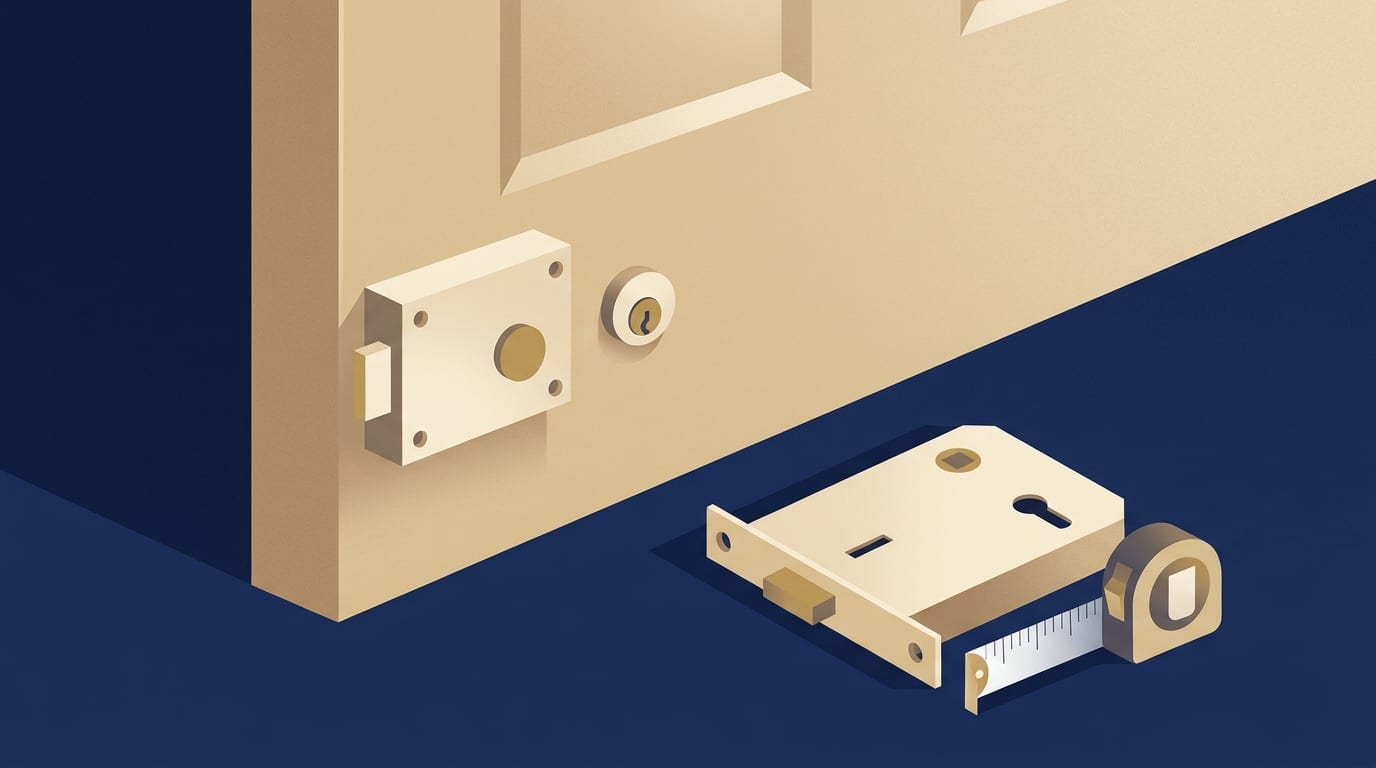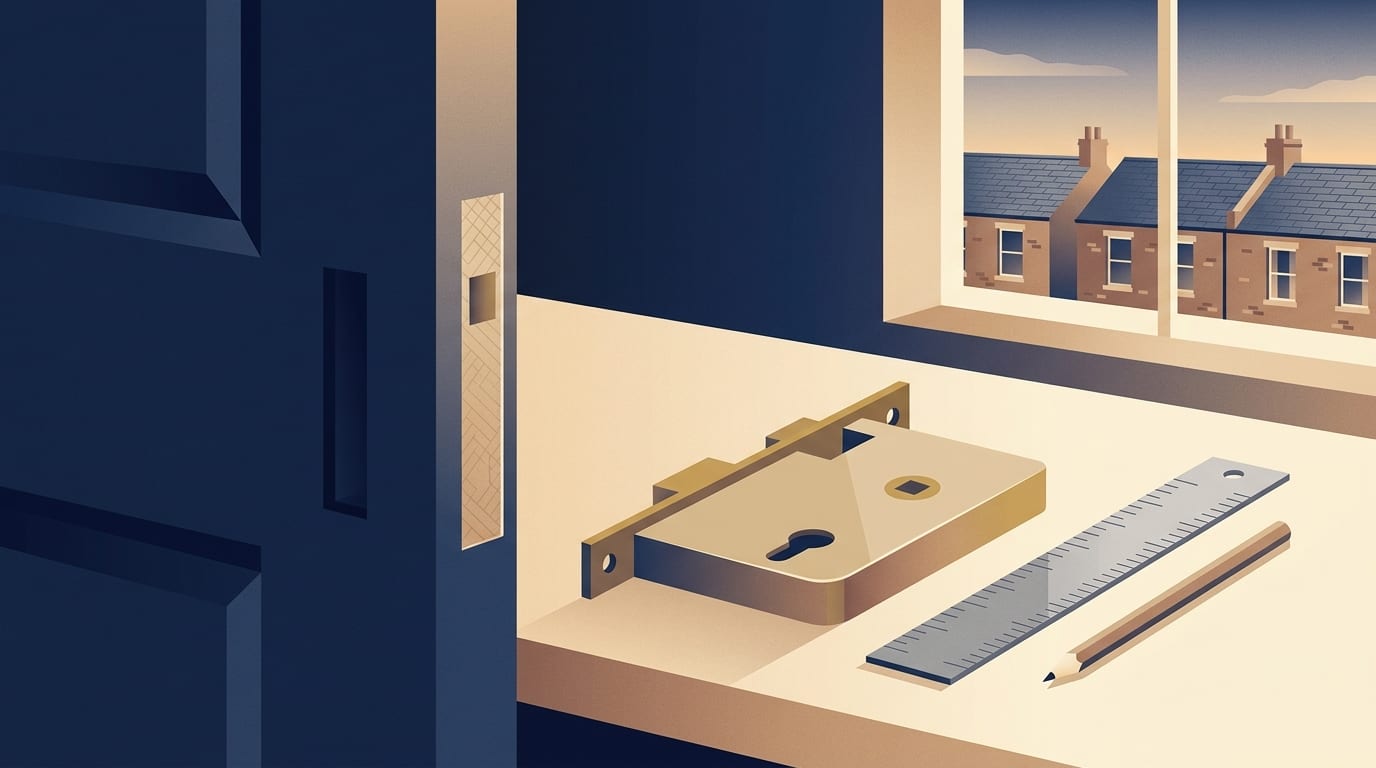
A mortice lock sits inside the edge of a timber door. A sashlock has a latch and a deadbolt, while a deadlock has a deadbolt only. The measurements that matter most are the case depth, the backset and, for a sashlock, the centres. The two common sizes for domestic doors are 64mm (2.5 inch) and 76mm (3 inch).
What is a mortice lock?
A mortice lock is a type of locking mechanism that is fitted directly into a pocket cut into the edge of a timber door. This makes it different from a rim lock, which is fitted on the surface of the door rather than inside the wood. You will most commonly find this type of lock fitted to wooden domestic doors.
The most common version fitted to external wooden doors is a five-lever mortice deadlock. The number of levers inside the mechanism affects how secure the lock is, and fewer levers increase the risk of key duplication. A three-lever mortice lock is considered less secure because fewer levers increase the risk of key duplication. If a front door has a five-lever mortice deadlock that is not approved to British Standards, it will usually have a night latch fitted as extra security.
How to tell a sashlock from a deadlock
When you need to replace a mortice lock, the first step is to identify whether you have a sashlock or a deadlock. The difference comes down to whether the lock has a latch that catches when you push the door shut. A mortice deadlock features a single deadbolt and no latch. The deadbolt is usually key operated, meaning you must turn the key to throw the bolt and secure the door.
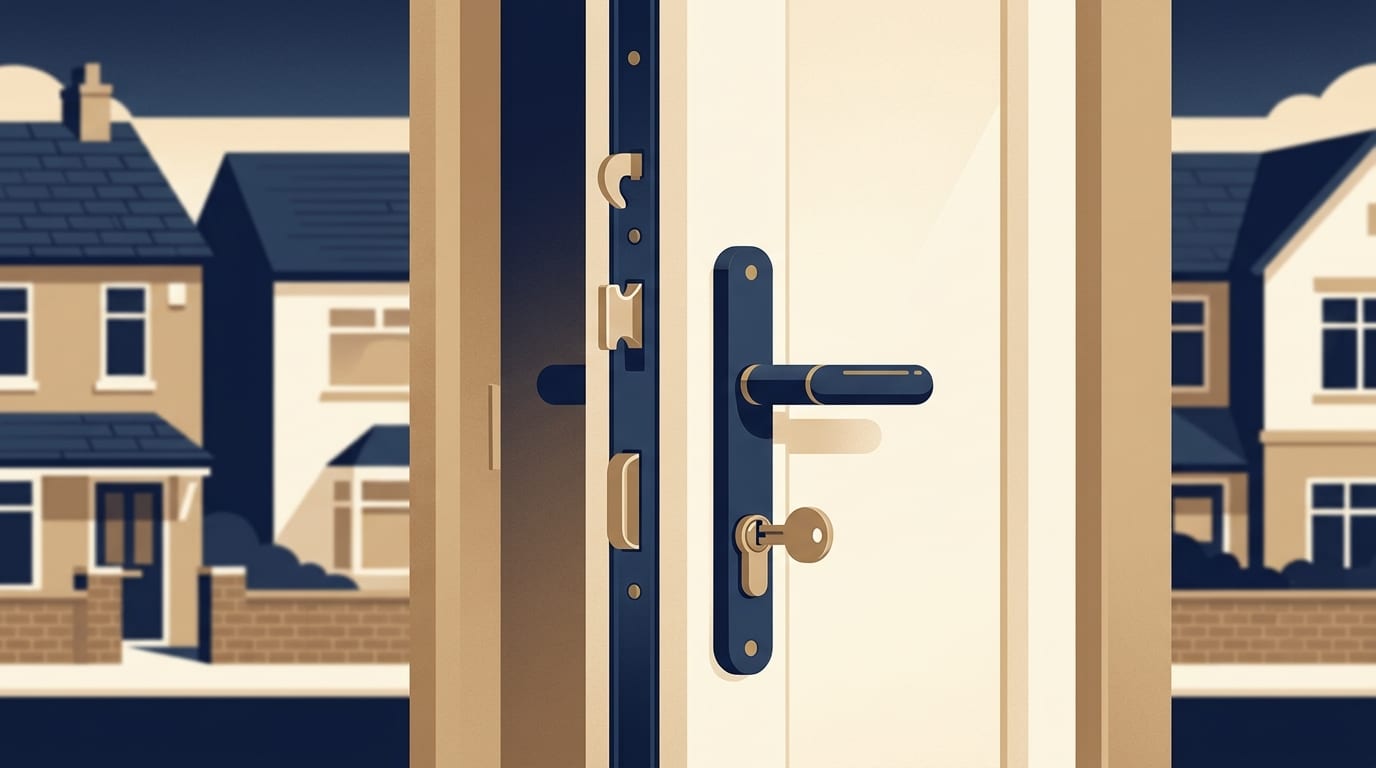
A mortice sashlock combines two functions in one metal case. It has a deadbolt that is usually key operated, exactly like a deadlock. Alongside the deadbolt, a sashlock also features a latch that is usually operated by door furniture, such as a set of handles. Pushing the handle down pulls the latch in, allowing you to open the door without turning a key.
Choosing the wrong type of lock can mean that you will have to modify your door to suit it, so be sure which type you have before anything is ordered.
What measurements a locksmith needs
Before ordering a replacement mortice lock, you need to record several exact measurements from your existing lock. Buying a lock that looks similar is not enough, as metric figures vary between makes. A locksmith or supplier will ask for details such as these:
- The case depth, which is the total length of the lock body that sits inside the door.
- The case height, which is the vertical measurement of the metal box.
- The backset, which is the distance from the edge of the forend to the centre line of the spindle, keyhole or cylinder.
- The centres, which is the distance from the centre of the spindle to the centre of the keyhole, cylinder or turn follower.
- The forend length and width across the metal faceplate.
- Whether the faceplate has square or radius ends.
- Whether the latch is reversible or the lock is handed.
- The number of levers and any security standard stamped on the faceplate.
Common mortice lock sizes
Most residential timber doors use one of two standard mortice lock sizes. The table below shows the typical sizes, though exact metric measurements vary between different makes.
|
Lock size |
Case depth |
Typical backset |
|---|---|---|
|
2.5 inch |
64mm |
44mm |
|
3 inch |
76mm |
57mm |
A 64mm case depth is commonly called a 2.5-inch lock, and usually has a backset of 44mm. A 76mm case depth is commonly called a 3-inch lock, and usually features a 57mm backset. These are typical values, so check them against your own lock with a locksmith before buying a replacement.
Why you must measure the lock case itself
When measuring for a new mortice lock, you should never rely on the size of the hole cut into the door. Old mortices may be oversized or altered. The reading that counts is the metal case of the lock itself. If the lock is still in the door, ask a locksmith to take it out and measure it.
Door thickness is another vital factor to consider when choosing a mortice lock. Most internal doors are around 35mm thick, while external timber doors are usually 44mm thick or more. A lock that is too deep for a thin door could weaken the structure of the door.
If you find that your current lock case is unusually large or small, you might struggle to find an exact match off the shelf. In these situations, the door, the frame or the mortice itself will need altering to accept a modern standard size. Do not alter the door yourself, because that is a job for a locksmith.
Checking the security standard and levers
When you inspect the metal faceplate on the edge of your door, you should look for a stamped standard and a lever count. A five-lever mortice deadlock is commonly fitted to wooden doors, and the lever count should be stamped clearly on the faceplate. A three-lever lock offers less protection because fewer levers increase the risk of key duplication, and it cannot be certified to the main British Standard.
The most common standard for mortice sashlocks and deadlocks on timber domestic doors is BS 3621. To conform to this standard, a lock must meet strict manufacturing and security criteria. A compliant lock requires all of the following features:
- A minimum of five levers inside the mechanism.
- At least 1,000 different key variations to reduce duplication risks.
- Anti-pick features to prevent the mechanism from being manipulated.
- Hardplates to protect the internal mechanism against drilling.
- A bolt throw of at least 20mm to secure the door firmly into the frame.
If a lock meets these requirements, the BS 3621 Kitemark should be visible on the faceplate. Certification is done by BSI, but be aware that some five-lever locks still do not conform to the standard. The phrase "Insurance-Approved Locks" only means that some insurers require the standard. Some insurers require BS 3621 locks but others do not, so you must check your own policy wording to see what is expected for your home.
Signs your mortice lock needs replacing
A mortice lock can last for decades, but the internal components will eventually wear down through daily use. If you have a lock that is 20 or more years old, it may need servicing or replacing entirely. A key that becomes difficult to turn is one sign of a failing lock. Never try to lock a mortice lock with the door closed if you have a problem with it.
There are several common reasons why a key will not turn in a mortice lock. The causes include a poorly cut key, a faulty lock mechanism, or a warped wooden door that has moved out of alignment with the frame. Inside the lock case itself, a failed or loose lever spring and worn parts can stop the key from engaging the bolt. If you force a stubborn key, it can easily snap off inside the lock.
If you suspect the lock is failing, arrange for a professional to inspect it. Attempting to force the mechanism or taking the lock apart yourself can cause further damage. A qualified locksmith can diagnose whether the issue is a warped door, a faulty key, or if the internal levers have simply reached the end of their working life.
When to get a locksmith to measure and fit
Taking a mortice lock out and fitting a new one is a job for a locksmith. If the door, frame or mortice needs altering, or the lock must be taken out or fitted, a locksmith should do it. Modifying a door incorrectly can leave it weaker.
There is no government licensing of locksmiths in the UK, meaning anyone can trade as one. This makes it vital to check the credentials of anyone you hire to work on your front door. The Master Locksmiths Association (MLA) runs a voluntary approval scheme, not a licence.
When a locksmith arrives, you should ask for their ID and ensure they provide a written invoice. A reputable professional will explain the problem, confirm the price of the parts and labour, and tell you exactly what standard the new lock meets.
How much does a mortice lock change cost?
The cost of replacing a mortice lock depends on the brand, the security grade, and how much labour is required to fit it. Typical 2026 prices put a mortice deadlock or sashlock change is from £148 including VAT. This is an average from approved locksmiths and represents a starting price rather than a firm quote.
A standard lock replacement typically takes from 30 minutes to complete. However, because mortice sizes vary between different makes and models, a change may require rework to the door to make the new lock fit securely. If the door needs rework, the job can take longer and cost more.
Your location and the time of day will also affect the final price you pay. Prices in London and some surrounding areas are typically around 20 to 25% higher than the national estimates. If you need a locksmith during the evening, at night, or on a weekend or bank holiday, you will pay a higher out-of-hours rate. Always ask for a total price, including parts, VAT and any out-of-hours charge, before the work starts.
What to ask a locksmith before they arrive
If you decide that measuring and fitting the lock is best left to a professional, you should ask the right questions before they travel to your property. National call centres often advertise as a local locksmith and pass the job to whoever is nearest, so you should always check the business has a real local address and positive reviews over time. If they claim to be MLA approved, check that claim on the MLA's own website.
When you speak to a locksmith on the phone, ask for a total price that includes the parts, the labour, VAT, and any out-of-hours charge. You should also ask how entry will be gained if you are locked out, and whether drilling the lock is likely. A skilled locksmith will try to get in without damaging the lock rather than drilling it immediately.
If you rent your home, you must consider the legal rules around lock changes. Tenants should check their tenancy agreement and get the landlord's agreement before changing locks. Conversely, a landlord who changes the locks to keep a tenant out without a court order commits illegal eviction, which is a criminal offence. For firm advice on tenancy disputes, contact Citizens Advice or Shelter.
Common scams and what to watch out for
Because the locksmith trade is unregulated, there are several common problems and scams you should be aware of. You might be quoted a very low price on the phone that multiplies unexpectedly once the person is standing on your doorstep. A reliable locksmith will give you a clear price range and will not refuse to give a price before starting the work.
Another common issue is paying premium prices for low quality hardware. A rogue trader might fit cheap hardware at premium prices. You should always ask what standard the new lock meets and look for the Kitemark on the faceplate yourself. You should also be wary of anyone who insists on cash only, provides no invoice, arrives in an unmarked vehicle, or carries no identification.
Under the Consumer Rights Act 2015, a service must be carried out with reasonable care and skill, at a reasonable price if none was agreed, and within a reasonable time. You have a right to have poor work put right or your money back. Under the Consumer Contracts Regulations 2013, there is normally a 14-day cancellation period for work arranged at home or by phone, but this does not apply where you specifically asked for a visit for urgent repairs. Any extra work sold during that visit is not covered by the exception.
Common questions
What is a mortice sashlock?
A mortice sashlock is a lock fitted into the edge of a timber door that features both a deadbolt and a latch. The deadbolt is usually operated by a key, while the latch is usually operated by door furniture such as a handle.
What is the backset on a mortice lock?
The backset is the distance from the edge of the door where the faceplate sits to the centre of the keyhole or spindle hole. Typical values are 44mm for a 64mm case depth lock, and 57mm for a 76mm case depth lock.
Can a three-lever lock be British Standard?
No, a three-lever mortice lock cannot be certified to the main domestic standard. To conform to BS 3621, a compliant lock needs a minimum of five levers, alongside hardplates and anti-pick features.
Why is my mortice lock key not turning?
If your key will not turn, the causes include a poorly cut key, a faulty lock, a warped door, or worn internal parts. Inside the lock case, a failed or loose lever spring can also prevent the mechanism from working.
What to do next
Before you order a replacement lock or call a professional, there are a few practical steps you can take to gather the right information.
- Ask a locksmith to take the lock out and measure the metal case rather than relying on the hole in the door.
- Ask which measurements are needed, such as case depth, backset and, for a sashlock, the centres.
- Check the metal faceplate for a stamped Kitemark and the number of levers.
- Read your home insurance policy wording to see if a specific lock standard is required.
- Ask a professional to measure and quote if the hole in the door needs altering.
If you are unsure what lock you have, or if your door requires modification to fit a new size safely, you should seek professional help. A qualified locksmith can identify the correct replacement, ensure it meets the required security standards, and fit it without weakening your timber door. To get a price, you can find a locksmith near you today.
Find a top rated locksmith near you
1,831 locksmiths across the UK, each ranked on their Google rating and the number of reviews behind it. Start with your county: