
Fire Door Locks and the Rules for Flats and Fire Exits
TopRatedLocksmiths.co.uk · 7 October 2026
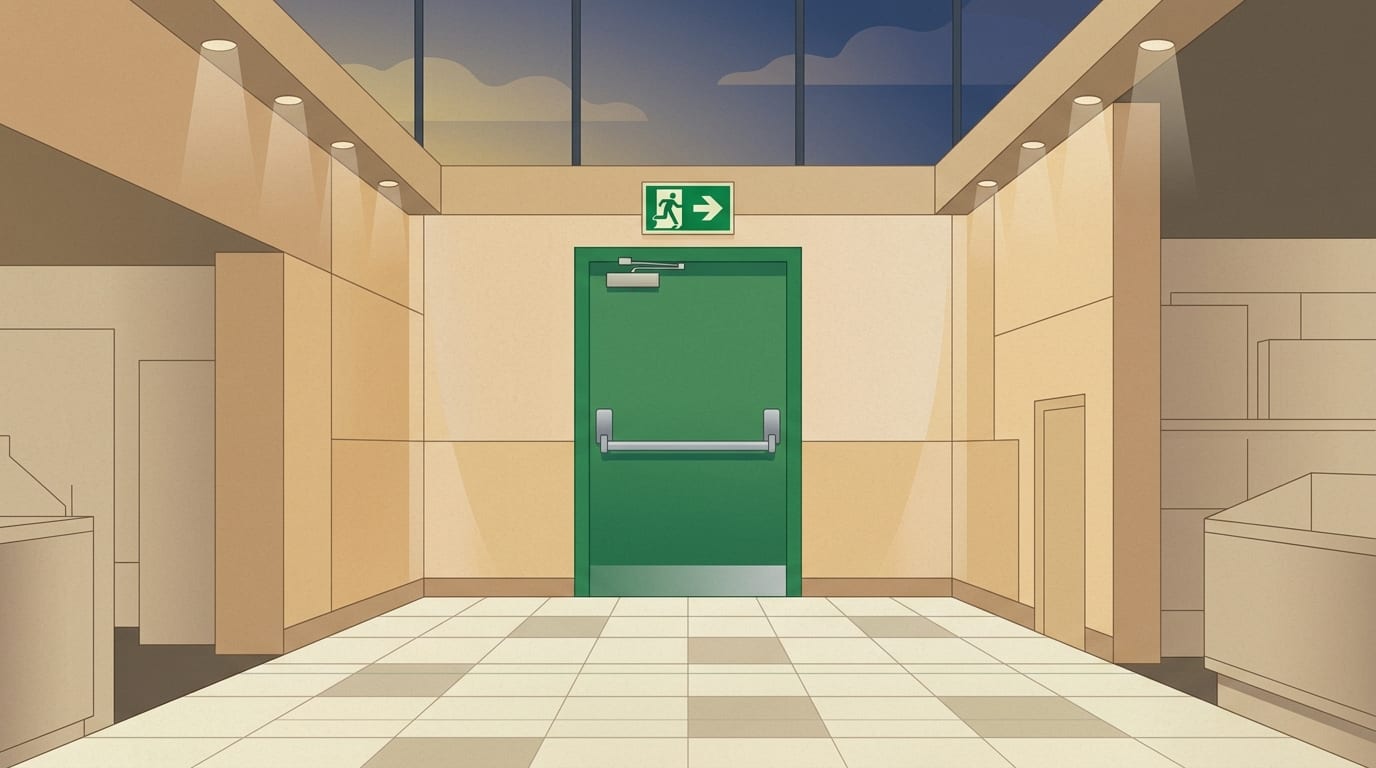
A fire door can be locked, but people inside must be able to open an escape door quickly without a key. Any lock work on a fire door must not weaken its fire resistance. Different rules cover flat front doors and fire exits in shops and offices, and both balance security against the need for a fast escape.
Why locks on fire doors are different
Fire safety and security often pull in opposite directions. A good lock keeps intruders out, but in an emergency it must not trap the people inside. For business premises, the law dictates how escape doors operate so that anyone can leave the building safely. For residential blocks, the front door of your flat is a vital barrier that stops fire spreading into the communal hallways.
These rules are for England, though the Fire Safety Order and the government guidance for offices and shops also apply in Wales. If you live or work elsewhere in the UK, you should check the specific fire safety rules where you live. You must never wedge, lock or chain a fire exit shut while people are inside the building.
Fire exits must open without a key
Under article 14 of the Regulatory Reform (Fire Safety) Order 2005, emergency doors must open in the direction of escape. They must not be so locked or fastened that they cannot be easily and immediately opened by any person who may require to use them in an emergency. Sliding or revolving doors must not be used for exits specifically intended as emergency exits.
Building Regulations guidance for buildings other than homes says doors on escape routes should either have no lock, latch or bolt at all, or only simple fastenings. These simple fastenings must be easy to operate from the side people escape from. They must be operable without a key and they must need only one mechanism to open the door.
Panic bars and push pads
Government guidance on fire exits starts from the position that doors on escape routes should not have any locking devices. It does accept that security often needs a device that prevents unlimited access from the outside, while still letting occupants open the door easily in a fire. A commercial locksmith can fit and repair these devices so the door stays locked and secure from the outside but allows a quick one touch escape.
Where members of the public or others unfamiliar with the building are present, panic exit bar devices should normally be used. These are the push bars or touch bars built to the BS EN 1125 standard. You will see these in shops, commercial buildings and places of assembly, where doors on escape routes from rooms with more than 60 people must have panic fastenings or no locks at all.
Premises with limited numbers of staff who are familiar with the building, and where panic is unlikely, may use push pads or lever handles built to the BS EN 179 standard. On any door with a panic bolt or latch, a notice saying Push bar to open should be displayed directly above the bar.
Electric and magnetic locks on exit doors
Many modern commercial doors use electromagnetic locks. These have no moving parts and fail safe unlocked if the power drops. They are released by a switch, a break glass point which is typically green, or the main fire alarm system.
Electromechanical locking devices are slightly different. These are normally unacceptable on escape doors unless they have a manual override fitted. That override can be a push bar, push pad or lever handle, so that a person can open the door without relying on the electronics.
Time delay devices that hold a door locked for between five and 60 seconds are not usually acceptable for use by members of the public. They may be acceptable in specific situations for trained staff who are familiar with how they work.
Locking up when the building is empty
Doors may be locked when rooms are completely empty. Some final exit doors have heavy security locks that are used only when the building is empty and locked up for the night. This may be appropriate to prevent break-ins, but management procedures must emphasise their safe use.
If you run a business, you must ensure that all security devices are removed before staff or customers enter the building. A daily check is required to ensure the escape routes are clear and ready to use.
Your daily fire exit check should include:
- Removing all bolts, padlocks and heavy security devices from fire exits.
- Checking that escape route doors swing freely and catch properly.
- Ensuring no fire exit is blocked by stock or rubbish.
- Checking that electronic release buttons and green break glass points are visible and undamaged.
- Confirming that all required signs remain in place and are easy to read.
Flat front doors are fire doors too
If you live in a block of flats, your front door is a fire door. Most fires in blocks of flats start inside a flat, and the heavy entrance door stops fire and smoke spreading into the common parts. The 2022 fire door guidance makes it clear that these doors are particularly important for everyone's safety.
The Responsible Person for your building must tell all residents that fire doors should be kept shut when not in use. They must also tell residents and guests not to tamper with self-closing devices. An effective self-closing device is very important because it ensures the door shuts automatically behind you to block smoke.
Any faults or damage to your front door must be reported immediately. The Responsible Person must remind residents of these rules at least every 12 months.
Changing the lock on a fire door
Where a resident wants to alter or change their front door, this should be done with the knowledge and agreement of the Responsible Person. This ensures the new hardware does not undermine the building's fire risk assessment. You should check your lease and ask the Responsible Person rather than guessing what is allowed.
The means of escape in a fire is an important consideration, particularly where the flat entrance door is your only way out. The Master Locksmiths Association (MLA) says escape locks that can be opened from the inside by a single action without a key, while staying secure from outside as described in the BS 8621 standard, are acceptable to insurers subject to written confirmation. These will normally meet the requirements of the Building Regulations. You can read more about escape locks in our guide to the types of front door lock.
Components such as locks, hinges and seals are part of the fire door and must be properly installed to keep the door's integrity. A hole left where an old lock has been removed is a defect that could affect fire resistance. Repairs and upgrades must be done by a competent contractor.
Fire door checks in blocks of flats
Routine checks look for damage or defects that could affect a door's fire resistance, as well as alterations that might weaken it. A door that met the standards for a fire resisting flat entrance door when the block was built, or when the door was made, is expected in most cases to remain adequate if it is undamaged and the gaps around the edges are not too large.
In blocks with a top storey more than 11 metres above ground level, the rules are stricter. The Responsible Person must use best endeavours to check all flat entrance fire doors at least every 12 months. They must also check all communal fire doors in the building at least every 3 months.
How locksmith work is priced and regulated
Jobs are usually priced as labour plus parts, either by the hour or as a fixed price per job. The price is driven by the time of day, with evenings, nights, weekends and bank holidays costing more. Location also matters, as London and the South East cost more than other areas. The type and security grade of the lock will also affect the final bill.
Many locksmiths charge no separate call-out fee but some do, and VAT may or may not be included. You must ask exactly what is covered before you agree to the work.
There is no government licensing of locksmiths in the UK. Anyone can trade as one, which is why vetting matters. The Master Locksmiths Association (MLA) is the main trade association. Its approved companies are vetted, have criminal record checks, employ locksmiths who have passed the MLA exam and are inspected regularly. This is a voluntary approval scheme, not a legal requirement. The MLA offers a Timber Fire Door Maintenance and Repair course, so you should ask if the locksmith has specific fire door experience.
Under the Consumer Rights Act 2015, a service must be carried out with reasonable care and skill, at a reasonable price if none was agreed, and within a reasonable time. You have a right to have poor work put right or get your money back. Under the Consumer Contracts Regulations 2013, there is normally a 14-day cancellation period for work arranged at home or by phone. This does not apply where you specifically asked for a visit for urgent repairs, though extra work sold during that visit is not covered by the exception.
Common problems and locksmith scams
When you need a lock changed on a flat door or a fire exit, you must watch out for poor practices. One common issue is national call centres advertising as a local locksmith. They quote a very low price on the phone to win the job, pass it to whoever is nearest, and the price then multiplies on the doorstep.
Some rogue operators will drill a lock that could have been opened without damage, forcing you to buy a replacement. On multipoint doors, they might insist on replacing the whole mechanism when only the cylinder or gearbox had failed. Others will fit cheap cylinders but charge premium prices for them.
Always avoid a worker who refuses to give a price before starting, demands cash only, provides no invoice, and has no company name or address. A reputable locksmith will arrive in a marked vehicle or at least carry clear ID.
For rented homes, you must navigate tenancy rules carefully. A landlord who changes the locks to keep a tenant out without a court order commits illegal eviction, which is a criminal offence. Tenants should check their tenancy agreement and get the landlord's agreement before changing locks. If you are in a dispute, contact Citizens Advice or Shelter for guidance on your own situation.
Common questions
Can a fire door be kept locked?
Cupboard, store and service duct fire doors that are not self-closing are routinely kept locked. They must be labelled Fire door keep locked on the outside. This is different from an escape door, which must never be kept locked in a way that stops people opening it easily while the building is occupied.
Do I need a panic bar or a push pad?
If members of the public or people unfamiliar with the building use the exit, you normally need a panic bar, and in shops, commercial buildings and places of assembly, doors on escape routes from rooms with more than 60 people should have panic fastenings or no locks. If the premises have limited staff who are familiar with the building and panic is unlikely, a push pad or lever handle is usually enough.
Should a fire door be locked from the outside?
An escape door can be locked from the outside to secure the building against break-ins. The requirement is that anyone inside the building must still be able to open the door easily and immediately without needing a key.
What is the rule for an emergency exit door?
An emergency exit door must open in the direction of escape. It must not be fastened or locked in any way that prevents a person opening it easily and immediately in an emergency. Sliding or revolving doors must not be used as dedicated emergency exits.
Next steps before you hire a locksmith
If you need to change the lock on a flat front door or repair a commercial fire exit, make sure you hire someone who understands the rules. A job that is not an emergency can wait until normal working hours to avoid out-of-hours rates. When you call a locksmith, use this checklist to protect yourself:
- Get a total price, including parts, VAT and any out-of-hours charge, before work starts.
- Ask how entry will be gained if you are locked out, and whether drilling is likely.
- Ask what standard the new lock meets and ensure it is an escape lock if fitted to a single exit flat door.
- Check the business has a real local address and consistent reviews over time.
- Check any MLA approval claim on the MLA's own website.
- Ask the locksmith about their fire door experience or specific training.
- Ask for ID on arrival and insist on a written invoice when the job is done.
- If your flat front door is damaged, report it to the Responsible Person straight away.
Taking a few minutes to check these details ensures your door remains secure without trapping anyone inside during a fire. When you are ready to get quotes from vetted local professionals, find a locksmith near you to discuss the right lock for your property.
Related Guides
Window Restrictors and How They Keep Children Safe
What window restrictors do, which windows need them, how far a window should open, how to keep a fire escape route and what landlords should know.
Garden Gate Locks and How to Secure a Side Gate
Why the side gate matters, the main types of garden gate lock, how to make a gate hard to climb, the planning height limits and what to ask a locksmith.
Sash Window Locks and How to Make Sash Windows Secure
How sash windows are locked, why the central catch is not enough, how many locks each window needs, how sash stops work and what to know in a listed home.