
Types of Front Door Lock and Which Is Most Secure
TopRatedLocksmiths.co.uk · 6 October 2026
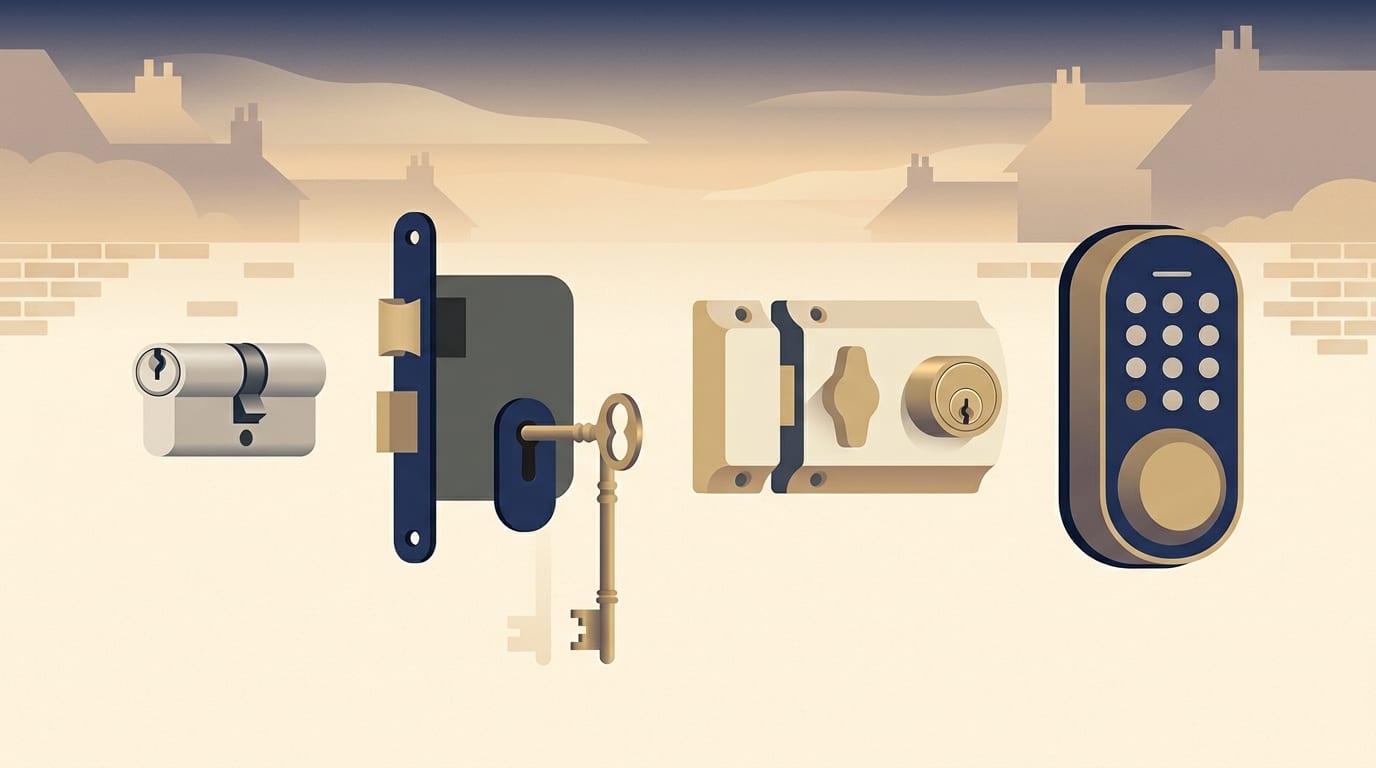
The type of lock you need depends entirely on what your front door is made of. Traditional timber doors are solid wood, which means heavy locking mechanisms can be cut deep into the edge of the door or screwed firmly onto the surface. They usually rely on a combination of two separate locks working together to provide security.
Modern uPVC and composite doors are built differently and cannot support traditional wooden door locks. Instead, they use a tall metal locking mechanism concealed along the edge of the door that throws hooks and bolts into the frame. This entire system is operated by a single barrel lock positioned near the handle.
Understanding what you have on your door is the first step to knowing if it is secure. You cannot usually mix and match these systems. A uPVC door will not take a traditional mortice lock, and while some timber doors are made with multipoint locks, most older timber front doors use a mortice lock and a night latch.
Euro cylinders and multipoint locks
The vast majority of uPVC and composite doors are secured by a multipoint locking system. This is a strip running down the edge of the door with bolts engaging the frame at a minimum of three points. When you lift the door handle, this mechanism throws the bolts into place.
Lifting the handle does not lock the door on its own. You must use the key to double lock the mechanism before going to bed or going out. If you only pull the door shut without lifting the handle and turning the key, the door is only held by a small central latch and is not fully secure.
The part of the system that takes the key is called a euro cylinder. This is the barrel that slides into the central gearbox of the multipoint lock. Euro cylinders are commonly fitted to uPVC and composite doors with multipoint systems, and they are simple for a locksmith to replace without changing the entire locking strip.
Because euro cylinders sit on the face of the door, they can be vulnerable to lock snapping, where an intruder applies force to break the barrel in half. To stop this happening, any replacement barrel needs to be snap resistant. You can read more about how anti snap locks work to protect against this.
Mortice deadlocks and sashlocks
A mortice lock is fitted completely within a cavity cut into the edge of a wooden door. These locks are operated by a key from both the inside and the outside.
There are two main types of mortice lock. A mortice deadlock has a single heavy metal bolt that shoots into the door frame when you turn the key. It has no handle and no latch, so it is used purely for security. You will often find a deadlock fitted lower down on a front door to back up a surface mounted night latch.
A mortice sashlock does exactly the same job but adds a sprung latch to the mechanism. This allows you to fit door handles on either side to open and close the door without locking it. Sashlocks are frequently used on wooden back doors where you want the convenience of a handle during the day and the security of a heavy bolt at night.
On an external wooden door, look for a 5-lever mortice deadlock certified to BS3621 rather than a basic lock. You can find more detail in the guide on why British Standard mortice locks matter for home security.
Night latches
A night latch is surface mounted on the inside of a wooden door. This is the type of lock most people refer to as a Yale lock. When you pull the door closed, a sprung metal latch snaps into a box on the door frame, locking the door automatically behind you. You open it from the outside with a key and from the inside using a small knob or handle.
The part you put the key into on the outside of the door is called the rim cylinder. Standard night latches are convenient but they do not offer enough security on their own. Unless it is an approved British Standard night latch, it needs an additional lock, such as a 5-lever mortice lock, to improve security.
You can improve on a basic model by fitting a deadlocking night latch. This version can be locked with a full turn of the key from the outside, which holds the latch in the closed position.
An auto deadlocking night latch goes a step further and deadlocks the latch automatically when the door shuts. Some of these high security models are approved to BS 3621 and can be used on their own without needing a separate mortice lock.
Keypad and smart locks
Electronic and digital door locks include smart locks operated by a smartphone app, keypad locks that require a PIN code, and fingerprint scanners. They offer the convenience of leaving the house without carrying keys and allow you to easily grant access to family members or tradespeople.
All electronic locks require power to work. This means they must be wired into the mains or run on batteries that you will need to replace. You should always check what backup method the lock uses in case the battery runs flat, which is usually a concealed keyhole or backup battery contacts on the outside.
Mechanical push button locks are an alternative that need no power at all. They use a simple mechanical keypad to release a latch. Mechanical push button locks are covered by British Standard BS 8607.
The standards that make a lock secure
There is no government licensing of locksmiths in the UK, so anyone can trade as one. This is why vetting matters and why you must know what standards to ask for. The Master Locksmiths Association (MLA) runs a voluntary approval scheme in which vetted companies are inspected regularly and employ locksmiths who have passed the MLA exam.
For traditional external timber doors, the MLA says most insurers expect key operated locks to be certified to BS 3621:2017+A1:2024, but check your own policy wording. This British Standard means the lock has been tested against common burglary techniques. You can spot it by looking for the British Standards Kitemark stamped onto the metal faceplate on the edge of the door.
Multipoint locks on uPVC and composite doors cannot be tested to BS 3621. Instead, PAS 3621, PAS 8621 and PAS 10621 set the minimum standard for the complete multipoint mechanism. Older multipoint locks should simply have at least three locking points and a suitable high security cylinder.
Approved Document Q of the Building Regulations sets the standard for new homes built in England, not for existing homes. It requires doors into a new home to be secure doorsets tested to PAS 24, or bespoke timber doorsets with a multipoint lock to PAS 3621, PAS 8621 or PAS 10621, or a mortice lock to BS 3621, BS 8621 or BS 10621 with a rim lock to the same standard.
The table below shows the most common standards for front door locks and the type of door they apply to.
|
Lock standard |
Door type |
How it operates |
|---|---|---|
|
BS 3621 |
Timber doors |
Key operated from both the inside and the outside |
|
BS 8621 |
Timber doors |
Key operated from the outside, thumb turn on the inside |
|
PAS 3621 |
uPVC and composite doors |
Multipoint lock operated by a key from both sides |
|
TS007 three star |
uPVC and composite doors |
Snap resistant euro cylinder tested against forced entry |
Check your own home insurance policy wording to see whether it names a standard.
The best set up for a timber front door
There is no single best lock for every house, as the right choice depends on the door material. For a traditional wooden front door, police and industry guidelines recommend a combination of two locks to provide maximum security.
The police crime prevention handbook recommends the following setup for a timber front door:
- A solid timber door construction that can securely hold heavy hardware.
- A British Standard mortice lock.
- An automatic deadlocking rim latch to secure the door quickly when pulled shut.
- A door viewer or restrictor chain to help you identify visitors before opening the door.
- A letterbox guard to stop an intruder reaching through the flap.
You must use both locks and check the mortice lock is fully engaged every time you leave the house. Relying solely on the night latch leaves the door vulnerable to physical force.
The best set up for a uPVC or composite door
The security of a uPVC or composite door relies entirely on the strength of the multipoint mechanism and the cylinder that locks it. The best setup starts with a multipoint lock that has at least three locking points engaging with the frame.
For retrofit upgrades on uPVC and composite doors, the Master Locksmiths Association recommends an SS312 Diamond cylinder, or a TS007 three-star cylinder. Alternatively, a locksmith can fit a TS007 one-star cylinder alongside two-star security handles to achieve the same overall rating.
How the lock is fitted is just as vital as the standard it meets. The euro cylinder should not protrude more than 3mm from the door or the handle faceplate. A cylinder that sticks out further than this is more exposed to snapping.
Locks that let you get out quickly
Security locks are designed to keep people out, but they can also trap you inside if you cannot find your key during an emergency. There is a careful balance between fire safety and burglary prevention, particularly in blocks of flats or rented homes where a quick escape route is essential.
Where people need to get out without a key, the best option is a thumb turn escape lock. For timber doors, BS 8621 locks open from the inside with a handle or thumb turn, while BS 10621 locks can be switched between key operation and thumb turn modes. For uPVC doors, PAS 8621 and PAS 10621 provide the same keyless escape functions for multipoint systems.
If you prefer traditional locks that require a key from the inside, you must manage the fire risk yourself. The government fire safety campaign advises keeping door and window keys in a safe but accessible place near the exit. You should never leave keys in locks where they could fall out or be hard to find in the dark, and you must make sure everyone knows where they are kept.
Typical costs for a lock upgrade
Jobs are usually priced as labour plus parts, either by the hour or as a fixed price per job. Prices are driven by the time of day, your location, the type of lock required, and the security grade of the new parts. London and the South East typically cost more, and evening, weekend or bank holiday callouts usually cost more too. You should always ask if the locksmith charges a separate call-out fee and whether VAT is included.
As a rough guide for 2026, the MLA lists fitted prices starting from £105 for a standard euro cylinder, £137 for an anti snap cylinder, £116 for a night latch and £148 for a mortice lock. The guide to what you should expect to pay for a lock change has a full price table.
If you are locked out and need a locksmith to open the door, ask how entry will be gained. A good locksmith will attempt non-destructive entry by picking or bypassing the lock rather than drilling it, which saves you the cost of replacement parts.
Common questions
What is a high security front door lock?
A high security lock is one that has been independently tested and certified to a recognised security standard. For timber doors, this means a mortice lock carrying the BS 3621 Kitemark. For uPVC doors, it means a multipoint locking system paired with a euro cylinder that meets the TS007 three-star or SS312 Diamond standard.
Which is the best lock for a front door?
There is no single lock that is best for every situation. The best lock for your front door depends entirely on the material the door is made from and whether you need keyless escape in an emergency. A BS 3621 mortice lock is ideal for a solid wood door, while a TS007 three-star or SS312 Diamond cylinder is the one to look for on modern composite and uPVC doors.
What is a front door mortice lock?
A mortice lock is a traditional locking mechanism fitted inside a cavity cut into the edge of a wooden door. It uses a series of internal metal levers to secure a heavy bolt into the door frame. How well it resists attack depends on the lock, so on an external door look for a 5-lever lock certified to BS 3621.
Can my landlord change the locks without telling me?
A landlord who changes the locks to keep a tenant out without a court order commits illegal eviction, which is a criminal offence. If you are a tenant and want to upgrade your locks yourself, you should check your tenancy agreement and get the landlord's permission before starting work. You can contact Citizens Advice or Shelter for guidance on your specific situation.
Questions to ask before you upgrade
Before you agree to have new locks fitted, you should ask the locksmith a few simple questions to ensure you get the right security for your home and avoid common pricing scams.
- Ask what British Standard or security rating the new lock meets.
- Check that the lock they plan to fit is suitable for your specific door material.
- Ask whether you need a thumb turn escape lock for fire safety on that particular door.
- Get a total price before work starts that includes parts, labour and VAT.
- Ask if there are any additional out-of-hours charges if the work is happening in the evening or at the weekend.
- Check the business has a real local address and positive customer reviews over time.
- Ask the locksmith to show you their ID when they arrive.
A reputable locksmith will be happy to explain their pricing and show you the security ratings on the packaging of your new locks. Once you know what type of mechanism your door needs, you can easily find a locksmith near you to carry out the upgrade.
Related Guides
Window Restrictors and How They Keep Children Safe
What window restrictors do, which windows need them, how far a window should open, how to keep a fire escape route and what landlords should know.
Garden Gate Locks and How to Secure a Side Gate
Why the side gate matters, the main types of garden gate lock, how to make a gate hard to climb, the planning height limits and what to ask a locksmith.
Sash Window Locks and How to Make Sash Windows Secure
How sash windows are locked, why the central catch is not enough, how many locks each window needs, how sash stops work and what to know in a listed home.