A thumb turn lock lets you unlock your front door from the inside by hand, while the outside still requires a key. This setup makes it easier to get out of your home in a fire, which is why fire safety advice favours a door that opens from the inside without a key. The Master Locksmiths Association (MLA) guidelines specifically name the standard (BS 8621) for lock assemblies of this kind. Deciding to fit one means weighing your physical safety in an emergency against the security of your front door.
What a thumb turn lock is
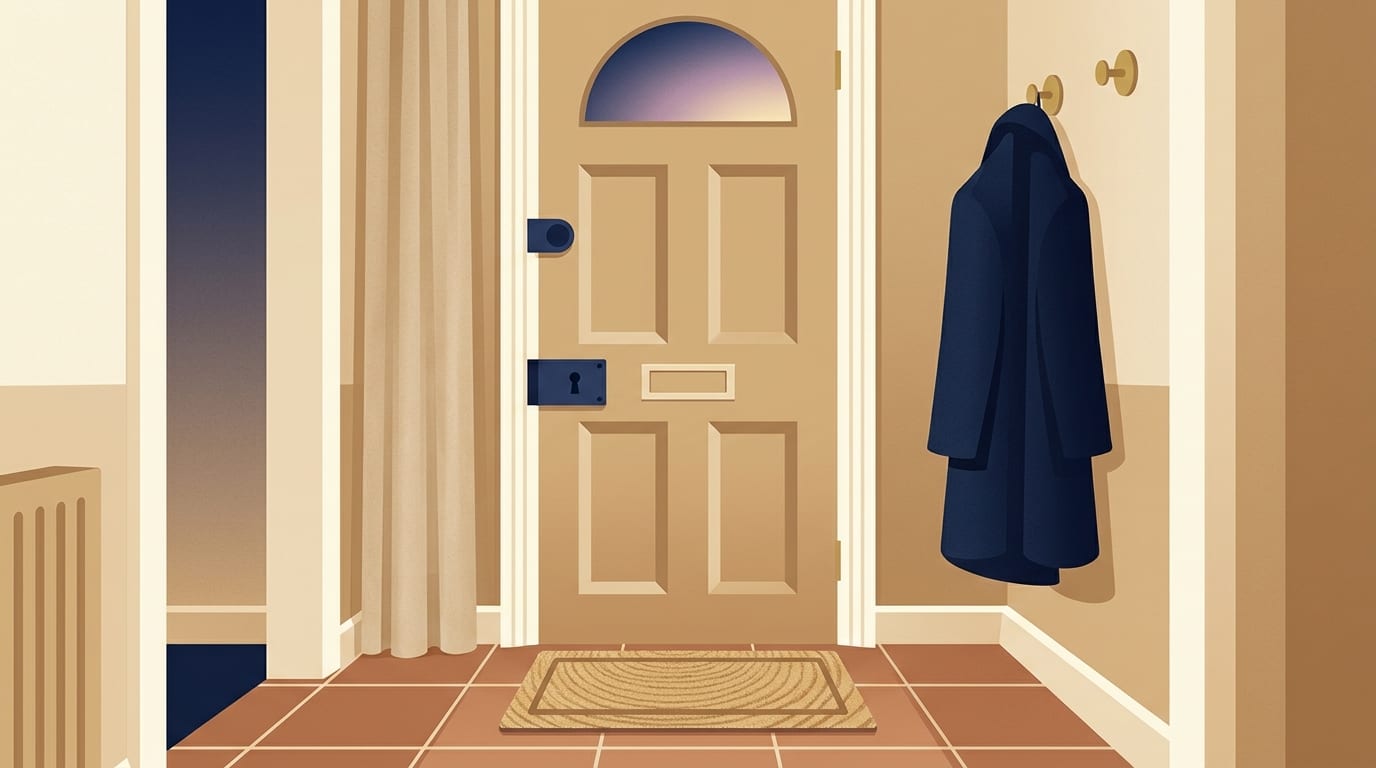
A thumb turn is simply the small knob or lever fitted on the inside of a door that works the lock bolt. When you twist it, the door unlocks. You do not need to find a key or put it into the lock to get out of the house. From the outside, the door looks and works exactly like any other locked door, and you still need your normal key to get in.
You will most often see them as a thumb turn cylinder. This is a specific type of euro cylinder, which is the barrel on uPVC and composite doors. Instead of having a keyhole on both ends, it has a keyhole outside and a permanent turning knob inside. Other lock types fitted to timber doors can also have an inside turn, so ask a locksmith what suits your door. Whatever the lock, the point of a thumb turn is that you can unlock the door from inside without a key.
You might also find thumb turns on a night latch or rim lock, which is the surface latch often called a Yale lock. The outside of this lock uses a rim cylinder for the key, while the inside has a built-in turning handle. If you have several doors, locks can be keyed alike, meaning one single key opens all of them from the outside.
Auto locksmiths are a separate specialism covering vehicle entry, key cutting, transponder and remote programming, but a domestic locksmith fits thumb turns to residential doors. A standard lock change or upgrade usually takes well under an hour. Because the mechanism is straightforward, a locksmith can often swap a standard cylinder for a thumb turn cylinder without changing the rest of the door hardware.
Why a way out without a key matters in a fire
When a fire starts in a home, thick smoke and panic make it incredibly difficult to find a key. If the front door is locked and the key has been moved, the occupants are trapped. This risk is why fire safety professionals want you to have a clear, keyless way out of your property.
The security industry recognises this problem. According to the MLA Guidelines for minimum security requirements for domestic property (Edition 19, 1 January 2025), insurers and specifiers should be mindful of the possible conflict between occupier safety and security when the property is occupied. A lock that keeps burglars out can also keep residents in.
The guidelines state that careful thought must be given to the means of escape in a fire before specifying that locks be engaged and keys removed before retiring for the night. If a door is deadlocked and the key is taken upstairs, anyone trying to flee downstairs will be unable to open the door.
A thumb turn removes this delay entirely. Because the turning mechanism is permanently attached to the lock, it cannot be lost, misplaced or taken by another member of the household. Anyone who reaches the door can open it immediately. If you are unsure whether your property needs this type of exit, the MLA advises that you consult any interested insurer and your local Fire Prevention Officer.
What fire and rescue and RICS advice says
Fire and rescue services and property professionals give clear advice on locked doors. The Royal Institution of Chartered Surveyors (RICS) publishes a fire safety guide for homeowners, occupiers and residents, dated 25 April 2025. This RICS guidance states that locked external doors should have a thumb turn or the key left inside the lock or nearby.
This ensures the door can be opened easily in an emergency. The RICS guide also notes that window keys should be easily accessible. The Greater Manchester Fire and Rescue Service offers similar practical advice on their flat escape plan page, warning against keeping keys in the kitchen as this is where most fires in the home start.
To keep your household safe, the Greater Manchester Fire and Rescue Service and RICS advice includes the following:
- Keep door and window keys accessible at all times.
- Avoid keeping keys in the kitchen.
- Ensure everyone in the flat knows where the keys are kept.
- Choose a second escape route if your property has one.
- Close the front door of a flat or maisonette when evacuating, which helps stop fire reaching shared areas.
A thumb turn reduces the problem of keys that cannot be found. The door no longer depends on a key kept in the right place, as the way out is part of the lock. Window keys and a second escape route still matter, as the RICS and fire and rescue advice above says.
Which standard to look for on a front door
Lock standards tell you exactly what a lock has been tested to withstand and how it operates. For a traditional key-operated lock on a timber door, the standard is BS 3621. This means it is operated by a key from both sides. For a thumb turn lock, the standard you need is BS 8621.
The table below shows the two main British Standards for domestic front doors and how they differ.
|
British Standard |
How it operates from the inside |
Main use |
|---|---|---|
|
BS 3621 |
Key required to lock and unlock |
Standard timber front doors |
|
BS 8621 |
Handle or thumb turn without a key |
Emergency exits and flats |
This table compares the two primary lock standards for domestic doors. Ask a locksmith which standard suits your door before any work starts.
The MLA Guidelines (Edition 19, 1 January 2025) state that where there is a requirement for a means of escape from fire from the inside without a key, while keeping security from the outside, lock assemblies to BS 8621:2017+A1:2024 should be installed. These locks are operated by a key from the outside and by a handle or thumb turn from the inside. Certifying to BS 8621 commenced in April 2005.
Where BS 8621 locks are fitted, egress is facilitated by the thumb turn. If your external doors are used as an emergency exit, they should have a lock that can be opened from the inside without a key when the property is occupied. A BS 3621 lock has the British Standard Kitemark engraved on the faceplate.
It is vital to check your home insurance policy wording before changing your lock type. Where a lock not certified to BS 3621 is used, the end user should get the insurer acceptance in writing. Any acceptance by an insurer regarding a thumb turn should always be confirmed in writing. You can read more about types of front door lock to understand the options for different materials.
Thumb turns on flats and shared buildings
If you live in a block of flats or a multi-occupancy building, the entrance door to your flat can be the only means of escape in a fire, so the lock matters even more.
The MLA Guidelines say that where the flat entrance door is the only means of escape, Escape Locks are acceptable. These are locks that can be opened from the inside by a single action without a key, but keep their security from the outside as described in BS 8621. The MLA states these are acceptable to insurers subject to written confirmation, and this type of lock will normally meet the requirements of the Building Regulations.
For the main shared entrances, the Police Crime Prevention Handbook (Secured by Design, January 2026 edition) states that communal doors should fail safe open in the event of a fire. They should also be fitted with a manual override, such as an internal thumb turn or a push to exit button.
The GOV.UK fire door guidance for the Fire Safety (England) Regulations 2022, updated 8 August 2025, applies to England only. It says routine checks apply where the top storey is more than 11 metres above ground level. Under these rules, the Responsible Person must use best endeavours to check all flat entrance fire doors at least every 12 months, and communal fire doors at least every 3 months. Each should have an effective self-closing device, though the guidance contains no statement on locking or thumb turn devices.
Security trade offs and keeping the key safe
Choosing a thumb turn means thinking about safety and security together, which is the conflict the MLA describes. A thumb turn that can be reached from outside the door is a weakness, so where the door and any glass near it sit matters, and a locksmith can advise on your door.
To manage this risk, the MLA Guidelines state that keys should be kept within easy reach of the occupant, but out of reach of an intruder. If you rely on a key kept near the door instead of a thumb turn, the same wording applies. No lock is completely burglar-proof, and a locksmith can tell you whether the turning mechanism on your door can be reached from outside.
When you lock up at night, the Police handbook advises that you always double lock uPVC and multipoint locking doors. This means you must lift the handle to engage the hooks, then turn and remove the key to lock the mechanism in place. Lifting the handle alone does not double lock the door.
Thumb turn cylinders and other places they are used
Thumb turn cylinders are euro cylinders, the barrels that fit into a multipoint locking mechanism, which is the long strip of hooks and bolts worked by lifting the door handle. The central part of that mechanism is called the gearbox.
According to the MLA door lock types guide, for multipoint locks in flats and multi-occupancy properties, a thumb turn cylinder must be fitted for easy egress in case of emergency. A locksmith can often fit a thumb turn cylinder in place of a standard euro cylinder without replacing the entire multipoint strip.
If you are fitting a new cylinder, you must ensure it has adequate protection against lock snapping. The snap-resistant standards to look for are TS007 three star, or a one-star cylinder paired with two-star handles. Sold Secure SS312 Diamond is another snap-resistant standard.
You might also see thumb turns used on internal doors, particularly on bathrooms or home offices, where privacy is needed but a key is unnecessary. You can read more about internal door locks and which type suits each room if you are updating doors inside the house.
Common questions
Does a thumb turn lock affect my home insurance?
It can affect your insurance if your policy asks for a particular lock. The MLA says escape locks to BS 8621 are acceptable to insurers in flats subject to written confirmation, and that where a lock not certified to BS 3621 is used you should get the insurer's acceptance in writing. Check your policy wording first.
Are thumb turn locks secure against burglars?
Security depends on the lock and how it is fitted. A euro cylinder should have a snap-resistant rating, and no lock is burglar-proof. The turning knob should not be reachable from outside, which a locksmith can check.
Can a landlord or tenant change to a thumb turn lock?
Tenants should check their tenancy agreement and get the landlord agreement before changing locks. For rented homes, a landlord who changes the locks to keep a tenant out without a court order commits illegal eviction, a criminal offence. Always point disputes to Citizens Advice or Shelter for your own situation.
What is the difference between BS 3621 and BS 8621?
BS 3621 is the British Standard for locks operated by a key from both the inside and the outside. BS 8621 is the standard for locks that require a key from the outside, but can be opened from the inside using a handle or thumb turn without needing a key.
Will I be charged a call-out fee to fit one?
Many locksmiths charge no separate call-out fee, but some do, and VAT may or may not be included, so you must ask. Jobs are usually priced as labour plus parts, either by the hour or as a fixed price per job. Price is driven by the time of day, as evenings, nights, weekends and bank holidays cost more, alongside your location and the security grade of the lock.
What to do next
If you are ready to upgrade your front door for better fire safety, taking the right steps helps you get the job done well. There is no government licensing of locksmiths in the UK, meaning anyone can trade as one. The Master Locksmiths Association (MLA) is the main trade association. Its approved companies are vetted, have criminal record (DBS) checks, employ locksmiths who have passed the MLA exam and are inspected regularly. This is a voluntary approval scheme, not a licence, but it helps you find a vetted professional.
Follow this checklist when arranging the work:
- Check your home insurance policy wording to see what lock standards are required for your doors.
- Contact your insurer to get written confirmation that they accept a thumb turn lock to BS 8621.
- Ask the locksmith for a total price before work starts, including parts, VAT, and any out-of-hours charges.
- Ask what standard the new lock meets, ensuring euro cylinders are TS007 three-star or Sold Secure SS312 Diamond.
- Check the business has a real local address, reviews over time, and ask for ID on arrival.
- If the locksmith claims MLA approval, check this on the MLA own website.
- Ask for a written invoice showing the company name and address once the job is finished.
Watch out for these warning signs of a rogue operator:
- National call centres advertising as a local locksmith and passing the job to whoever is nearest.
- A very low price quoted on the phone that multiplies on the doorstep.
- Refusing to give a total price before starting the work.
- Drilling a lock that could have been opened without damage.
- Replacing a whole multipoint mechanism when only the cylinder or gearbox had failed.
- Fitting cheap cylinders at premium prices.
- Demanding cash only with no invoice, company name or address.
- Arriving with no ID and an unmarked vehicle.
Under the Consumer Rights Act 2015, a service must be carried out with reasonable care and skill, at a reasonable price if none was agreed, and within a reasonable time, with a right to have poor work put right or money back. Under the Consumer Contracts Regulations 2013, there is normally a 14-day cancellation period for work arranged at home or by phone. This does not apply where the customer specifically asked for a visit for urgent repairs, although extra work sold during that visit is not covered by the exception. If you are locked out and need a locksmith to get you in before fitting the new lock, ask how entry will be gained. Ask whether non-destructive entry is possible, which means opening the lock without drilling it. If a door has been severely damaged in a break-in, they may also offer boarding up to secure the property.
Most single lock changes take well under an hour and can easily wait until normal working hours to avoid expensive evening or weekend rates. When you are ready to get quotes from vetted professionals in your area, find a locksmith near you to discuss fitting a secure thumb turn lock.
Find a top rated locksmith near you
1,831 locksmiths across the UK, each ranked on their Google rating and the number of reviews behind it. Start with your county: