
Patio Door Locks and How to Make Sliding Doors Secure
TopRatedLocksmiths.co.uk · 6 October 2026
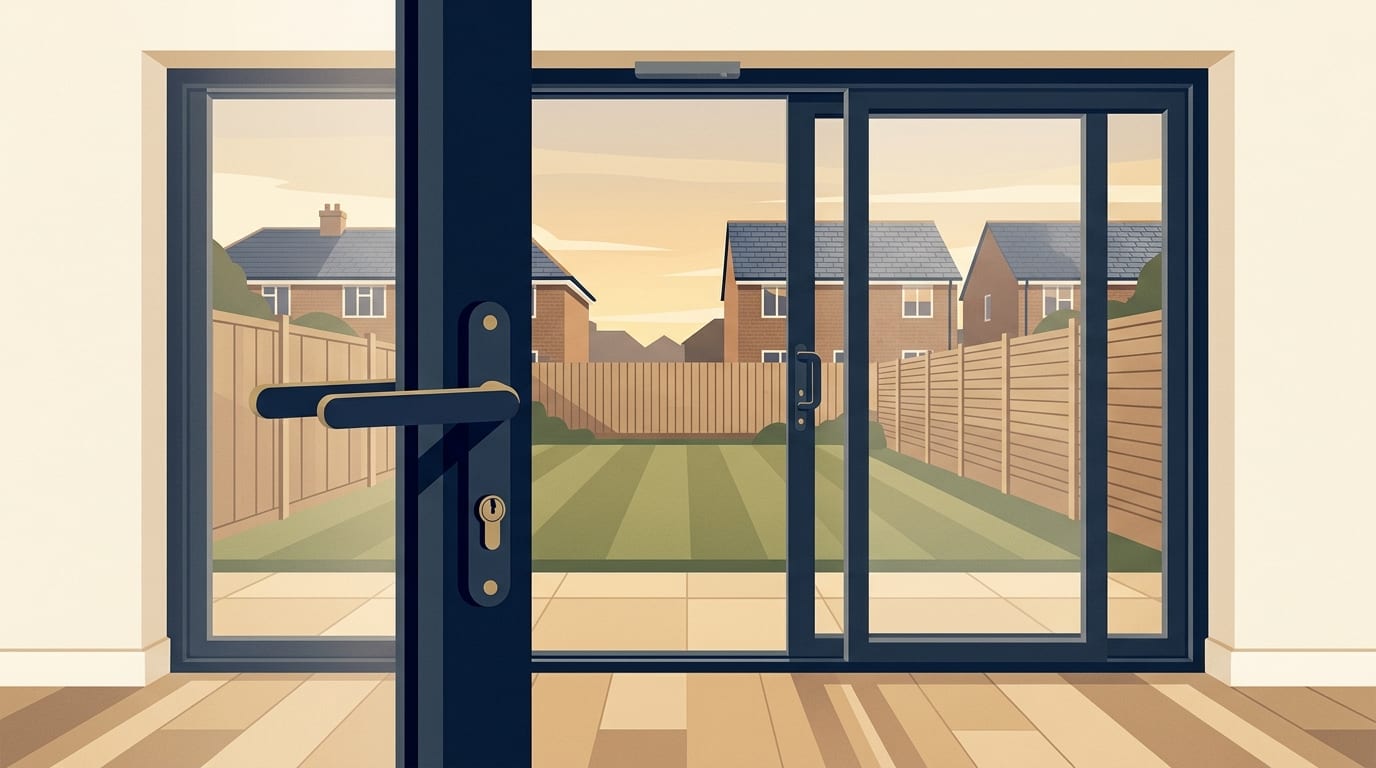
Patio doors usually lock using either a multipoint mechanism or a central hook lock, most often operated by a euro cylinder. If your patio door lock is stiff, floppy or completely broken, a locksmith can typically fix the problem by adjusting the door alignment or replacing the central gearbox without you needing to buy a whole new door.
How patio door locks work
Many patio doors, and most hinged uPVC ones, use a multipoint locking mechanism. This is the metal strip of hooks and bolts that runs down the edge of the door. You operate it by lifting the door handle, which pushes the hooks outwards and into their matching holes in the door frame. The central part of this mechanism directly behind the handle is called the gearbox.
Once the door handle is lifted, you turn the key in the euro cylinder to lock the mechanism in place. The euro cylinder is the barrel where you insert your key, commonly found on uPVC and composite doors. If the handle feels stiff or the key will not turn, the fault usually lies in the euro cylinder, the gearbox or the alignment of the door.
Sliding doors and French doors lock differently
Sliding doors and hinged French doors have different weak points and use different locking systems. A sliding patio door is usually secured by a single hook lock or a multipoint mechanism. Where a multipoint lock is used, the MLA guidelines look for at least three locking points, using hook bolts or shoot bolts into the head and sill of the frame, all locked by one turn of the key. Sliding doors also have an interlock, which is the vertical point where the sliding panel overlaps the fixed panel when the door is closed.
French doors are double hinged doors and they secure differently. The first closing leaf is the door that you shut first and usually keep bolted in place. This door should have two key operated rim or mortice security bolts, or two flush bolts concealed in the edge of the door. The MLA guidelines give a minimum throw of 14mm for these bolts, which is how far each bolt reaches out of the door.
The second closing leaf is the door you use every day to go in and out. This door carries the main multipoint locking mechanism. When you close the second leaf against the first, the hooks and bolts from the multipoint lock reach into the first leaf to hold everything together. If the flush bolts on the first leaf are weak or not used, the main lock on the second leaf has nothing solid to grip.
Common patio door lock problems
A patio door lock is used heavily and exposed to the weather all year round. Over time the moving parts wear down or the heavy glass door shifts slightly in its frame. When a patio door lock stops working, the fault usually falls into one of three areas:
- A key that will not turn because the internal pins in the euro cylinder are worn out or filled with dirt.
- A stiff handle, which often means the door has dropped out of line, or a floppy handle, which usually points to a worn handle or a failed gearbox.
- Locking hooks that do not line up with the keeps in the frame because the door hinges have dropped or the bottom rollers are worn.
The keeps are the metal slots in the frame that the locking hooks slide into. On a hinged uPVC door, misalignment happens because the heavy door slowly drops on its hinges over time. On a sliding door, the rollers underneath the sliding panel can wear flat, causing the panel to sit lower than it should. When the door drops, the locking hooks hit the solid metal frame instead of sliding smoothly into their slots.
When the patio door will not lock
If your patio door will not lock, do not force the handle upwards or force the key to turn. Pushing too hard can snap the key inside the barrel or break the internal metal parts of the multipoint gearbox. What starts as a minor alignment issue can quickly turn into a more expensive repair if the metal parts snap.
A locksmith will first check whether the problem is the lock itself or the way the door sits in the frame. If the door has dropped, adjusting the hinges or replacing the worn rollers on a sliding door will often fix the problem. This adjustment lifts the door and brings the hooks back into line with the keeps.
If the door is aligned perfectly but the lock still fails, the locksmith will test the cylinder and the gearbox. A worn euro cylinder is a fast and simple part to change. If the handle spins or droops without moving the hooks, the gearbox has failed. A locksmith can usually supply and fit a replacement gearbox without having to replace the entire full length multipoint strip. You can read more about dealing with stubborn handles in our guide to uPVC door lock problems.
Why sliding doors need anti lift protection
Sliding doors sit on runners inside a track. Without an anti-lift device, a sliding panel can be lifted off its runners. The Master Locksmiths Association minimum security guidelines state that all sliding doors and windows should be fitted with anti-lift devices to prevent them being removed from their tracks.
Some sliding door locks have a built in anti-lift feature. For example, they might use swing hook bolts that rotate upwards to engage with the frame, which is designed to stop the door being lifted while it is locked.
If your sliding door does not have this feature built in, a locksmith can fit separate anti-lift devices. These are small blocks or brackets fixed into the top track directly above the sliding door. When the door is closed, the blocks fill the empty space in the upper track, so the panel cannot easily be lifted off its runners.
Extra locks a locksmith can fit
The MLA guidelines say a sliding door should have anti-lift devices plus one of these:
- The main lock plus key operated patio door locks or security bolts, with a minimum 9mm throw, at the bottom of the interlock and, if practical, at the top. A patio bar is the alternative.
- A hook lock certified to BS3621 or BS8621, shown by a Kitemark on the faceplate.
- A multipoint lock with at least three locking points using hook bolts or shoot bolts, all locked by one turn of the key.
A locksmith can check which of these your door already has and fit what is missing.
For both sliding and French doors, the euro cylinder should meet the anti-snap standards. Lock snapping affects euro cylinders on uPVC, composite, aluminium and wooden doors, and the MLA points to a Sold Secure SS312 Diamond cylinder, a TS007 three star Kitemarked cylinder, or a one-star cylinder with two-star handles, with the cylinder sticking out no more than 3mm from the handle. Our guide to anti-snap locks explains what these ratings mean.
Repair the lock or replace it
When a patio door lock stops working, you rarely need a completely new door. Most faults can be fixed by repairing or replacing individual parts. If the door is hard to lock because the latch is sticking or the hinges have dropped, a locksmith can carry out a minor adjustment. This realigns the door and stops the internal parts rubbing against the frame.
If the lock is stiff because the internal pins in the euro cylinder are worn, the cylinder must be replaced. The MLA price guide lists a patio door lock from £13 without labour and a fitted patio door cylinder replacement from £116. If you decide to change the cylinder, it is the perfect time to upgrade to a three-star anti-snap model to improve your home security.
When the multipoint mechanism itself is broken, the locksmith will check if the central gearbox can be unbolted from the long metal strip. Replacing just the gearbox is cheaper than replacing the whole multipoint locking system. If the entire strip is rusted, bent or discontinued, the locksmith will fit a complete new multipoint mechanism. If you are also having trouble with the locks on your outbuildings, our guide to garage door lock replacement explains similar repair options.
What patio door lock work costs
Locksmith jobs are usually priced as labour plus parts. You might be charged a fixed price for the whole job or an hourly labour rate. Standard hourly labour starts from £85, but this rises to £105 or more per hour after 8pm. Most single lock changes take well under an hour.
Prices are driven by the time of day, the type of lock, the security grade of the parts and where you live. London and the South East cost more than other parts of the UK. Evenings, nights, weekends and bank holidays usually cost more.
This table shows typical published prices for patio door lock work in 2026.
|
Type of patio door work |
Typical UK price |
London and South East price |
|---|---|---|
|
Minor adjustment or sticking latch |
£70 to £110 |
£90 to £140 |
|
Window or patio lock that is stiff or misaligned |
£70 to £130 |
Not given separately |
|
Patio door lock repair |
From £85 |
Higher local rates apply |
|
Cylinder or handle replacement |
£90 to £150 |
£120 to £180 |
|
Patio door lock (cylinder) replacement |
From £116 |
Higher local rates apply |
|
Anti snap euro cylinder fitted |
From £137 |
Higher local rates apply |
These are typical published prices for 2026 and your local quotes will differ. The figures include a mix of estimates for parts and labour. Many locksmiths do not charge a separate call-out fee but some do, and VAT may or may not be included in the price they quote on the phone. You must ask the locksmith to confirm the total price including parts, labour and VAT before they travel to your home. You can check the latest average charges on the Master Locksmiths Association price guide.
Using patio door locks properly every day
How you use your patio door lock affects both your security and how long the internal parts will last. You must always double-lock uPVC and multipoint locking doors. This means you lift the handle to engage the hooks, turn the key to lock the mechanism, and then remove the key from the barrel. If your multipoint locking system does not lock properly, your insurance may not cover your losses after a break-in.
Many sliding doors have a ventilation position that allows the door to be locked while slightly open to let fresh air in. You should never leave a sliding door secured in the ventilation position when your home is unoccupied.
Fire safety is just as important as security. The government's Fire Kills campaign advises keeping door and window keys in a safe but accessible place near the exit. You should never leave keys inside the locks where they could fall out or be hard to find in the dark. Make sure everyone in the house knows exactly where the patio door keys are kept so you can unlock the door and get out quickly in an emergency.
Common questions
How do you fix a sliding patio door that will not lock?
If a sliding patio door will not lock, the first step is to check the alignment. The rollers beneath the door can wear down, causing the door to drop and the locking hooks to miss their slots in the frame. A locksmith can replace the worn rollers or adjust the lock keeps. If the door is aligned correctly but the key will not turn, the euro cylinder or the multipoint gearbox usually needs replacing.
Can a locksmith open a locked patio door without damage?
Often, yes. A trained locksmith will usually try non-destructive entry first, which means picking or bypassing the lock rather than drilling it, but not every lock can be opened that way. Most lockouts take well under an hour. You should always ask a locksmith on the phone how they plan to gain entry and whether drilling is likely, as drilling destroys the lock and adds the cost of a replacement cylinder to your final bill.
How much does a new patio door key cost?
If you just need a spare key for an existing patio door lock, key cutting is very affordable. A patio door key costs from £5.80 and is normally cut in under five minutes. You can take your existing key to a local locksmith shop to have copies made while you wait.
What is a multipoint lock on a patio door?
A multipoint locking mechanism is a metal strip running down the edge of the door that secures the door at three or more points. It uses hook bolts or shoot bolts that reach into the top and bottom of the frame. You operate all the locking points at the same time by lifting the door handle and then securing them with one turn of the key.
Can a landlord change the patio door locks?
A landlord who changes the locks to keep a tenant out without a court order commits illegal eviction, which is a criminal offence. Tenants should check their tenancy agreement and get the landlord's agreement before changing locks themselves. If you are involved in a tenancy dispute over locks, you should contact Citizens Advice or Shelter for guidance on your specific situation.
Next steps
There is no government licensing of locksmiths in the UK, which means anyone can trade as one. The Master Locksmiths Association runs a voluntary approval scheme where companies are vetted, have criminal record checks, employ locksmiths who have passed an exam and are inspected regularly. Because the trade is unregulated, vetting the person you hire is essential to avoid being overcharged or having your locks damaged unnecessarily.
Before you hire a locksmith to repair or upgrade your patio door lock, run through this checklist:
- Ask for a total price before work starts, including the parts, the labour, any out-of-hours charge and the VAT.
- Check whether the business has a real local address and a history of customer reviews over time.
- Ask how they will gain entry if you are locked out, and confirm they will try non-destructive methods before drilling.
- Ask what standard the new euro cylinder will meet, ensuring it is a three-star or Diamond rated anti-snap lock.
- Check any claims of Master Locksmiths Association approval by searching for the firm on the association's own website.
- Ask to see identification when they arrive.
- Request a written invoice once the job is finished.
Under the Consumer Rights Act 2015, any lock repair or replacement must be carried out with reasonable care and skill, at a reasonable price if no fixed price was agreed, and within a reasonable time. If you arranged the work at home or by phone, the Consumer Contracts Regulations 2013 normally give you a 14-day cancellation period, though this does not apply if you specifically asked for a visit for urgent repairs, and extra work sold to you during that visit is still covered. If your patio door is jammed shut or will not lock at night, you can find a locksmith near you to secure your home.
Related Guides
Window Restrictors and How They Keep Children Safe
What window restrictors do, which windows need them, how far a window should open, how to keep a fire escape route and what landlords should know.
Garden Gate Locks and How to Secure a Side Gate
Why the side gate matters, the main types of garden gate lock, how to make a gate hard to climb, the planning height limits and what to ask a locksmith.
Sash Window Locks and How to Make Sash Windows Secure
How sash windows are locked, why the central catch is not enough, how many locks each window needs, how sash stops work and what to know in a listed home.