
Garage Door Lock Replacement and Security Options
TopRatedLocksmiths.co.uk · 6 October 2026
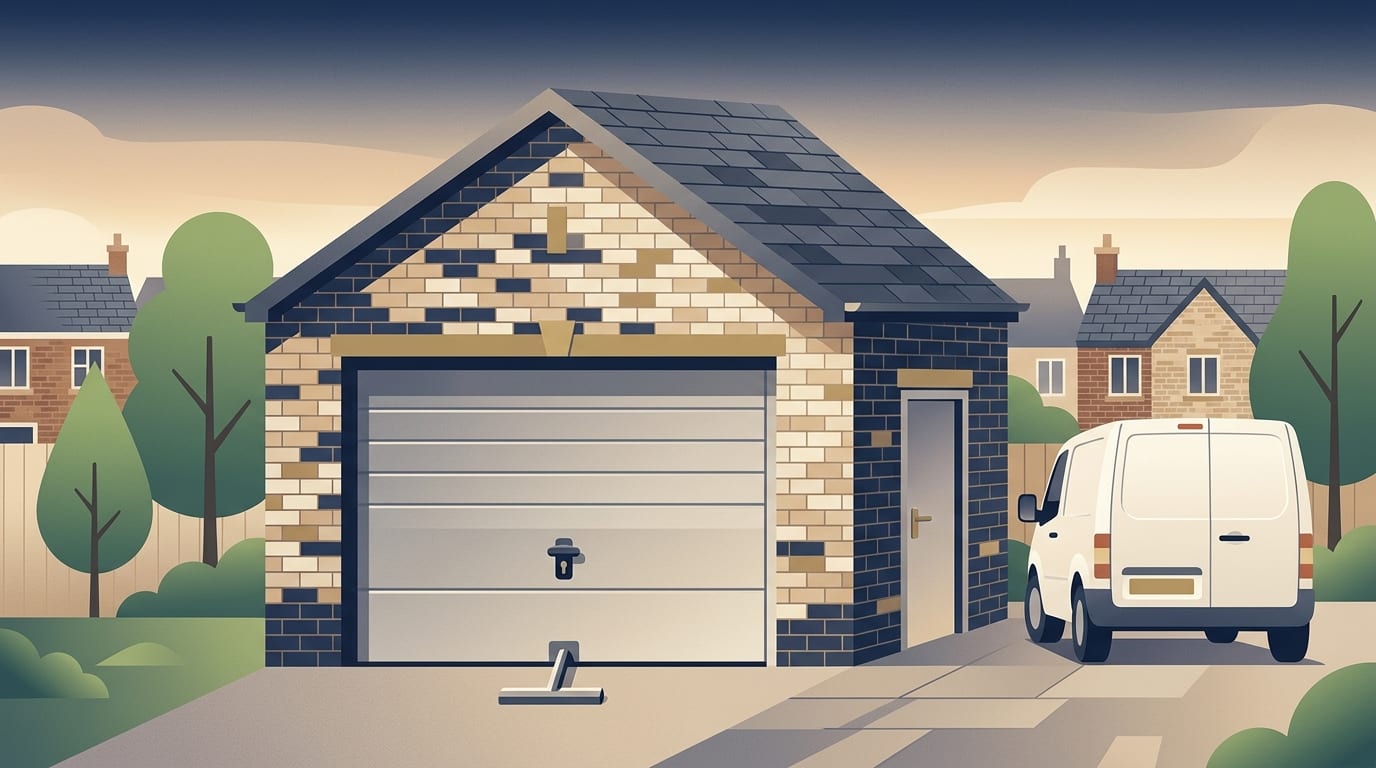
Replacing a garage door lock usually costs from £100 including labour, while a simple repair starts from £69. Most up and over doors use a central handle lock that controls latches at the edges, and a professional can usually swap the barrel or the whole handle in well under an hour. Because parts vary widely by manufacturer, your locksmith will often ask for the make of the door or a photograph before they arrive.
Why garage security is worth thinking about
Garages are often the weakest point of a property. They frequently hold expensive power tools, bicycles, gardening equipment and sporting gear that are easy for an intruder to sell. Police Secured by Design guidance describes garage doors as vulnerable and suggests adding extra security to them.
If your garage is attached to your home, a compromised main garage door presents a much larger risk. Someone who gets into the garage can reach the door into your house out of sight of the street, so the main garage door and the door from the garage into the house both matter.
Check whether your home insurance covers the garage and the things stored in it, and whether the policy sets any conditions about locks. Secured by Design advises making sure your contents insurance covers items kept in a garage, shed or outbuilding.
How garage door locks work
Most traditional up and over garage doors are secured by a central handle lock located in the middle of the door panel. When you turn the key, it unlocks the handle so it can be twisted. Turning the handle pulls on cables or solid metal rods hidden inside the back of the door. These cables pull the latches out of the frame at the top corners or sides of the door, allowing the whole panel to swing outward and up.
The lock itself is usually a simple cylinder built directly into the handle assembly. Some up and over doors take a euro cylinder, the same type of barrel used on uPVC and composite doors, while many use a lock made for that make of door. If yours takes a euro cylinder, ask the locksmith what security standard the replacement meets.
On older doors, the lock might be a proprietary shape that means the whole handle unit has to be replaced as one piece if the key stops working. Roller garage doors and sectional garage doors work entirely differently and vary heavily by make. Manual roller doors often have a lock built into the bottom slat or the side guide rails. Powered electric doors usually rely on the motor itself to hold the door shut, acting as a permanent brake when the power is on, though some have a manual override lock fitted to the outside.
Common garage door lock problems
A garage door lock lives outside and takes a huge amount of punishment from rain, frost and dirt. Because garages are often unheated, condensation can also build up on the inside of the mechanism. If your garage door has been damaged in a break-in, a locksmith can offer a boarding up service to secure the property while you wait for a replacement door.
- If the key will not turn, the cylinder might be seized with dirt or rust, or the internal pins may have worn down.
- When the handle turns but the door stays latched, the central lock is working but a cable or rod inside the door has snapped or detached.
- A door that catches on one side is often a sign that one of the internal cables has stretched or broken, leaving one latch permanently engaged in the frame.
- If the door will not latch shut, the latches are stuck open or the locking bars have bent and no longer line up with the holes in the frame.
- If you have lost your keys and have no spare, a locksmith can usually use non-destructive entry methods, such as picking or bypassing the lock, to open the door without drilling it.
Many of these faults only need a repair rather than a replacement. You should leave broken cables, stretched springs and powered door mechanisms to a professional. The tension involved in garage door springs is immense and can cause serious injury if released incorrectly.
Replacing the lock on an up and over door
When you need a garage door lock replacement, the exact part required depends entirely on the make, model and age of your door. Some manufacturers sell replacement cylinders that slot straight into the existing handle. Others only sell complete handle assemblies, meaning the whole unit on the front of the door has to be swapped.
A locksmith will normally ask you for the brand name printed on the front of the door or on the handle itself. If there is no name visible, they will usually ask you to send a clear photograph of the lock. This saves time and means they bring the correct replacement part on their first visit, rather than having to order it and return another day.
Changing the lock on an up and over garage door is usually a fast job for a professional, who will swap the cylinder or the whole handle unit and test the latches before leaving. If the problem is just a snapped cable, they will replace the wire and adjust the tension so both sides latch smoothly at the same time.
Roller doors and side doors
Manual roller garage doors often use a central locking mechanism built into the bottom rail. When you turn the key, flat metal bars shoot out into the side tracks to secure the door. If this mechanism fails or you lose the key, a locksmith can usually replace the lock, but parts vary by make, so expect to be asked for the make or a photo.
If your garage has a pedestrian side door, you should treat it exactly like any other external door on your property. The Master Locksmiths Association guidelines recommend fitting outward opening pedestrian doors with hinge bolts or security hinges to stop them being lifted off their pins.
The lock on a pedestrian side door should be certified to BS 3621, BS 8621 or BS 10621, or an alternative standard approved by your insurer. You could also secure it using a multipoint locking mechanism, where a central gearbox operates at least three locking points along the edge of the door. Another option is a heavy duty padbar bolted securely to the door and frame, fitted with a padlock and fittings certified to EN 12320 Grade 3. A doorset that is certified to PAS 24 is also an acceptable standard for a side door.
Extra security for the main garage door
Up and over doors are often held only by the handle lock and its side latches. You can make them more secure by adding extra hardware.
The Master Locksmiths Association advises that work on improving the security of up and over doors should be undertaken by professionals who have experience in this type of work. Security locking products are readily available for this type of door, and the advice of an MLA member should be obtained before starting. The police Secured by Design handbook suggests several ways to improve your garage door security.
- Padlocks and hasps fitted near the bottom corners of the door, which give it more locking points.
- Floor mounted locking T bars, fixed into the floor just in front of the door, which lock against the bottom of it to help hold it shut.
- Garage door defenders, which work in a similar way and lock onto a steel plate fixed in the floor.
Securing the door between the garage and the house
If your garage is attached to your home, the interconnecting door between the garage and the living space is a major security risk. Because it is inside the building, it is easy to treat it as an internal door and fit it with a light lock.
This door should be solid and robust. It should be secured with an accredited BS3621 British Standard mortice deadlock or sashlock fitted inside the timber door. A BS3621 mortice lock has at least 5 levers, anti-pick features, hardened steel plates to protect against drilling, and a bolt throw of at least 20mm. It clearly shows the Kitemark and BS3621 stamped on the metal faceplate.
Some internal doors are also fitted with a night latch or rim lock, which uses a rim cylinder on the outside. This should be in addition to the mortice lock, not instead of it. You should also fit additional security to this door, such as hinge bolts and Birmingham bars to strengthen the frame against kicking.
For new dwellings in England, Approved Document Q of the Building Regulations sets strict rules, which have been in force since 1 October 2015. It states that if a garage has no interconnecting door into the dwelling, the garage doors need not be secure doorsets. However, where the dwelling can be reached through an interconnecting door from the garage, either the garage doors or the interconnecting door itself must be a secure doorset.
What garage door lock work costs
Locksmiths usually price garage door work as labour plus parts. Depending on the company, you might be charged a fixed price for the whole job, or an hourly rate plus the cost of the replacement handle or cylinder. You must ask if VAT is included in the quote, and whether they charge a separate call-out fee just for turning up.
If your lock works fine but you just need a spare key, garage keys are cheap and fast to copy. A garage door key costs from £5.50 and is normally cut in under 5 minutes. If you have multiple garage doors or a side door, a locksmith can often supply cylinders that are keyed alike, meaning one single key will open all of them.
For repairs and lock changes, labour rates depend heavily on where you live and what time of day you call. Standard daytime labour starts from £85 an hour in most parts of the UK and from £95 an hour in London. If you need someone to come out in the evening, at night, or on a bank holiday, the price is driven up significantly. Most single lock changes and lockouts take well under an hour to complete.
This table shows typical starting prices for garage door lock work.
|
Type of work |
Typical starting price |
|---|---|
|
Garage door lock replacement (including labour) |
From £100 |
|
Garage door lock repair |
From £69 |
|
Garage door lock part only (no labour) |
From £19 |
|
Standard hourly labour (daytime) |
From £85 |
|
Out-of-hours labour (after 8pm) |
From £105 |
These figures are typical published prices for 2026 from the Master Locksmiths Association price guide, and local quotes will differ based on your exact location and the specific part required for your door.
Common questions
How do you change a lock on a garage door?
The right part depends on the make of the door, so a locksmith will usually ask for the make or a photo of the handle first, then swap the cylinder or the whole handle unit and check that both latches engage. Springs, cables and powered mechanisms should be left to a professional. Our guide on when to change door locks covers the times a lock change is worth doing.
Can you fit a smart lock to a garage door?
You cannot easily fit a smart lock to a manual up and over garage door handle. If you have a powered electric garage door, the motor itself acts as the lock and can often be linked to a smart home system. For a pedestrian side door, you can use the same smart locks you would fit to a regular front door.
What is a garage door security lock?
A garage door security lock usually means extra hardware added to the door to stop it being forced open. This includes heavy duty padlocks on the bottom corners, or floor mounted locking T bars that physically block the door from moving outwards. These are entirely separate from the main central handle lock.
How much does a replacement garage door lock mechanism cost?
The cost of the lock part itself starts from £19, depending on the exact make and model of your door. If you hire a professional to supply and fit it, the total cost normally starts from £100 including standard daytime labour and the replacement part.
Who to call and what to ask
When you need to hire a locksmith to repair or replace your garage door lock, you must be careful who you choose. National call centres often advertise as local locksmiths, quote a very low price on the phone, and pass the job to whoever is nearest. The price then multiplies on the doorstep, and they may insist on drilling a lock that could have been opened without damage. Follow these steps to make sure you get a fair deal.
- Check the make of your garage door and take a photograph of the handle before you call.
- Ask for a total price before work starts, including parts, labour, VAT and any out-of-hours charge.
- Ask how entry will be gained if you are locked out, and whether drilling is likely.
- Check the business has a real local address and read their reviews over time.
- Ask to see their identification when they arrive and check for an unmarked vehicle.
- Ask for a written invoice that clearly shows the company name and address.
There is no government licensing of locksmiths in the UK, which means anyone can trade as one. This is why vetting matters. The Master Locksmiths Association is the main trade association and runs a voluntary approval scheme. Its approved companies are vetted, have criminal record checks, employ locksmiths who have passed the MLA exam and are inspected regularly. You can check any MLA approval claim on the MLA's own site.
Under the Consumer Rights Act 2015, a service must be carried out with reasonable care and skill, at a reasonable price if none was agreed, and within a reasonable time. You have a right to have poor work put right or get your money back. Under the Consumer Contracts Regulations 2013, there is normally a 14-day cancellation period for work arranged at home or by phone, but this does not apply where you specifically asked for a visit for urgent repairs. Extra work sold during that visit is not covered by the exception.
If your garage door is secure and the job can wait, always book the work during normal working hours to avoid paying premium night or weekend rates. When you are ready to secure your garage, you can find a locksmith near you to get a firm quote and get the job done properly.
Related Guides
Window Restrictors and How They Keep Children Safe
What window restrictors do, which windows need them, how far a window should open, how to keep a fire escape route and what landlords should know.
Garden Gate Locks and How to Secure a Side Gate
Why the side gate matters, the main types of garden gate lock, how to make a gate hard to climb, the planning height limits and what to ask a locksmith.
Sash Window Locks and How to Make Sash Windows Secure
How sash windows are locked, why the central catch is not enough, how many locks each window needs, how sash stops work and what to know in a listed home.