
Police Approved Key Safes and Where to Fit One
TopRatedLocksmiths.co.uk · 6 October 2026
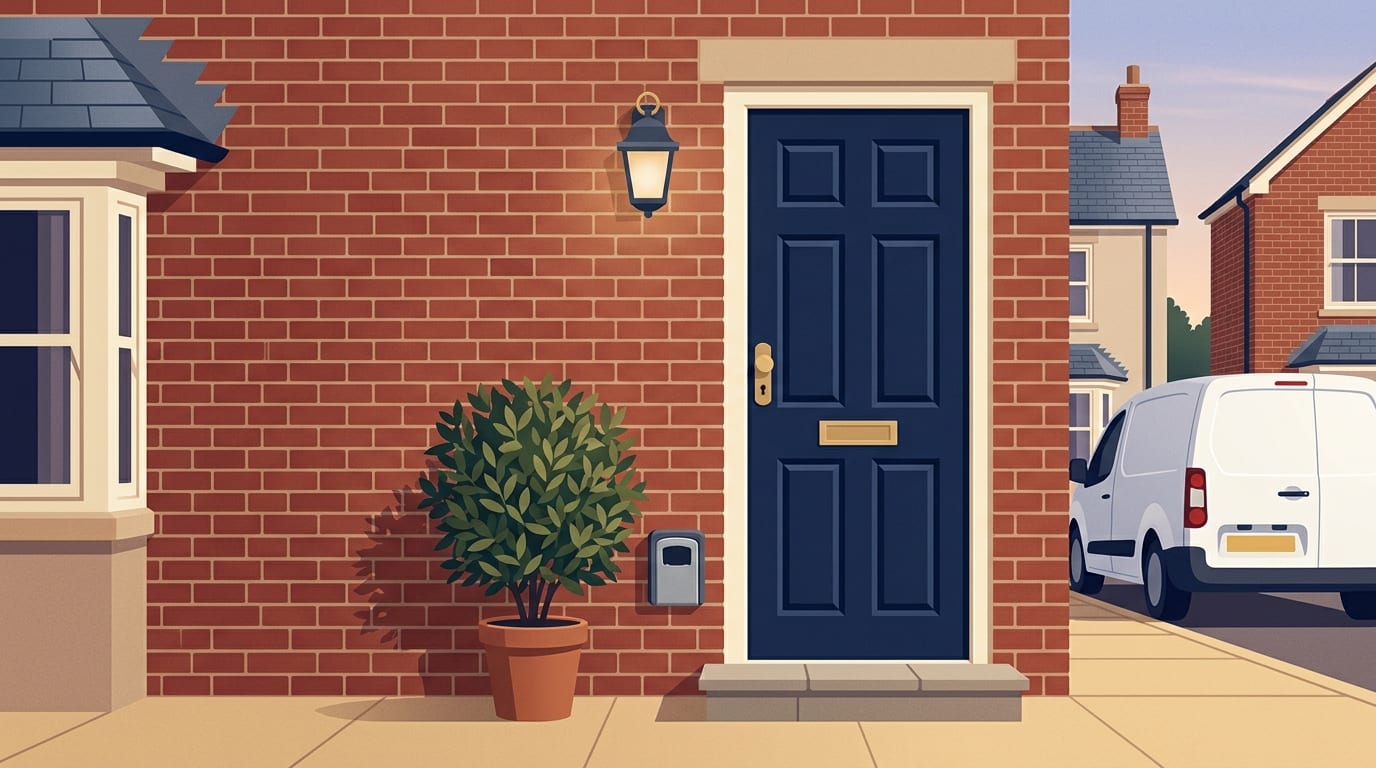
A police approved key safe is a secure outdoor box that holds a spare door key and has passed independent tests for resisting criminal attack. Having one professionally supplied and fitted typically costs £60 to £150 in 2026 depending on the model and where you live. It allows carers, family members and emergency services to get into your home safely when you cannot get to the door.
A key safe is a small mechanical box that you lock to a wall outside your property. It is designed to hold a spare house key securely so that authorised people can let themselves in. You open it by entering a specific code that you choose yourself.
These devices are widely used across the UK for a variety of practical reasons. They are essential for older or vulnerable people who have regular visits from care workers or district nurses. If the person inside has a fall or cannot reach the door, the carer or emergency services can still get inside quickly using the code.
They are also useful for busy family homes, landlords managing rented properties, and small business owners who need to share access with staff. A key safe can also save you from being locked out on the doorstep. If you lose your main set of keys, you can simply use the code to retrieve the spare and let yourself in.
People commonly fit a key safe when:
- An older relative needs daily visits from carers or medical staff.
- Family members need emergency access to a property.
- A landlord or holiday let owner needs to leave keys for tenants.
- Homeowners want a backup plan in case they lose their keys.
- Tradespeople need temporary access while you are at work.
What police approved means
When you see a product described as police approved, it means it carries the Secured by Design logo. Secured by Design is the official police crime prevention initiative that approves security products. To earn this approval, the key safe must meet the Police Preferred Specification of performance.
Meeting this specification shows that the product is resistant to criminal attack. It does not mean the box cannot be forced, but it does mean the design has met a recognised police specification.
Local authorities and police forces actively encourage the use of these approved models. For example, West Yorkshire Police recommend key safes that carry the Secured by Design approval logo, a standard supported by Kirklees Council in their security advice. You can check if a specific model has this approval by using the search tool on the Secured by Design website.
Other approvals worth looking for
While Secured by Design is the most recognised police standard, there are other independent testing bodies in the UK. The Master Locksmiths Association advises that you should look for third party approval when buying a key safe. The main independent approvals to look for are Sold Secure and LPS.
Sold Secure is a premier testing house owned by the Master Locksmiths Association that assesses security products against strict criteria. LPS stands for Loss Prevention Standard, which is a certification issued by the Loss Prevention Certification Board. If a key safe holds a Sold Secure or LPS approval, it has been independently tested.
You will often find that a key safe holds more than one of these certifications at the same time. The Master Locksmiths Association advises that an approved locksmith can specify the type of key safe needed and ensure it meets the right standards for your home. Choosing a model with at least one of these independent approvals is a sensible starting point.
Where to put a key safe
The location of your key safe is just as important as the model you choose. It should always be fitted out of sight so it does not attract unwanted attention from passers by. You do not want to advertise that there is a spare key sitting outside your front door.
Avoid placing the box at eye level right next to the main entrance. Instead, look for a discreet spot that is hidden by a porch wall, a meter box, a drainpipe or a sturdy plant pot. It still needs to be accessible for a care worker or family member, but it should not be obvious from the pavement.
It must also be fixed to a solid surface such as brickwork or concrete, never a fence, a door frame or crumbling masonry.
Why the fixing matters
Even a police approved key safe depends on how well it is fixed to the wall. This is why the fixing method is critical to your overall home security.
To maintain the product's security rating, you must follow the manufacturer's instructions exactly. You must also use the specific approved fittings that are supplied with the box. These are usually heavy duty masonry screws designed to anchor deep into solid brick or concrete.
The Master Locksmiths Association states that a key safe ideally needs to be professionally fitted to a sturdy wall. A professional will know how to drill into the brick rather than the mortar line, which is much weaker and prone to crumbling. Getting the installation right matters as much as the model you choose.
A good installation includes:
- A solid surface such as solid brickwork or dense concrete.
- The specific approved masonry fittings supplied by the manufacturer.
- Exact compliance with the manufacturer's printed instructions.
- A discreet location that keeps the box hidden from the road.
- Drilling directly into the brick face rather than the softer mortar joints.
Choosing and changing the code
Most outdoor key safes use a mechanical push button keypad to enter the code. You should choose a code that is easy for authorised people to remember but difficult for a stranger to guess. Avoid obvious combinations like birth years, sequential numbers or repeating digits.
You must keep the code strictly to the people who genuinely need access. The more people who know the combination, the less secure your home becomes. If you need to give the code to a tradesperson for a one off job, you should change it as soon as their work is finished.
You should also change the code when a care worker, a tenant or a family member no longer needs access to the property. Changing the combination is a simple process, but you must follow the manufacturer's instructions to do it correctly. Always test the new code while the key safe door is open before you close and lock it.
Key safes and home insurance
Many homeowners worry that fitting a key safe will affect their home insurance, because a key is being left outside the property.
There is no single rule for all insurance providers in the UK. You must check your specific policy wording to see what it says about keys left on the premises. If the policy document is not clear, you should contact your insurer directly and ask them.
Tell them you are planning to fit a key safe and ask if this is acceptable under your current cover. You should also ask which specific approval they expect the product to have.
What professional fitting costs
Jobs are usually priced as labour plus parts, and the total cost depends on the model of key safe and where you live. Many locksmiths will supply the box and fit it for a fixed price, while others may charge by the hour plus the cost of the unit. You should always ask if the quoted price includes VAT.
Location plays a big part in the price. If you live in London and the South East, you can expect to pay more than in other parts of the UK. Time of day also affects the labour rate, with evenings, nights, weekends and bank holidays costing significantly more than a weekday appointment. When a job is not an emergency, you can save money by waiting until the daytime rate applies.
The table below shows typical costs for supplying and fitting a key safe, alongside standard hourly labour rates.
|
Service or rate |
Typical cost |
|---|---|
|
Key safe installation (supplied and fitted) |
£60 to £150 |
|
London and South East premium |
20 to 30 per cent higher |
|
Standard locksmith labour (per hour) |
From £85 |
|
Standard locksmith labour in London (per hour) |
From £95 |
These are typical published prices for 2026, and local quotes will differ based on the specific approved model you choose. For more detail on how labour rates are calculated across different regions, you can read about how much a locksmith costs.
Who can fit a key safe for you
Because the fixing is so important, it is usually best to have a professional handle the installation. An MLA approved locksmith has the right tools and knowledge to specify the exact type of key safe needed for your wall. They will ensure it is anchored securely into the brickwork using the correct heavy duty fittings.
There is no government licensing of locksmiths in the UK, meaning anyone can trade as one. This is why checking credentials matters. The Master Locksmiths Association operates a voluntary approval scheme where companies are vetted, have criminal record checks, employ qualified locksmiths and are inspected regularly. A genuine local business will have a real local address and a history of customer reviews over time, which helps you find a local locksmith you can trust.
When you hire a locksmith to fit your key safe, they can also check the security of your front door. If you have a uPVC or composite door, they can check that your euro cylinder and multipoint locking mechanism are working smoothly. If you have a timber door, they can inspect your mortice deadlock or night latch to ensure it meets British Standard BS3621.
If you are setting this up for an older or disabled relative, there may be local support available. Some areas have handyperson services that fit key safes for vulnerable residents. In Kirklees, for example, people over 60 or with a disability can use an Age UK handyperson service to fit their key safe. You should ask your local council or regional Age UK branch what services run in your area.
Consumer rights and rented homes
When you pay a business to supply and fit a key safe, you are protected by the Consumer Rights Act 2015. This law states that a service must be carried out with reasonable care and skill, at a reasonable price if none was agreed, and within a reasonable time. If the locksmith does a poor job of fixing the box to the wall, you have a right to have the poor work put right or your money back.
Under the Consumer Contracts Regulations 2013, there is normally a 14-day cancellation period for work arranged at home or by phone. However, this cancellation right does not apply if you specifically asked the locksmith for a visit for urgent repairs. So if you are locked out and call a locksmith out urgently, the cancellation period will not normally cover that work, although extra work sold to you during the visit is still covered.
For rented homes, landlords often use key safes to give new tenants or maintenance workers access. Tenants should check their tenancy agreement and get the landlord's agreement before fitting or changing a key safe themselves. A landlord who changes the locks or the key safe code to keep a tenant out without a court order commits illegal eviction, which is a criminal offence. For advice on tenancy disputes, you should contact Citizens Advice or Shelter.
Common questions
How secure is a wall-mounted key safe?
A wall-mounted key safe is much harder to get into if it carries a recognised police or independent approval, such as Secured by Design, Sold Secure or LPS, and is fitted correctly, although no key safe can be guaranteed against attack. However, a cheap unapproved box fixed to a weak surface will not provide adequate security.
Is it better to hide a spare key outside?
No. A key hidden under a doormat or plant pot can be found by anyone who looks. East Cambridgeshire District Council advises residents to keep all keys out of sight and away from letterboxes, and police Secured by Design advice lists fishing for keys through a letterbox, window or cat flap as one way burglars get in.
What is an insurance-approved key safe?
There is no single insurance approval for key safes. Ask your insurer whether a key safe is acceptable under your policy and which approval, such as Secured by Design, Sold Secure or LPS, it expects. You must always check your own policy to find out exactly what your insurer requires.
How do I change a key safe code?
The method depends on the make and model of the box, and it is normally done with the key safe open. You must follow the manufacturer's instructions carefully and always test the new code before closing the door.
Are digital key safes an option?
Most outdoor key safes use mechanical push buttons or dials, which do not need batteries. Electronic or digital key safes are available, and the same independent approvals are worth looking for. Mechanical versions remain the most common choice for reliable outdoor access.
What to do next
If you are ready to arrange a key safe installation, take these practical steps to get the right result:
- Check your home insurance policy to see what type of key safe is acceptable.
- Look for a model that carries Secured by Design, Sold Secure or LPS approval.
- Find a solid brick or concrete wall out of sight from the main road.
- Ask a local locksmith to quote a total price including parts, labour and VAT.
- Check that the installer will use the manufacturer's approved heavy duty fittings.
- Choose a secure code and change it whenever a carer or tradesperson no longer needs it.
If you want a professional to supply and fit an approved model securely, find a locksmith near you to get a fixed price for the job.
Related Guides
Window Restrictors and How They Keep Children Safe
What window restrictors do, which windows need them, how far a window should open, how to keep a fire escape route and what landlords should know.
Garden Gate Locks and How to Secure a Side Gate
Why the side gate matters, the main types of garden gate lock, how to make a gate hard to climb, the planning height limits and what to ask a locksmith.
Sash Window Locks and How to Make Sash Windows Secure
How sash windows are locked, why the central catch is not enough, how many locks each window needs, how sash stops work and what to know in a listed home.