
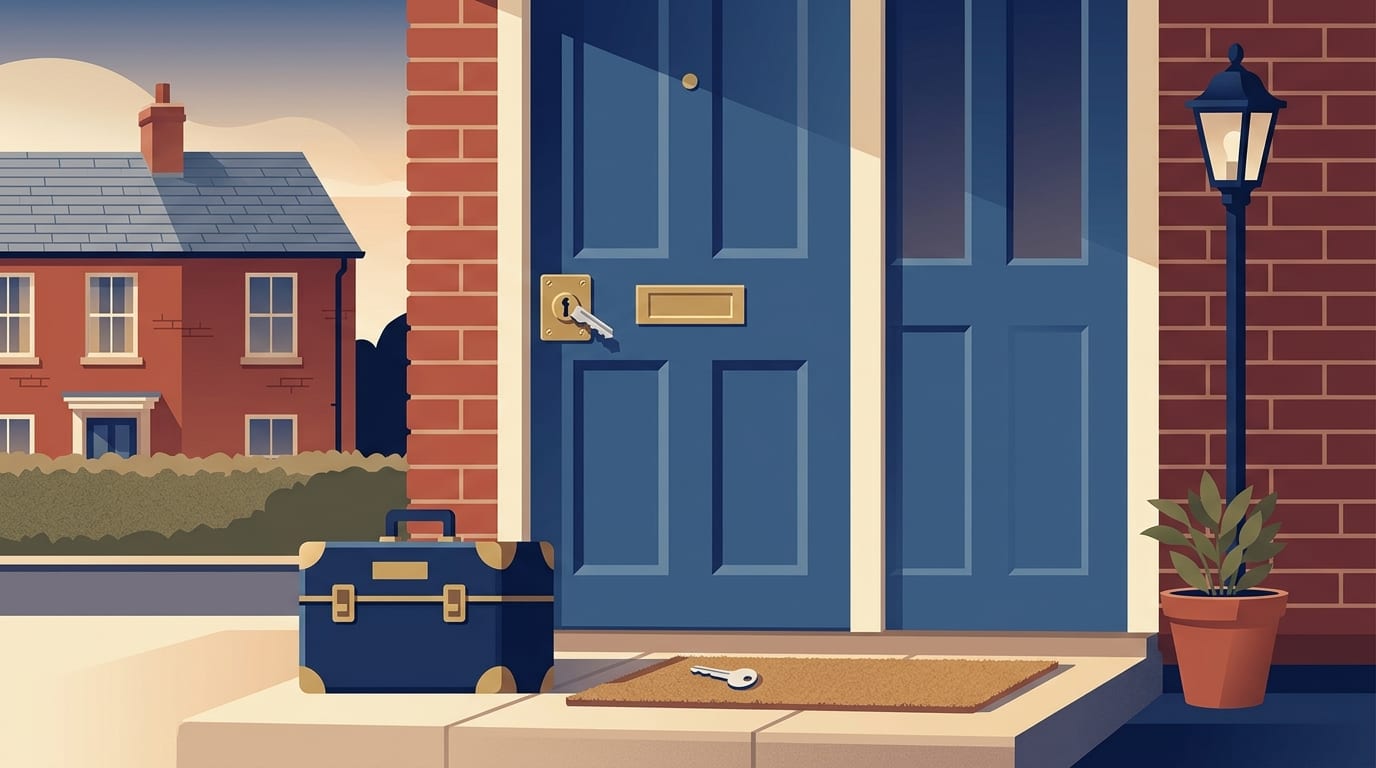
If your key has just snapped in the front or back door lock, stop trying to turn it and keep hold of the broken piece left in your hand. Published 2026 prices for broken key extraction run from £60 to £150, and the MLA says a straightforward job of half an hour or less normally costs around £85. Your immediate next step depends entirely on whether your door is wide open, shut but insecure, or locked tight leaving you stranded on the doorstep.
What to do in the first few minutes
Assess the situation calmly before you make any phone calls. If the door is open, do not close it behind you. You need to work out whether the property is currently secure and whether you have another way inside. If you are locked out, check for open ground floor windows or a back door that might have been left unlocked. Check whether a neighbour or family member has a spare key, though a spare will not help until the broken piece is removed from the keyway.
If the door is locked and you cannot get in, this is a clear emergency. You will need a locksmith to gain entry and extract the broken metal. If the door is open but cannot be locked, it is also highly urgent because your home is not secure for the night.
If the door is locked from the outside and you have another way in, the job can wait until normal working hours. Waiting for daytime rates will save you money on out of hours surcharges. Always keep the broken half of the key that snapped off in your hand, as the locksmith will need both pieces to cut a replacement later.
Why digging the key out yourself can backfire
If you search for how to remove a broken key in lock, you will find plenty of home remedies. The Master Locksmiths Association (MLA) warns that attempting to remove a broken key yourself could cause damage to the internal parts of the lock. Poking at the broken piece usually pushes it further into the mechanism.
Once the broken metal is pushed deeper into the keyway, extraction becomes much more time consuming and will end up costing you more. You also risk damaging the delicate brass pins inside a euro cylinder or the levers inside a mortice deadlock. If those internal parts are bent or crushed, the lock will no longer work even when the broken blade is finally pulled out.
What starts as a simple extraction job can quickly turn into a full lock replacement. Locksmiths have specialist extraction tools that most tradespeople and householders simply do not own. Leaving the broken piece exactly where it sits gives the locksmith the best possible chance of pulling it out cleanly without drilling.
Why keys snap
Keys are cut from relatively soft metals like brass or nickel silver. Over time, these metals suffer from fatigue and wear down with daily use. The MLA identifies several common reasons why a key breaks inside a door lock.
- Turning the key before it is fully inserted into the cylinder.
- Using the wrong key by mistake and trying to force it to turn.
- Forcing a stiff or jammed lock rather than finding out why it is stuck.
- Holding the key while pushing or pulling a heavy door open so the metal bends.
- Using the key for jobs it was not designed for such as opening paint tins.
A key that has already been bent and straightened is heavily weakened and very likely to snap. If your multipoint locking mechanism is stiff when you lift the handle on a uPVC or composite door, the extra pressure you put on the key can cause it to break. You can often prevent a snapped key by dealing with uPVC door lock problems before the mechanism completely seizes up.
What a locksmith does
When a professional locksmith arrives, they will first assess the type of lock and how deep the broken piece is sitting. They use specialist broken key extraction tools and will normally try to remove the piece without drilling the lock or damaging the door.
If you are locked out, the locksmith will also need to open the door, ideally without damage. Most single broken key jobs take well under an hour to resolve. The exact approach depends slightly on whether you have a euro cylinder fitted to a uPVC door, a night latch on a timber door, or a traditional mortice sashlock.
If the key broke inside a car ignition or a vehicle door lock, this requires a different trade specialism. Domestic locksmiths do not usually carry the tools or software required for vehicle security and transponder programming. You will need to call an auto locksmith to extract a car key and program a working replacement.
Will the lock need replacing?
In most straightforward cases, the lock will not need to be replaced. If the key broke because of user error or simple metal fatigue, the locksmith will remove the piece and the lock should carry on working. You will just need a new key cut to replace the broken one.
However, if the key snapped because the internal gearbox or the cylinder itself is jammed, broken or severely worn, extracting the key will not fix the underlying problem. If the lock is damaged or faulty, it takes the locksmith longer to remove the broken piece. In these situations, it is often cheaper and safer to replace the lock entirely.
If you do need a new lock fitted, ask the locksmith what security standard the new one meets. For a timber door, look for a mortice deadlock with a BS3621 Kitemark on the faceplate. For a uPVC or composite door, a replacement euro cylinder should ideally be a TS007 three-star or Sold Secure SS312 Diamond standard to protect your home against lock snapping.
Getting a new key made from the pieces
You might assume that a snapped key means you have to replace the cylinder just to get a fresh set of keys. This is rarely true. As long as you have kept both halves of the broken key, a new one can usually be cut.
A locksmith can generally make a new key from a broken key if the break is clean and both parts are kept. They align the broken piece extracted from the lock with the piece you kept in your hand to trace the original cuts accurately. This is much cheaper than buying and fitting a brand new cylinder and having new keys cut for the rest of your family.
If the key is shattered, twisted, or parts of the metal blade are missing, it cannot be copied. In that case, you will need to use a spare key to get copies made. If you have no spare keys at all, the locksmith can sometimes cut a new key to fit the lock, or they may replace the euro cylinder or rim cylinder.
What broken key removal costs
Locksmith jobs are usually priced as labour plus parts. Because broken key extraction rarely requires new parts, you are mostly paying for the locksmith's time, expertise and travel. Many emergency locksmiths do not charge a separate call-out fee, but some charge an emergency call-out fee from £50, so you must always ask.
Typical published prices for 2026 show that a straightforward extraction costs between £60 and £150 per job. The exact price is driven by the time of day, how entry is gained, and your location. London and the South East cost significantly more than other areas.
The table below shows typical published prices for 2026.
|
Type of locksmith service |
Typical 2026 price |
|---|---|
|
Remove a broken or snapped key |
£60 to £150 per job |
|
Broken key removal as an emergency job |
£110 to £200 |
|
Out of hours surcharge |
£50 to £100 |
|
Unlock a house door |
From £90 |
|
Emergency labour (daytime) |
From £85 per hour |
|
Emergency labour (after 8pm) |
From £105 per hour |
|
London emergency labour |
From £122 per hour, from £153 after midnight |
These are typical published prices for 2026 and local quotes will differ. The MLA says a straightforward broken key job taking half an hour or less would normally cost around £85 depending on location, and its 2026 price guide lists broken key removal from £90. Always ask for a total price including VAT before the work begins.
If it happens at night or at the weekend
If your key snaps late at night, on a weekend or during a bank holiday, the cost of hiring a locksmith will increase. Out of hours surcharges typically add between £50 and £100 to the final bill. If your door is secure and you have another way in, leaving the job until normal working hours is the most sensible option.
If you are completely locked out and need an emergency locksmith, you will usually pay the higher night rate, and our guide on what to do when you are locked out covers the next steps. When calling an emergency locksmith, describe the problem clearly. Tell them the key has snapped, whether the door is locked or unlocked, and what type of lock is fitted to the door.
Be aware of your consumer rights when booking emergency work. Under the Consumer Contracts Regulations 2013, there is normally a 14-day cancellation period for services arranged at home or by phone. However, this cancellation right does not apply where you specifically requested a visit for urgent repairs or maintenance. This means you cannot cancel and demand a refund simply because you changed your mind after the emergency extraction is completed. The exception does not cover additional services, or goods other than the replacement parts needed for the repair, sold to you during that visit.
How to stop it happening again
Keys and locks require basic care to keep them working smoothly. A key rarely snaps without warning. Usually the lock feels stiff or the key gets harder to turn beforehand.
- Never use your house keys to open cardboard boxes, pry things apart or scrape off paint.
- Do not pull heavy timber or composite doors closed using the key in the lock.
- Check your keys regularly for hairline cracks or bends along the blade.
- If a key is bent, throw it away and get a spare cut rather than trying to bend it back.
- If the lock feels stiff, do not force the key to turn with pliers or extra grip.
If you have a uPVC door and the handle is hard to lift, the door may have dropped out of line or the gearbox may be failing. Forcing the key against a stiff multipoint mechanism strains it, so have a locksmith adjust the door or replace the gearbox before the key breaks and leaves you locked out.
Common questions
How long does it take to remove a broken key?
A straightforward job can take half an hour or less, but it depends on the lock and how deep the broken piece sits. If the lock mechanism is faulty or severely damaged, the job will take longer. In those cases, the locksmith will explain the problem and may suggest replacing the cylinder.
Can a snapped key be copied?
Yes, a new key can generally be made from the broken pieces if the break is clean. You must keep both the piece that snapped off in the lock and the piece you were holding. The locksmith will put them together to trace the correct shape.
Will my home insurance cover a broken key?
Home insurance policies vary widely. Some include home emergency cover that pays for a locksmith if you are locked out or your home is insecure. You must check your own policy wording to see if lost or broken keys are included, and whether you have to use their approved tradespeople.
Is a broken key a landlord or tenant responsibility?
It depends on your tenancy agreement and on why the key broke, for example whether the lock was already faulty or the key was forced. Check your agreement, tell your landlord or letting agent straight away, and contact Citizens Advice or Shelter if you cannot agree who should pay.
Next steps
Before you hire a locksmith to deal with a snapped key, take a minute to gather the right information. Doing this will help you get an accurate quote and avoid paying unnecessary call-out charges.
- Check all other doors and windows to see if you can get inside safely.
- Decide if the job is an emergency or if it can wait until daytime rates apply.
- Find the broken head of the key and keep it safe for the locksmith.
- Ask the locksmith for a total price including parts, VAT and any out-of-hours charge before work starts.
- Check that the business has a real local address, verifiable reviews over time, and ID on arrival.
Once you know what to expect and what questions to ask, you can confidently find a locksmith near you to get your door open and your property secure.
Related Guides
Window Restrictors and How They Keep Children Safe
What window restrictors do, which windows need them, how far a window should open, how to keep a fire escape route and what landlords should know.
Garden Gate Locks and How to Secure a Side Gate
Why the side gate matters, the main types of garden gate lock, how to make a gate hard to climb, the planning height limits and what to ask a locksmith.
Sash Window Locks and How to Make Sash Windows Secure
How sash windows are locked, why the central catch is not enough, how many locks each window needs, how sash stops work and what to know in a listed home.