A loose or broken door handle can often be a simple repair or a straight swap for a new one, but you must check first whether the handle is the real fault or whether the lock or multipoint mechanism behind it is failing. This article covers timber, composite and internal doors. If you have a white plastic door you should read our guide to how much uPVC door handle replacement costs to get the right information for your home.
Is it the handle or the lock
The handle on your door has a very simple job. It turns a square metal bar called a spindle which passes through the door and operates the latch inside the lock. If the handle droops, feels stiff or spins without doing anything, the fault could be the handle itself or the lock mechanism it connects to. A locksmith can tell which it is quickly, so ask before buying a new handle.
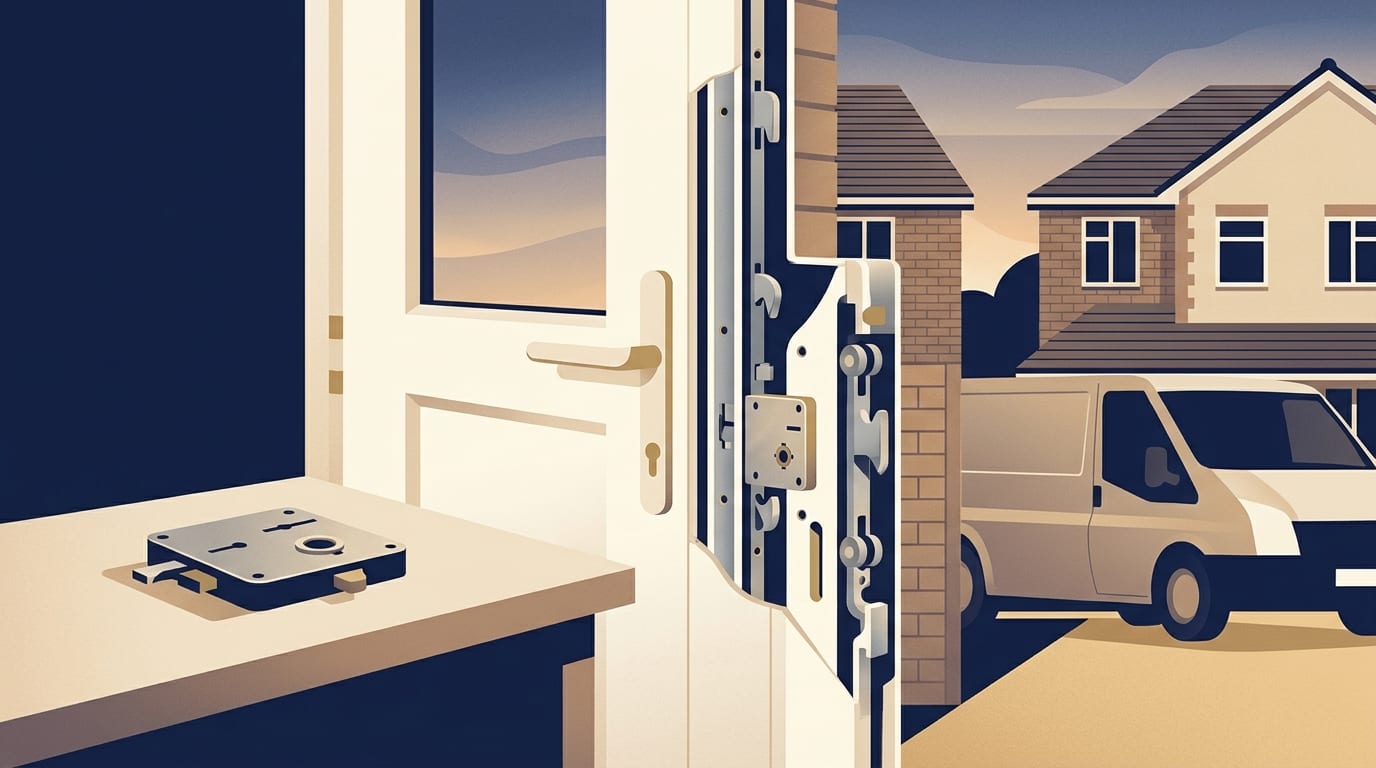
On a front door with a multipoint locking mechanism, lifting the handle engages a strip of hooks and bolts. The central part of this mechanism is called the gearbox. If the gearbox fails, the handle may feel loose, drop down or refuse to lift. If the door will not latch, lift or lock properly after the handle is sorted, the lock is the cause.
Timber doors usually have a mortice deadlock and sashlock fitted inside the wood. The sashlock contains the latch that the handle operates. A floppy handle can come from the lock rather than the handle. A locksmith is the right person to call when the lock is involved.
What to do with a loose door handle
A handle that has come loose can often be re-secured without needing new parts. The screws or fixings holding it to the door may have simply worked loose over time through daily use.
A loose handle that is otherwise in good condition can normally be tightened, but a worn or cracked one should be replaced. You can often spot what is wrong by looking closely at how the handle sits on the door and how it moves when you pull it. Check these common signs before deciding what to do next.
- The metal backplate wobbles against the wood when you turn the lever.
- The screws holding the backplate or round rose are visibly sticking out.
- The small grub screw located underneath the handle lever is missing or loose.
- The handle lever pulls away from the door when you pull it towards you.
- The metal around the screw holes is cracked or bent out of shape.
- The door handle turns perfectly but the latch in the door edge does not move.
If the fixings have simply worked loose, the handle can often be re-secured. If the metal is damaged or the handle has physically snapped, you will need a replacement.
When to repair and when to replace
Repairing a handle means re-securing it. This makes sense if the handle is in good condition and the door still locks smoothly.
You should replace the handle if the metal is fatigued, heavily scratched or starting to rust. A handle that droops or no longer springs back usually needs replacing.
Replacing the handle is also necessary if you are updating the look of your home or if the old handle no longer matches your locks. You must make sure the new handle covers any old screw holes or unpainted wood left behind by the previous backplate. If your door handle breaks late at night but the door can still be locked securely with a key, the job can wait until the daytime rate applies. If the broken handle prevents you from locking your front door, it is an emergency that cannot wait.
Which handle suits which door
Different doors need different types of handle to work properly. Internal latch handles are the simplest type and usually sit on a round rose or a plain backplate. They only operate a latch to keep the door shut and do not have a keyhole. Bathroom doors use a similar handle but include a privacy turn that locks the door from the inside without needing a separate key.
Front door handles with a lock are more complex because they must accommodate the security hardware. Timber doors often use a mortice sashlock, which requires a handle with a keyhole cut into the backplate. The distance between the handle lever and the keyhole must perfectly match the lock inside the door. Some timber doors use a night latch or rim lock, which is a surface latch often called a Yale lock. These rely on a rim cylinder where you insert your key, and the outside handle is often just a fixed pull rather than a moving lever.
Composite doors use multipoint locks that run the full height of the door. The replacement handle must match the door and lock set up exactly. You must measure the distance between the screw holes and the distance from the spindle to the keyhole to ensure the new handle fits. The replacement must also be the right security standard on an external door.
- Internal doors need a simple latch handle on a rose or backplate.
- Bathroom doors need a handle with an integrated privacy turn.
- Timber front doors with a sashlock need a backplate with a cut out keyhole.
- Timber front doors with a night latch need a fixed pull handle on the outside.
- Composite doors need a specific lever handle that connects to the multipoint gearbox.
Handles on multipoint and composite doors
Composite doors use a multipoint locking mechanism, which is the strip of hooks and bolts worked by lifting the handle. Lifting the handle throws the hooks into the door frame.
These handles connect to the gearbox, and the euro cylinder is the barrel where you insert your key. For snap resistance, the standards to look for are in the section above on the right security standard.
The Master Locksmiths Association advises that, on a uPVC door, a handle must be the correct security standard. For uPVC doors the MLA names TS007 2 Star or Police Approved. Its uPVC door security page is about uPVC doors and is not for timber or internal doors, so ask your locksmith which standard suits your composite or timber door. Fitting cheap cylinders at premium prices is a common scam to watch out for.
What it costs to replace a handle in 2026
The price of replacing a door handle depends on the type of door, the cost of the parts and whether the lock mechanism also needs work. Jobs are usually priced as labour plus parts, either by the hour or as a fixed price per job. Many locksmiths charge no separate call-out fee but some do, and VAT may or may not be included, so you must ask before booking.
The first table shows individual tradespeople's estimates from August 2026. Most of these quotes cover labour and fitting. Some include a basic handle in the price, while others charge for the handle separately. Work on a lock or multipoint mechanism is usually excluded or priced separately, and tasks like filling holes or drilling new ones will cost more.
|
Job description |
Estimated cost |
|---|---|
|
Bathroom or internal door handle fitted |
£40 to £70 |
|
Bathroom door handle total (labour £35 to £50 plus handle £10 to £25) |
£45 to £70 |
|
Front door handle fitted (assuming just the handle and not the lock) |
£50 to £90 |
|
Front door handle total (labour £40 to £60, handle £20 to £50 or more) |
£60 to £100 |
These figures are individual tradespeople's estimates from August 2026 and are not fixed prices. Local quotes will differ based on the exact handle you choose and the condition of your door.
The second table shows typical 2026 prices for lock and handle repairs, compiled separately from the first table, so do not combine the two. These figures include VAT and reflect market rates across the country. Price is driven by location, with London and the South East costing more, and by the time of day. Parts are charged extra when a component is replaced.
|
Service type |
Rest of the UK (inc VAT) |
London and South East (inc VAT) |
|---|---|---|
|
Cylinder or handle repair or replacement |
£90 to £150 |
£120 to £180 |
|
Lock repair across the UK |
£70 to £150 |
£70 to £150 |
|
uPVC multipoint mechanism repair |
£120 to £250 |
£160 to £320 |
|
Out of hours repair |
£110 to £200 |
£150 to £260 |
These are 2026 estimates and they vary by area and time of day. Costs rise if the lock or multipoint mechanism needs work. A very low price quoted on the phone that multiplies on the doorstep is a common scam, so always get a total price before work starts.
When a locksmith is the right person
You might think a loose handle is a job for a general handyman, but a locksmith is the right call when the lock is involved. If your front door handle is loose because the gearbox has shattered, a general handyman may not be able to fix it. Auto locksmiths are a separate specialism covering vehicle entry, key cutting, transponder and remote programming, so you need a locksmith for doors.
There is no government licensing of locksmiths in the UK. Anyone can trade as one, which is why vetting matters before you let a stranger work on your front door. The Master Locksmiths Association (MLA) is the main trade association. This is a voluntary approval scheme, not a legal requirement. Its approved companies are vetted, have criminal record checks, employ locksmiths who have passed the MLA exam and are inspected regularly. You can verify a company and see the full range of MLA locksmith services on the association's own website.
If you are struggling with handles inside your house, a locksmith can advise on the best internal door locks by room and fit them cleanly. A qualified professional will also help you decide whether to repair rekey or replace a lock when the handle failure has damaged the internal mechanism. Under the Consumer Rights Act 2015, a service must be carried out with reasonable care and skill, at a reasonable price if none was agreed, and within a reasonable time, with a right to have poor work put right or your money back.
If you rent your home, you should check your tenancy agreement and get the landlord's agreement before changing locks or handles. A landlord who changes the locks to keep a tenant out without a court order commits illegal eviction, which is a criminal offence. Tenants facing this situation should contact Citizens Advice or Shelter for guidance on their own situation.
Common questions
Can I replace a door handle without changing the lock?
Yes, you can swap a door handle without changing the lock behind it. The new handle must have the same measurements as the old one so the spindle and keyhole line up perfectly with the existing lock. If the lock itself is stiff or failing, changing the handle will not fix the underlying problem and you will still struggle to open the door.
Why did my door handle fall off?
Handles often fall off because the screws holding the backplate to the door have stripped the wood or worked completely loose. On internal lever handles, a small grub screw holds the lever to the spindle, and if this falls out, the lever will come away in your hand. Daily heavy use causes these fixings to vibrate, and if they are not tightened occasionally, the handle will detach.
How long does it take to replace a door handle?
Most single lock changes and lockouts take well under an hour, and a simple handle swap is often much faster. If the replacement handle requires new holes to be drilled through the wood, or if the multipoint locking mechanism needs adjusting, the job will take slightly longer.
Do replacement door handles come with locks?
Internal latch handles do not come with locks because they only operate a simple catch in the door edge. Front door handles may be sold separately from the mortice deadlock, sashlock or euro cylinder that actually secures the door, so ask your locksmith to supply what suits the door.
Does home insurance cover a broken door handle?
Insurers often ask what locks are fitted, so you should check your own policy wording to see exactly what is covered. Your policy wording says whether wear and tear or damage from a break-in is covered, so read it or ask your insurer.
What to do next
Before you book someone to fix your door handle, you should gather the right information to get an accurate price. Knowing what type of door you have and what the handle is doing helps you get a more accurate price. Avoid national call centres advertising as a local locksmith, and watch out for tradespeople who refuse to give a price before starting, demand cash only, provide no invoice, carry no ID or drive an unmarked vehicle.
Check these details before you make a call.
- Test if the door latches and locks properly when the door is left open.
- Measure the distance from the centre of the handle lever to the centre of the keyhole.
- Measure the distance between the top and bottom screws on the backplate.
- Check if the door is made of timber, composite material or internal hollow wood.
- Decide if the job can wait until normal working hours to avoid evening or weekend rates.
- Ask the locksmith what standard the new lock or handle meets.
- Ask how entry will be gained if you are locked out, and whether non-destructive entry is likely.
- Check the business has a real local address and verify any MLA approval claim on the MLA's own site.
When you speak to a professional, get a total price including parts, VAT and any out-of-hours charge before work starts. Ask for ID on arrival and a written invoice once the work is finished. If you are ready to get your door sorted, you can find a locksmith near you to provide a firm quote and secure your home.
Find a top rated locksmith near you
1,831 locksmiths across the UK, each ranked on their Google rating and the number of reviews behind it. Start with your county: