When a door becomes difficult to open or secure, you need to know whether a lock repair or replacement is the right choice. Minor faults such as poor alignment, a sticking latch or a loose handle are cheaper to repair. A worn out or badly damaged lock is often better replaced, and on a uPVC door the cylinder can often be changed on its own without buying a whole new mechanism. This guide explains how to choose between the three options, what you should expect to pay, and how to avoid being overcharged.
Three options and three price levels
Understanding the difference between a repair, changing the barrel and a full replacement helps you avoid paying for unnecessary parts. The cheapest option is usually a repair, which means adjusting the existing components so they work smoothly again. Changing the cylinder is the middle option, mostly used on modern doors where the central barrel can be swapped while keeping the rest of the hardware. A full replacement is the most expensive route, needed when the entire mechanism has failed or the lock is physically broken.
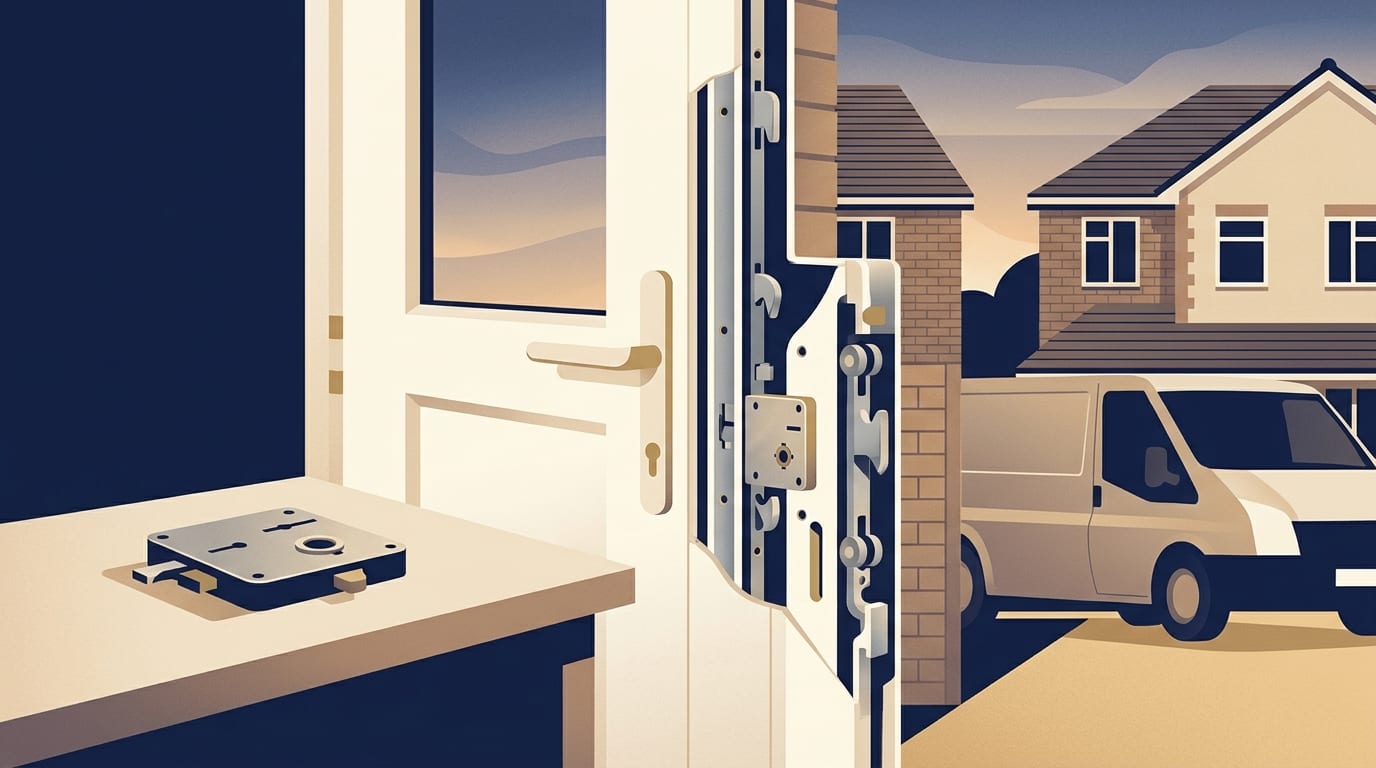
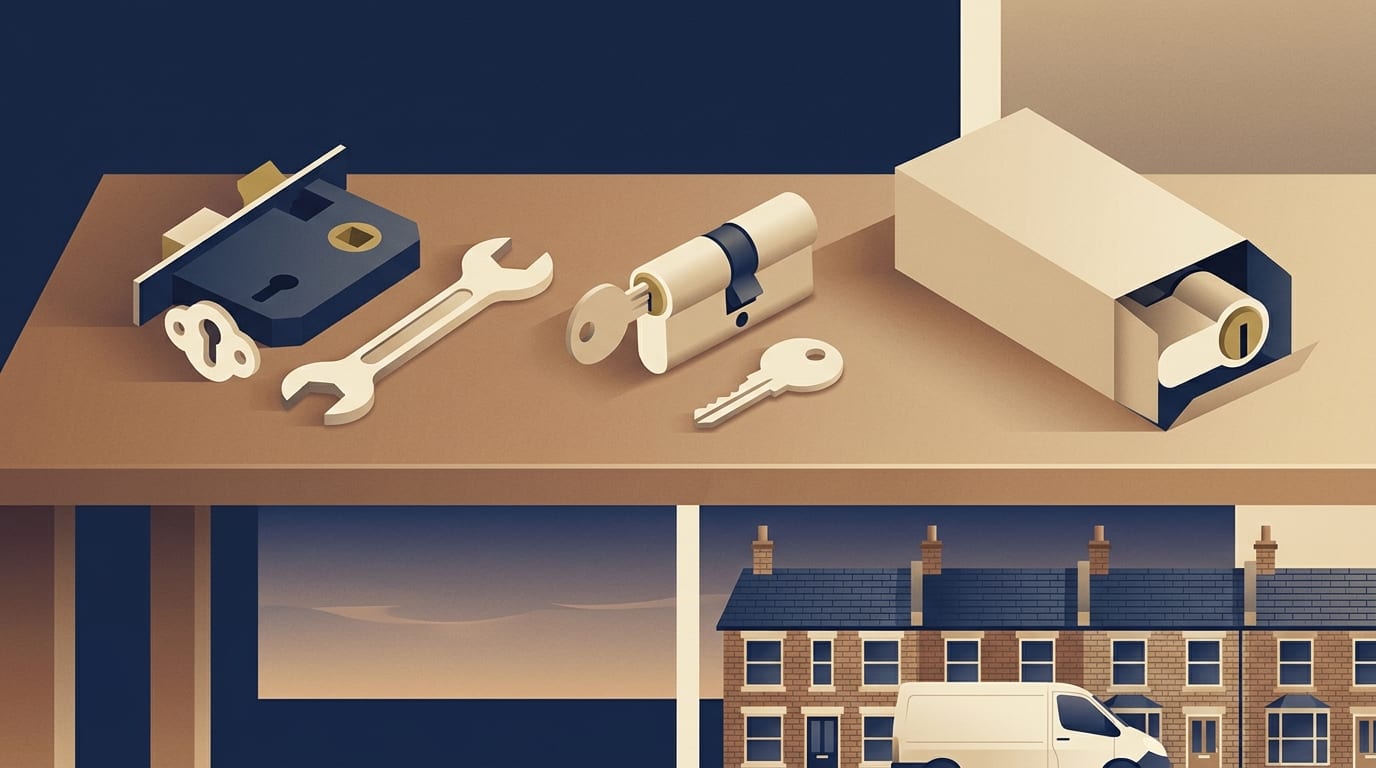
To understand what a locksmith is quoting for, it helps to know the correct terms for your door. A euro cylinder is the barrel on uPVC and composite doors where the key is inserted. The multipoint locking mechanism is the strip of hooks and bolts worked by lifting the handle, and the gearbox is the central part of that mechanism. Inside a timber door, you will typically find a mortice deadlock or sashlock. A night latch or rim lock is the surface latch often called a Yale lock, which operates using a separate rim cylinder.
You may also hear tradespeople use specific industry terms when discussing your options. Keyed alike means multiple locks are pinned to operate on one single key. Non-destructive entry means opening a lock without drilling it. Lock snapping is the name for an attack on a standard euro cylinder, which anti-snap cylinders are designed to resist. If a property is severely damaged during a break-in, boarding up is the process of temporarily securing the broken windows or doors. Auto locksmiths are a separate specialism entirely, covering vehicle entry, key cutting, transponder and remote programming.
Jobs are usually priced as labour plus parts, either by the hour or as a fixed price per job. Price is driven by the time of day, your location, the type and security grade of the lock, and how entry is gained. Evenings, nights, weekends and bank holidays cost more. London and the South East cost more than the rest of the UK. Many locksmiths charge no separate call-out fee but some do, and VAT may or may not be included, so you must ask for the total figure before work begins. Most single lock changes and lockouts take well under an hour.
When a repair is enough
According to the Master Locksmiths Association, a professional can repair most door locks, handles and window locks. Minor faults such as alignment, a sticking latch or a loose handle are cheaper to repair than replace. If a door will not shut properly, it may only need its strike receiver readjusted on the door frame.
If a key turns but the door will not open, the multipoint mechanism may need replacing or the door may need to be aligned. Locksmiths can repair mortice, composite, euro cylinder, anti-snap and Yale-style locks, as well as uPVC window locks. A worn or jammed lock may cost less to repair than replace, so you should ask about a repair first before agreeing to buy new parts.
However, a repair is not always possible or cost effective. A repair may tip into a full replacement if the cylinder is damaged by a broken key or the internal mechanism is heavily worn out.
When to change only the cylinder
This approach applies primarily to uPVC and composite doors. The euro cylinder drives the gearbox, which in turn operates the multipoint locking mechanism. Because these parts are separate, the euro cylinder can often be replaced on its own. For a traditional surface latch on a timber door, replacing the rim cylinder on its own starts from £90. Replacing just the barrel is usually cheaper than replacing the whole mechanism, as the prices below show.
A lost key or a wish for better security often means changing the cylinder to an anti-snap type. Standard euro cylinders can be attacked by lock snapping. The snap-resistant standards to look for are TS007 three star, or a one-star cylinder paired with two-star handles. Alternatively, you can look for the Sold Secure SS312 Diamond standard. The MLA says the police recommend an SS312 Diamond standard cylinder.
Replacing a standard euro cylinder on a uPVC door takes about 20 minutes. It is a fast job that leaves the main strip of hooks and bolts untouched. You should only replace the full mechanism if it has failed completely or the door will not lock. If you are upgrading your security to protect against snapping, you can read more in our guide to anti snap locks explained.
When a whole lock should be replaced
A worn out or badly damaged lock is often better replaced entirely. If a key will not turn because the lock is worn, faulty or cheap, the lock will need to be replaced once the door has been opened. The Master Locksmiths Association states that you should replace a lock when it is beginning to be unreliable and hard to operate or is physically damaged.
For older timber doors, replacing a mortice lock takes about 30 minutes. A night latch should not be the only lock on a door.
When replacing locks on timber doors, look for the BS3621 British Standard, which is shown by a Kitemark on the lock faceplate. Insurers often ask what locks are fitted, so you should check your own policy wording rather than assuming what your insurer requires. A new lock that meets the correct British Standard is a sensible choice, but no lock guarantees against burglary.
What rekeying means and why it is less common
Rekeying means setting a lock to work with new keys instead of replacing it. It is less common in the UK than the term suggests, and it is not always cheaper. You can ask a locksmith whether your lock can be re-set with new keys and what that would cost compared with a new cylinder.
Most locksmiths recommend replacing the lock if you lose a key. Euro cylinders can only be keyed alike if they are the same brand and key profile.
Lost keys and new owners
Most locksmiths recommend replacing the lock if you lose a key. Replacing lost house keys takes about one hour, according to the MLA, and it means the missing key no longer fits the new lock. If you are unsure whether you need new locks after losing a set, you can review your options in our guide on lost or stolen house keys.
If you have just bought a house, the previous homeowners or tenants could still have keys. Moving into a new property is a key time to review your physical security. Current locks may not meet insurance requirements and some may be incorrectly fitted or damaged. On uPVC or composite doors you may want to change the cylinder for more security.
For rented homes, the law protects the occupier. Tenants should check their tenancy agreement and get the landlord's agreement before changing locks themselves. A landlord who changes the locks to keep a tenant out without a court order commits illegal eviction, which is a criminal offence. If you are in a dispute over access or repairs to a rented property, you should contact Citizens Advice or Shelter for guidance on your specific situation.
Typical 2026 prices side by side
There is no government licensing of locksmiths in the UK. Anyone can trade as one. This is why vetting matters and why prices vary considerably between companies. The Master Locksmiths Association is a voluntary approval scheme. Its approved companies are vetted, have criminal record checks, employ locksmiths who have passed the MLA exam and are inspected regularly. They recommend getting several quotes from local approved locksmiths.
Before you call out a tradesperson, you must decide whether the job can wait until the daytime rate. If your door is secure and you have another way in, waiting until normal working hours will save you money. If you are locked out at night or the door will not lock, you will have to pay a premium for an immediate response.
The table below compares the cost of repairing a lock against the cost of replacing it.
|
Type of work |
MLA 2026 estimate (from) |
Typical 2026 range (rest of UK) |
|---|---|---|
|
Repair a front or back door lock |
£85 |
£70 to £150 |
|
Repair a uPVC door lock or euro cylinder |
£85 |
£80 to £150 |
|
Replace a standard euro cylinder |
£105 |
£75 to £140 |
|
Upgrade to an anti-snap 3-star cylinder |
£137 |
£110 to £200 |
|
Replace a mortice lock |
£148 |
£90 to £170 |
|
Replace a night latch |
£116 |
£90 to £170 |
|
Replace a uPVC multipoint mechanism |
Not stated |
£150 to £350 |
|
Door alignment or strike plate repair |
Not stated |
£70 to £120 |
The MLA column shows 2026 'from' prices including VAT. The other column shows typical 2026 ranges for the rest of the UK, also including VAT. The two columns measure different things, so do not combine them. Local quotes will differ based on your area and the exact lock model. For repairs, parts are extra where a component is replaced. London and the South East cost more, typically £90 to £180 for a lock repair, £95 to £180 to replace a single euro cylinder, and £120 to £220 for a mortice or night latch replacement. Replacing lost house keys starts from £100. London and the South East cost more, typically £90 to £180 for a lock repair, £95 to £180 to replace a single euro cylinder, and £120 to £220 for a mortice or night latch replacement. Replacing lost house keys starts from £100.
Warning signs of an upsell
Because anyone can trade legally without a licence, you must watch out for common scams. You can avoid rogue operators by looking out for these warning signs:
- National call centres advertising as a local locksmith and passing the job to whoever is nearest.
- A very low price quoted on the phone that multiplies on the doorstep.
- Drilling a lock that could have been opened without damage using non-destructive entry.
- Replacing a whole multipoint mechanism when only the cylinder or gearbox had failed.
- Fitting cheap cylinders at premium prices.
- Refusing to give a price before starting, or demanding cash only with no invoice.
- Arriving with no ID in an unmarked vehicle.
A legitimate professional will provide a written invoice, trade under a real company name and address, and carry ID. Ask them to explain why a part needs replacing before they drill or dismantle anything. You can check our guide on how much does a locksmith cost to understand legitimate pricing structures.
Questions to ask before agreeing
Under the Consumer Rights Act 2015 a service must be carried out with reasonable care and skill. It must be provided at a reasonable price if no fixed sum was agreed beforehand, and it must be completed within a reasonable time. If the work is substandard, you have a statutory right to have poor work put right or to get your money back.
Under the Consumer Contracts Regulations 2013 there is normally a 14-day cancellation period for work arranged at your home or by phone. This cooling-off period does not apply where you specifically asked for a visit for urgent repairs. However, if the tradesperson sells you extra work or products during that visit which were not part of the urgent repair, those extras are not covered by the exception and the cancellation rights still apply. To protect yourself, ask these questions before you agree to any work:
- What exactly is wrong with the door and can it be repaired first?
- What is the total price including parts, VAT and any out-of-hours charge?
- How will entry be gained and is drilling likely?
- What standard does the new lock meet?
- Is your business approved by the Master Locksmiths Association?
You should also check that the business has a real local address and reviews over time. If they claim to be MLA approved, check their status on the MLA's own site. Always ask for ID on arrival and insist on a written invoice when the job is done.
Common questions
Can a broken uPVC gearbox be repaired?
The gearbox is the central part of the multipoint locking mechanism. A locksmith can repair a uPVC gearbox from £85, but replacement may be cheaper than a repair depending on the fault. Ask your locksmith to compare the cost of fixing the existing part against fitting a new one.
Is it cheaper to repair or replace a door handle?
A door handle repair starts from £53. A loose handle is one of the minor faults that is cheaper to repair than replace.
Can I get my locks keyed alike?
Most locksmiths recommend replacing the lock if you lose a key rather than trying to rekey it. Euro cylinders can only be keyed alike if they are the same brand and key profile. You can ask a locksmith to supply new cylinders that all operate on one single key.
Does a locksmith repair window locks?
Yes, a locksmith can repair a uPVC window lock from £69. They can also repair internal door locks from £58.
Next steps
When you are ready to fix your faulty door, follow these steps to get the right service at a fair price:
- Ask the locksmith whether a door that will not shut may only need its strike receiver readjusted.
- Decide if the fault is an emergency or if it can wait until daytime rates apply.
- Get a firm quote covering labour, parts, VAT and any call-out fees before work starts.
- Ask the locksmith to attempt a repair before agreeing to a full replacement.
- Check that any new lock meets the BS3621 standard for timber doors or TS007 three-star for uPVC doors.
Taking the time to ask the right questions will help you avoid unnecessary costs and ensure your home is secure. If you need a professional to look at a sticking latch, a loose handle or a broken cylinder, you can find a locksmith near you to get a clear quote for the work.
Find a top rated locksmith near you
1,787 locksmiths across the UK, each ranked on their Google rating and the number of reviews behind it. Start with your county: