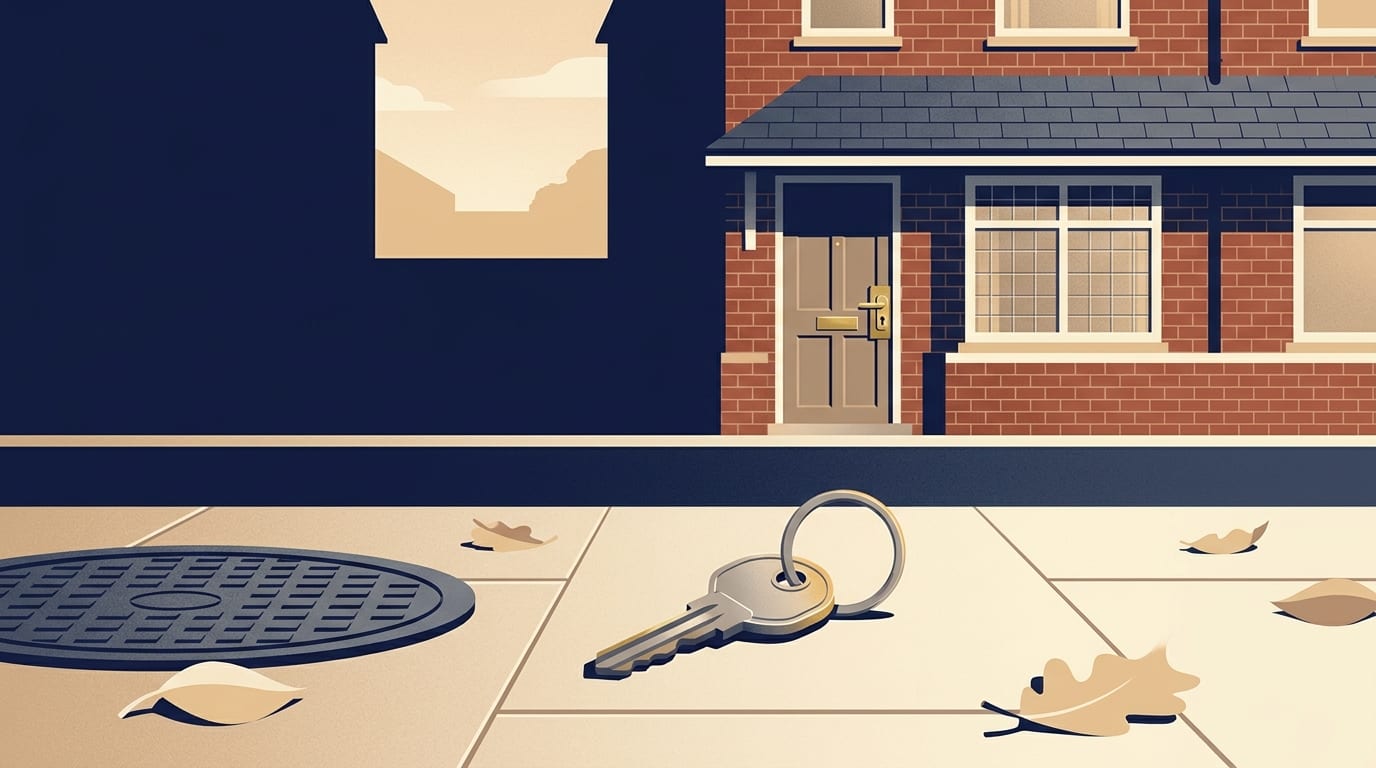
If your lost house keys have anything attached that points to your address, or if they were stolen by someone who knows where you live, changing your locks is the sensible step. If you are certain they fell out inside your own home, taking time to search is fine. The MLA's 2026 figures give from £100 to replace lost house keys, and prices vary by lock, time of day and area.
First check you have really lost them
Before you pay for a locksmith, take a moment to retrace your steps. Keys are easily misplaced under furniture, left in the door on the inside or dropped in the car. If you know the keys are somewhere inside your house, there is no immediate security risk. You can take your time to search thoroughly without worrying about an intruder.
If you dropped them while out walking or shopping, the risk depends on who finds them. If a key has nothing on it that points to your address, the risk is lower, but you cannot be sure who has it.
However, you must be honest with yourself about where they might have gone. If there is any chance you left them in the front door overnight, someone walking past could have taken them. This changes the situation from a misplaced key to a potential security threat.
When losing keys is a risk
Losing your keys becomes a clear risk to your home if they can be linked to your address in any way. This happens in several common situations:
- Your keys are attached to a bag containing letters or bank statements.
- Your keys are inside a wallet holding your driving licence.
- Your keys are dropped alongside a parcel with a delivery label.
- Your keys have a car fob attached and you park your car on your own driveway.
A car fob can lead a finder to your car and so to your home. According to figures from Money Expert (the page carries no date), nearly 40 per cent of UK homeowners have lost at least one set of keys. The same page notes that 31 per cent of homeowners did not call a locksmith to change their locks after losing their keys. Choosing not to change the locks leaves your home vulnerable if the wrong person finds them.
The Master Locksmiths Association lost keys page states that a locksmith will recommend you change your door locks if you lose your keys as a security prevention. A local locksmith will usually change the locks if you have lost your keys to stop people without permission getting into the home.
Stolen keys and the police
Stolen keys present a much higher risk than keys that are simply misplaced. If your bag is snatched, your home is broken into while you sleep, or your car is stolen with your house keys inside, you must assume the thief intends to use them.
Victim Support advises that if your house keys have been stolen it is a good idea to get your locks changed. This matters most when the thief may know your address. Changing the locks will stop a criminal getting easy access to your property. Victim Support also notes that you should contact your insurance company, as they may be able to help you with the costs of changing the locks.
You should report the theft to the police immediately. Ask for a crime reference number. You will need this number if you claim on your home insurance or if the theft leads to a burglary later.
Do you need new locks
If your keys are lost with your address, or if they have been stolen, you need new locks. Keeping the existing locks means someone holds a working key to your front door. They can walk in at any time of the day or night without causing any damage or making any noise.
Deciding when to change door locks comes down to who has access to your property. Changing the locks stops the lost keys working, though no lock guarantees against burglary. A locksmith will remove the old cylinder or lock body and fit a new one supplied with a fresh set of keys. Your old keys will no longer work, rendering the lost keys useless.
If you have a timber door, the locksmith will usually replace the mortice deadlock fitted inside the door. If you have a night latch, which is the surface latch often called a Yale lock, they will simply replace the rim cylinder on the outside. If you have a uPVC or composite door, they will replace the euro cylinder, which is the barrel on uPVC and composite doors. The multipoint locking mechanism, which is the strip of hooks and bolts worked by lifting the handle, often does not need to be changed. The new cylinder operates the gearbox, the central part of that mechanism.
Does insurance help
Victim Support says your insurer may be able to help with the cost of changing the locks. Check your own policy wording and call the insurer to find out what is included.
There is a much larger issue regarding your home insurance if you choose not to change your locks. Money Expert warns that if lost or spare keys are used in a break in your policy may be void. If a burglar uses a lost or spare key, your claim is likely to be refused because there must always be signs of forced entry.
Insurers may sometimes still consider such claims but you should never rely on this. It is vital to check your home insurance lock requirements and speak to your provider. If you decide not to change the locks and someone later uses your lost key to walk in and take your belongings, you could find yourself with no insurance cover for the stolen items.
What a locksmith will do
When you call a locksmith because you have lost your keys, they will first ask how they can get you back inside. A skilled locksmith uses non-destructive entry methods, meaning picking or bypassing rather than drilling. This allows them to open the door without causing damage. If a door or window has been damaged during a break in to steal your keys, the locksmith can also provide boarding up to secure the property temporarily.
Once the door is open, they will remove the existing lock and fit a replacement. A locksmith may carry a range of locks. They should offer you locks that meet British Standards. For timber doors, this is a BS3621 mortice lock or rim lock, shown by a Kitemark on the lock faceplate. For uPVC doors, ask for a snap-resistant standard such as a TS007 three star cylinder, a one-star cylinder fitted with two-star handles, or a Sold Secure SS312 Diamond cylinder. This protects against lock snapping.
Remember that there is no government licensing of locksmiths in the UK. Anyone can trade as one, which is why vetting matters. The Master Locksmiths Association (MLA) runs a voluntary approval scheme. Its approved companies are vetted, have criminal record checks, employ locksmiths who have passed the MLA exam and are inspected regularly.
What it may cost
Locksmith jobs are typically priced as labour plus parts, either by the hour or as a fixed price per job. The price is driven by the time of day, your location, the type and security grade of the lock, and how entry is gained. Evenings, nights, weekends and bank holidays will cost more than a standard weekday appointment.
The MLA's 2026 figures state that replacing lost house keys starts from £100. This process takes about one hour and includes VAT. The MLA also notes that most locksmiths will also replace the door lock during this visit.
This table shows MLA 2026 starting prices for replacing different types of door locks.
|
Service or lock type |
Starting price (inc VAT) |
|---|---|
|
Replace lost house keys |
from £100 |
|
Standard euro cylinder on a uPVC door |
from £105 |
|
Mortice lock |
from £148 |
These are MLA 2026 'from' prices. Local quotes will differ based on the time of day and the specific lock standard you choose.
London and some surrounding areas are typically about 20 to 25 per cent higher than the MLA's national estimates. Charges may also be subject to VAT if the locksmith is VAT-registered. Many locksmiths charge no separate call-out fee but some do, so you must ask for a total price before work starts.
When you call a locksmith, you must ask for a clear price before they travel to your home. A reliable quote should include:
- The cost of the labour for the time spent on the job.
- The price of the replacement locks or cylinders.
- Any separate call-out fee if the locksmith charges one.
- Any out-of-hours premium for evenings, weekends or bank holidays.
- VAT if the locksmith is registered to charge it.
Under the Consumer Rights Act 2015 a service must be carried out with reasonable care and skill, at a reasonable price if none was agreed, and within a reasonable time, with a right to have poor work put right or money back. Under the Consumer Contracts Regulations 2013 there is normally a 14-day cancellation period for work arranged at home or by phone, but this does not apply where the customer specifically asked for a visit for urgent repairs. Extra work sold during that visit is not covered by the exception.
Smaller steps if you will not change locks
If you decide that losing your keys does not pose a direct risk to your home, you will still need a way to get inside and secure the property. If you are locked out, you can call a locksmith simply to gain entry. They will aim to open the door without damaging the lock, leaving the existing lock in place.
You will then need to find a spare key. If you have left a spare with a trusted neighbour or family member, you can retrieve it and have a new copy cut at a local hardware shop. This may cost less than replacing the lock, but it means the lost key remains a working key for your door.
While you are inside the house, you can secure the doors using internal bolts or a door chain. This provides temporary security while you are at home, but it does not protect the property when you leave for work or go out shopping.
Keeping spare keys safe in future
Once your new locks are fitted, you will need a secure way to manage your new keys. Leaving a spare key under a doormat or a plant pot is a known risk. A hidden key can be found by other people, and your home insurance may not cover you if a burglar uses a key you left outside.
A safer option is to give a spare key to a trusted neighbour, a close friend or a family member who lives nearby. Ensure they keep the key in a safe place away from their own front door. Do not attach any address tags to the spare key.
If you need to keep a spare key at your own property for carers or family members, consider a key safe. This is a small metal box with a combination lock. Ask what security rating the model holds and position it out of direct sight from the street.
Common questions
Can I just get a new key made without changing the lock?
A new key for the existing lock leaves the lost key fully working, which keeps the security risk to your home. That is why a locksmith will recommend changing the lock after lost keys.
Do landlords pay to replace lost keys?
Who pays depends on your tenancy agreement. You should check it and get the landlord's agreement before changing locks. A landlord who changes the locks to keep a tenant out without a court order commits illegal eviction, a criminal offence. For advice on your own situation, you should contact Citizens Advice or Shelter.
Will a locksmith ask for ID before opening my door?
A reputable locksmith may ask you to show that you live at the property before they open your front door, so have some ID ready if you can.
What happens if the locksmith has to drill the lock?
If a lock is faulty or highly secure, a locksmith may need to drill it to get you inside. This normally means the lock has to be replaced. A good locksmith will always attempt non-destructive entry first and will explain why drilling is necessary before they start. Be wary of national call centres quoting very low prices on the phone, only for a sub-contractor to arrive, drill a lock that could have been picked, and charge a premium for a cheap replacement cylinder.
What to do now
If you have just lost your keys, follow these steps in order to secure your home:
- Search thoroughly inside your home and retrace your steps outside.
- Report stolen keys to the police immediately and ask for a crime reference number.
- Check your home insurance policy to see if you have cover for lost or stolen keys.
- Call a local locksmith to gain entry if you are locked out on the doorstep.
- Ask the locksmith for a total price including parts, labour, out-of-hours charges and VAT before work starts.
- Ask what security standard the new locks will meet before they are fitted.
- Check the locksmith has a real local address and ask to see their ID and an invoice.
Taking action quickly removes the worry that someone else holds a key to your front door. If you need new locks fitted or require emergency entry, find a locksmith near you to get a clear price and secure your property today.
Find a top rated locksmith near you
1,787 locksmiths across the UK, each ranked on their Google rating and the number of reviews behind it. Start with your county: