
How Much Does uPVC Door Handle Replacement Cost?
TopRatedLocksmiths.co.uk · 7 October 2026
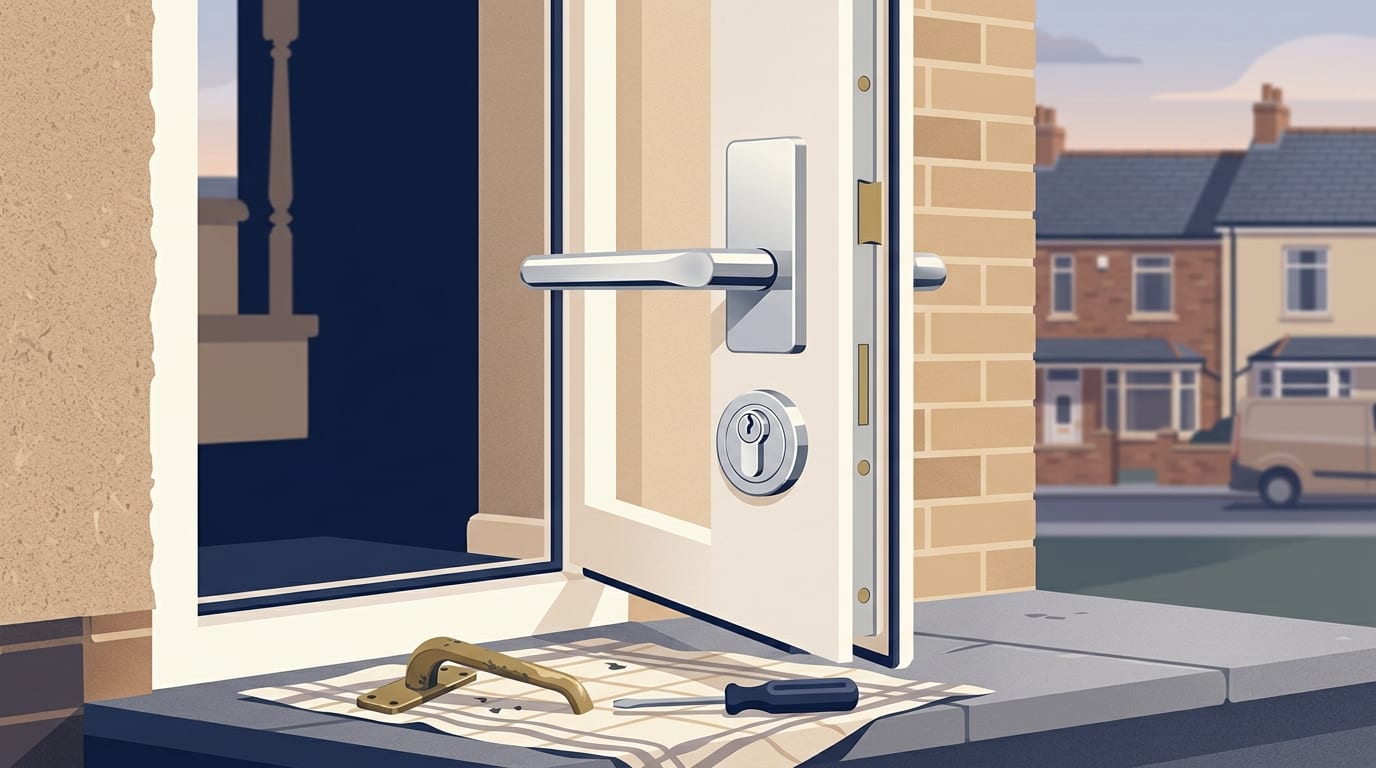
In 2026 having a locksmith fit a replacement uPVC door handle, including labour, starts at around £110 to £116. Repairing a handle starts from £53, but the bill is much higher if the real fault is the gearbox inside the door. A broken door handle usually needs diagnosing properly so you do not pay for parts you do not need.
Typical uPVC door handle prices
The table below shows what you can expect to pay a professional to supply and fit a new handle, or to fix the underlying mechanism if the handle itself is not broken.
|
Job |
Typical 2026 price |
|---|---|
|
Repair a door handle |
from £53 |
|
Replacement standard handle, part only |
from £20 plus labour |
|
Replacement high security handle, part only |
from £40 to £50 plus labour |
|
Fit a replacement uPVC door handle including labour |
from £110 to £116 |
|
Cylinder or handle repair or replacement outside London |
£90 to £150 |
|
The same job in London and the South East |
£120 to £180 |
|
Replacement gearbox when the handle is floppy |
£145 to £280 including labour |
These are typical published starting prices and ranges for 2026. The parts price is added to the £90 to £150 and £120 to £180 ranges when a component is replaced, and local quotes will differ.
You must always ask a locksmith whether their quote includes VAT. Some independent locksmiths are not VAT registered, while larger firms are, which changes the final amount you pay. You should also ask if they charge a separate call-out fee just for turning up, as many do not.
Is it the handle or the gearbox?
Most uPVC and composite doors are secured by a multipoint locking mechanism. This is the strip of hooks and bolts worked by lifting the handle. The central part of that mechanism is called the gearbox.
According to the Master Locksmiths Association, a floppy handle is usually caused by a faulty gearbox. The problem is normally a broken spring inside the multipoint lock rather than a fault with the handle you hold. However, the exact same symptom can be caused by a broken spring cassette in the handle itself, non-repairable wear to the metal, or poor installation.
Because the signs can look the same from outside, a locksmith should diagnose the fault before anyone buys a handle. If you fit a new handle but the internal gearbox spring is snapped, the new lever will still droop and the door will not secure properly.
Signs that the fault may be in the gearbox or the wider mechanism include:
- The handle droops and feels loose when you press it.
- The door will not lock even when you lift the handle firmly.
- The key turns fully in the cylinder but the hooks and bolts do not retract.
- You hear a metallic crunching sound inside the door when lifting the handle.
- The handle lifts freely but the hooks and bolts do not move.
A handle that works when the door is open but is stiff when it is closed usually means the door has dropped out of line, not that a part has broken. The guide to uPVC door lock problems covers that and what replacing a gearbox involves.
Why handles break or go loose
Inside the backplate of most uPVC door handles is a small unit called a spring cassette. This metal spring forces the lever back to a horizontal position after you press it down. Over years of daily use, the metal fatigues and the spring snaps.
Another cause is a door that has dropped on its hinges. Once it is out of line with the frame, the locking hooks no longer meet their keeps and the handle has to be forced up to lock the door. That daily forcing puts strain on the handle, the spring cassette and the gearbox.
Eventually, the weakest part of that system will break. If your handle and lock are old and worn, the Master Locksmiths Association recommends changing them at the same time. Ask the locksmith whether the other parts are worn before deciding to fix only the broken spring.
Repairing the handle or replacing it
Repairing a door handle starts from £53. This usually means the locksmith replaces the broken spring cassette inside the handle backplate, leaving your original handle on the door.
Repairing a uPVC door lock or fixing a uPVC gearbox starts from £85. However, it may be cheaper and more reliable in the long run to replace the gearbox entirely than to attempt a repair on worn internal parts.
A replacement standard handle costs from £20 for the part alone, plus labour. Fitted, a replacement handle starts from around £110 to £116, against £53 for a repair, so a new handle makes most sense when the old one is worn, pitted or loose on its backplate. Ask for both prices.
Standard handles and security handles
According to the Master Locksmiths Association guide to door handles, uPVC door handles can be fitted to any uPVC door type. This includes front and back doors, French doors and even bi-fold doors. While they may look similar, they are tested to different security standards and some are much more secure than others.
High security handles are designed to protect the lock cylinder inside them. They feature a cylinder guard against lock snapping, chamfered edges to stop burglars getting a grip with tools, and extra overall strength. Most are at least twice as thick as standard handles.
The most secure uPVC door handle is one approved to TS007 2-star with Secured by Design accreditation, which means it is police approved. Upgrading to Sold Secure SS301 approved or 2 star Kitemarked security handles improves your home security significantly. A high security handle costs from £40 to £50 supply only, plus labour.
A security handle does nothing without a good cylinder. The handle on its own will not protect the door and always needs a high security lock. A 2-star handle combined with a 1-star cylinder makes 3 stars against snapping. You can learn more about these ratings in our guide to anti snap locks explained.
How uPVC door handles are sized
Handles are not universally sized. If you hire a professional, they will measure the door to ensure they supply the correct part. If you want to understand what they are checking, there are three main measurements that must match your existing locking mechanism.
The PZ measurement is the distance between the centre of the square spindle hole and the centre of the keyhole. Common UK PZ sizes are 92mm, which is the most common size on modern multipoint locks, and 68mm, which is often found on older doors. A 70mm PZ size is also used on some systems.
Screw fixing centres are measured from the centre of the top fixing screw to the centre of the bottom one. Common UK sizes for these are 122mm, 211mm and 215mm. Most uPVC door handles use an 8mm square spindle to connect the levers through the door.
You also need to know the handle operation type. Lever/lever handles have a handle on both sides that you press down. Lever/pad handles have a fixed pad outside and a lever inside. If you want to change from a lever/lever to a lever/pad, the locksmith must confirm it suits the multipoint locking system, as they are not always interchangeable.
What changes the price
The final price you pay depends on the exact handle you choose, whether other parts need changing, where you live and the time of day you need the work done.
The type of handle changes the parts cost. A standard handle starts from £20, while a high security handle costs £40 to £50. When fitting a new handle, the cylinder might also need changing. Some security handles have a cover over the keyway. If your current cylinder is now too long or too short to fit safely behind that cover, a new one must be installed.
Time of day makes a significant difference to labour costs. Standard daytime labour is around £65 to £95 per hour. According to the Master Locksmiths Association price guide, standard hourly labour starts from £85, but rises to from £105 per hour after 8pm. Evening, weekend and bank holiday call-outs typically add roughly £40 to £90 to the bill.
Location is another major factor. Locksmith prices in London and some surrounding areas are typically around 20 to 25% higher than the national estimates. This reflects the higher operating costs in the capital and the South East.
Why fitting matters for security
The Master Locksmiths Association does not advise fitting a handle yourself because a badly fitted handle can leave the door vulnerable to attack. A professional ensures the hardware is mounted correctly without crushing the internal lock parts.
The MLA gives fitting times starting from 20 to 30 minutes for an experienced locksmith. The time consuming parts of the job are making sure the new handle covers the old screw holes neatly, and changing the cylinder if the new handle depth requires it.
The Master Locksmiths Association minimum security guidelines require that the outside of any cylinder should not protrude more than 3 mm from the door or the handle plate. A cylinder that sticks out further is easier to grip and snap.
The guidelines also state that lock furniture should be the bolt-through type with fixings secured from the inside only, complying with BS EN 1906 Annex A Grade 1. If screws are exposed on the outside, a burglar can simply unscrew your handle and access the lock mechanism directly.
Getting a firm price and avoiding scams
There is no government licensing of locksmiths in the UK. Anyone can trade as one, which is why vetting the person you hire matters. The Master Locksmiths Association is the main trade association. Its approved companies are vetted, have criminal record checks, employ locksmiths who have passed an exam and are inspected regularly. This is a voluntary approval scheme, not a legal requirement.
When searching for a tradesperson, be cautious of national call centres advertising as a local locksmith. They often quote a very low price on the phone that multiplies on the doorstep, or pass the job to whoever is nearest. Other common scams include drilling a lock that could have been opened without damage, replacing a whole multipoint mechanism when only the cylinder or gearbox had failed, or fitting cheap cylinders at premium prices.
A reputable locksmith will arrive in a marked vehicle, show ID, and provide a written invoice. They will not demand cash only or refuse to give a firm price before starting work.
Under the Consumer Rights Act 2015 a service must be carried out with reasonable care and skill, at a reasonable price if none was agreed, and within a reasonable time. You have a right to have poor work put right or your money back.
Under the Consumer Contracts Regulations 2013 there is normally a 14-day cancellation period for work arranged at home or by phone. However, this does not apply where you specifically asked for a visit for urgent repairs. Extra work sold during that visit is not covered by the exception, so do not feel pressured into buying upgrades you did not ask for.
Questions to ask before the locksmith starts:
- Is the quoted price fixed for the job or charged by the hour?
- Does the price include VAT, labour and the parts?
- Will you diagnose whether the gearbox is broken before fitting a new handle?
- What security standard will the new handle meet?
- Will my current cylinder fit the new handle safely without protruding?
- Can you provide a written invoice and show ID on arrival?
Common questions
Can you fix a uPVC door handle that is loose on one side?
Yes, if a handle is loose on one side it is usually a failed spring cassette within that specific lever. A locksmith can often replace the broken cassette without needing to replace the entire handle assembly, which keeps the repair cost down.
What is a replacement door handle spring cassette?
A spring cassette is a small self-contained mechanism fitted inside the handle backplate. It contains a coiled spring that pushes the handle back to a horizontal resting position after you press it down. When the metal in this cassette snaps, the handle drops and goes floppy.
Can you fit any composite door handle?
No, handles are not universal. The new handle must exactly match the PZ measurement and the screw fixing centres of your existing multipoint locking system. If you try to fit a handle with the wrong measurements, the spindle and keyhole will not line up and the fixing screws will not go through the door.
How do you know which uPVC door handle to buy?
A professional locksmith will measure the PZ distance, the screw centres and the spindle thickness before supplying a part. They will also check whether you need a lever/lever or lever/pad setup, and recommend a handle that meets current TS007 or Sold Secure standards.
Next steps for replacing your handle
Before you pay to have a door handle replaced, take a few simple steps to ensure you get the right repair at a fair price and do not pay emergency rates unnecessarily.
- Check if the handle is floppy when the door is open. If it is, the problem is likely the handle spring or the internal gearbox.
- Decide if you want a standard replacement handle or if you want to upgrade to a 2-star high security handle to protect against lock snapping.
- Find an established local locksmith and describe the exact symptoms over the phone.
- Ask for a total estimate that includes labour, parts and VAT.
- Wait for standard daytime working hours if your door is secure, to avoid paying out-of-hours call-out premiums.
- Ask the locksmith to diagnose the fault fully before they start unscrewing the old hardware.
Getting a broken handle sorted quickly stops further strain on your locking mechanism and keeps your home secure. To get a firm price for your door, find a locksmith near you and ask them to assess the fault.
Related Guides
How Much Does Key Cutting Cost in the UK?
Typical 2026 prices for cutting house, mortice, window, security and safe keys, how long it takes and why restricted and patented keys need a locksmith.
How Much Does a Locksmith Cost in the UK?
What UK locksmiths charge for lockouts, lock changes and out of hours work, what pushes the price up and how to get a firm quote first.
Window Restrictors and How They Keep Children Safe
What window restrictors do, which windows need them, how far a window should open, how to keep a fire escape route and what landlords should know.