The answer to who pays for a broken door entry system depends entirely on your lease or tenancy agreement. As a general rule, shared parts of a building are the landlord's or freeholder's responsibility to repair, and leaseholders usually pay for these repairs through their annual service charge. You will need to check your own lease, as this document decides exactly what counts as a shared part of the building.
How a door entry system in a block of flats works
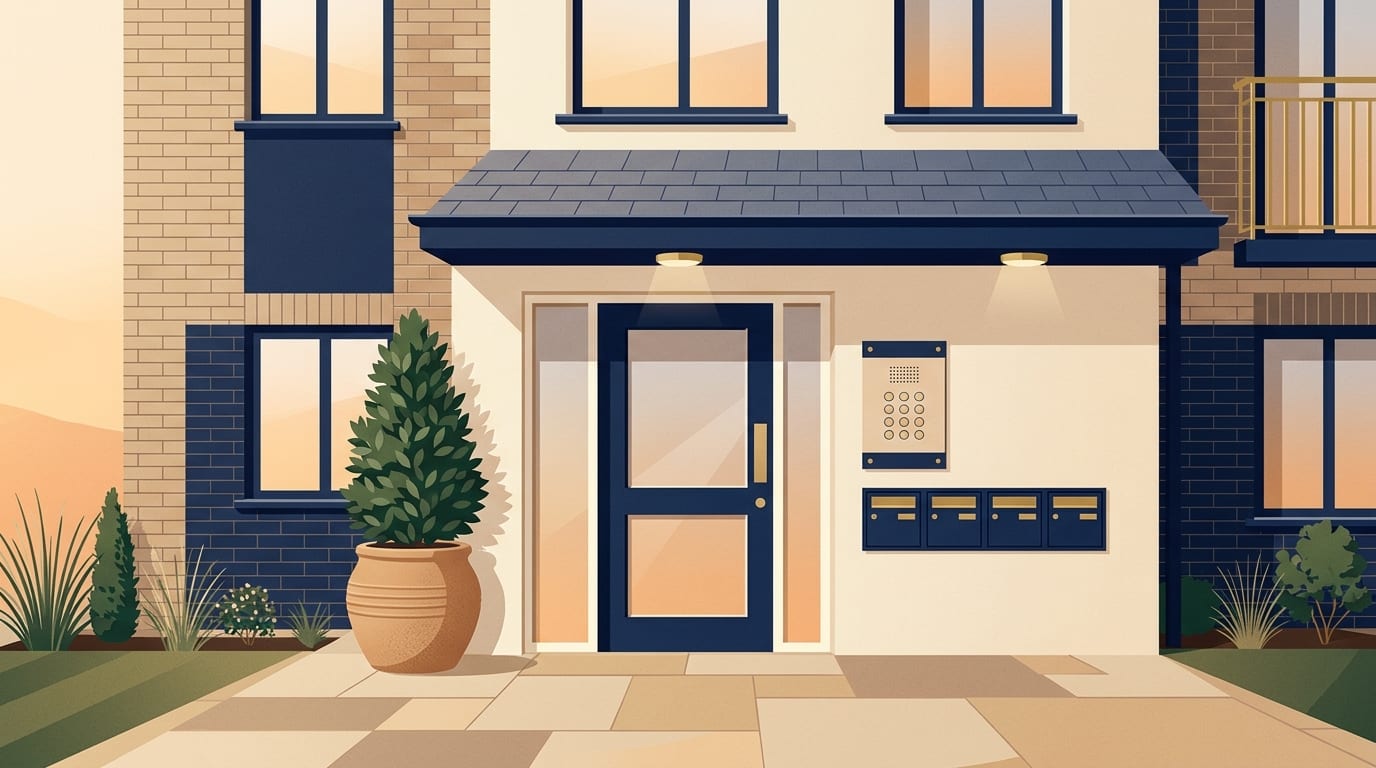
A door entry system controls who can get into the shared hallway of your building. It is a network of electrical and mechanical parts designed to keep the main door locked while allowing residents to let visitors in.
A standard door entry system usually includes these main parts:
- An outside panel fitted with a buzzer, microphone, and a keypad.
- Handsets or wall-mounted buttons inside each individual flat.
- An electronic lock release wired into the communal door frame.
- Electronic fobs, swipe cards, or traditional keys for residents to enter.
Inside each flat, the handsets let residents speak to visitors and unlock the door remotely. The actual locking mechanism on the communal door is normally an electronic lock release, also known as a strike.
Residents usually open this door from the outside using their fobs or keys. Because these parts are wired together across the entire building, a fault can be difficult to pinpoint. The problem could be at the main door, hidden in the communal wiring, or isolated inside an individual flat's handset.
The system relies on the communal door closing properly behind every person who walks through it. This means the entry system works alongside a mechanical door closer and a specific type of lock that secures itself automatically. If the mechanical parts fail, the electronic entry system cannot keep the building secure.
Why a broken entry system matters
A broken entry phone system makes daily life highly frustrating. It stops you from receiving parcel deliveries, forces you to walk down flights of stairs to let guests in, but the most serious problem is a communal door that no longer locks.
If the electric lock release fails and leaves the communal door open, the security of the entire block is compromised. Anyone can walk off the street into the shared hallways, stairwells, and meter cupboards. That is why the police handbook says a communal door is only effective if it is closed and secure.
The police crime prevention handbook offers clear advice for residents living in flats. It states that your communal door is only effective if it is closed and secure. The police advise you to check that it locks behind you every time you use it.
If the door does not lock behind you, the handbook says to report it to your management agent or landlord so it can be repaired quickly. A secure communal door is your main line of defence. If you are also worried about the lock on your own flat, you can check the rules on fire door locks and fire exits to understand what is safe to fit.
Who pays for repairs if you rent your flat
If you rent your flat in England, Shelter says the landlord must keep common or shared parts of the building in repair even if they have not been notified by the tenant. Shelter's pages do not name entry systems, so whether yours counts as a shared part depends on your tenancy agreement.
Shelter gives the example of a leaseholder who has the right to use an entrance hall owned by a separate freeholder. You can check the exact details on repairs under section 11 on the Shelter website.
There is one specific exception to this rule in England. Shelter states that if your tenancy began before 15 January 1989, the landlord is only responsible for repairs to the structure and exterior of the dwelling let to the tenant and the installations in it. Crucially, they are not responsible for repairs to common parts.
The Shelter pages above are for England. If you live in Scotland, the rules differ. Shelter Scotland states that owners are usually responsible for communal areas. If you rent your home, your landlord is responsible for communal areas. The title deeds show who is responsible in a particular building.
If you are a tenant and feel tempted to improve security by upgrading locks yourself, you should read about changing locks on a rented home first. Check your tenancy agreement and get the landlord's agreement first.
Who pays for repairs if you own a leasehold flat
When you own a leasehold flat, the ownership and repair responsibilities are split between you and the freeholder. This split decides who is responsible for fixing a broken intercom or door entry system.
Shelter advises that the freeholder is usually responsible for repairs to the building's structure and to shared parts, such as lifts and communal stairways. In contrast, you are usually responsible for repairs inside your flat. Because a flat door entry system bridges the gap between the shared hallway and your private living room, you must check your lease agreement to find out exactly who is responsible for shared spaces.
If your lease agreement does not clearly say who is responsible for a particular repair, Shelter recommends that you contact LEASE for advice. You can find more information on responsibility for leaseholder repairs directly from Shelter.
Leaseholders usually pay for shared repairs through the service charge, and the lease sets how the service charge is organised and what can be charged.
How service charges and consultation work
When a communal entry system needs to be fixed, upgraded, or completely replaced, the freeholder uses the building's service charge funds to pay for the work. GOV.UK states that your lease sets out the way the service charge is organised and what can be charged.
GOV.UK says you have the right to be consulted about charges above set thresholds, shown in the table below.
The table below shows the consultation thresholds GOV.UK gives.
|
Type of work or service |
Consultation threshold |
|---|---|
|
Planned work |
£250 per leaseholder |
|
Work or services lasting over 12 months |
£100 a year per leaseholder |
Shelter says the freeholder should consult you before doing any work that will cost each leaseholder more than £250 in total, or £100 per year for work taking over a year.
If you think a service charge bill is unreasonable, or if you believe the standard of work carried out by the installer was unsatisfactory, you have rights. GOV.UK explains that you may apply to a tribunal to challenge the charges. You can check the official rules on service charges and other expenses to understand how this process works.
What your lease or tenancy agreement says
Your lease or tenancy agreement is the most important document you have when an intercom or door entry system breaks. This is because the lease decides what counts as a shared part of the building and what belongs strictly to your flat.
When you read your agreement, look for clauses that mention:
- Communal areas and shared parts of the building.
- Door entry systems, intercoms, or electronic gates.
- Maintenance of fixtures and fittings inside your flat.
- Restrictions on altering the building's wiring or external doors.
Shelter gives lifts and communal stairways as examples of shared parts, but the electronics can be more complicated. The handset in your flat might be treated as your own, or as part of the communal system, and only your lease or tenancy agreement can tell you which. If it states the whole system is a shared part, the landlord or managing agent would normally deal with the repair.
If the lease says you are responsible for all fixtures and fittings inside your flat, you may have to arrange and pay for the repair of your own handset yourself. Never assume you can alter, bypass, or replace a communal system on your own. Modifying shared wiring or changing the lock on a communal front door may breach your lease.
Unauthorised changes can also affect fire escape routes. Always seek written permission before touching any part of the system.
What to do if nobody fixes it
If the entry phone system is broken and the landlord or managing agent is slow to act, you should report the fault to them in writing. Do not rely on a quick phone call. Keep a copy of your email or letter, and note down the exact date the system stopped working.
In your message, explain clearly how the broken door affects your security. Point out if the communal door no longer locks behind you, as this turns a simple maintenance issue into an urgent security risk. Remind them of their obligations under the lease or your tenancy agreement.
If they still do not fix it, speak to Shelter or Citizens Advice before withholding any payment, as your lease or tenancy agreement and the law decide what you can do. You can also follow the managing agent's official complaints procedure to escalate the issue.
If the formal complaint process fails, you should not take matters into your own hands. This guide does not give legal advice, so you will need to speak to a specialist. Contact Citizens Advice or Shelter for guidance tailored to your exact situation.
They can explain your options for your own situation.
When a locksmith or installer is called
When a communal door entry system fails, a locksmith or a specialist access control installer will be needed to fix it. This professional must be called by the landlord, the freeholder, or the managing agent. As a resident, you should not call a tradesperson to work on a communal door yourself, because work on shared property is for the landlord, freeholder or managing agent to arrange.
When the locksmith arrives, they will inspect the communal door to see if the problem is mechanical or electrical. If the door is physically failing to close, the lock release cannot engage. In this case, the locksmith might adjust the hinges, realign the door, or replace a faulty door closer.
If the problem is electrical, the approach is different. If the fault is in the complex wiring, the main intercom panel, or the fob reader, an access control specialist may need to trace the fault through the building's electrical system.
You should ask your managing agent for a timeline of when the contractor will arrive. If the building is completely insecure because the door will not lock, this should be treated as an emergency and fixed quickly. If only one flat's buzzer is faulty but the building remains secure, the repair will usually wait for normal working hours, as evening and weekend call-outs push the price up.
Common questions
Is a flat door entry system a shared part of the building?
It depends on your lease or tenancy agreement, which decides what counts as a shared part of your building. Shelter's pages name shared parts such as lifts and communal stairways but do not name entry systems, so check your document.
Can I fit my own intercom system for my flat?
You cannot usually fit your own intercom system if it involves wiring through communal hallways or altering the shared front door. Doing so may breach your lease. You should get written permission from your freeholder or landlord before making any changes that affect the building's shared areas.
What happens if the entry phone system breaks at night?
If the broken system leaves the communal front door wide open, you should report it to the managing agent's emergency out-of-hours number immediately. A locksmith can usually attend to secure the door. If the door is secure but the buzzers simply do not work, the repair will normally wait until the daytime rate applies, as night call-outs cost more.
Do I have to pay if I did not break the door entry phone?
If you are a leaseholder, you usually pay for shared repairs through the service charge, but your lease sets what can be charged. If you rent, check your tenancy agreement, and speak to Shelter or Citizens Advice about your own situation.
What to do next
If your flat's door entry system is broken, follow these steps:
- Check the communal door to see if it locks behind you, and report it immediately if it does not.
- Read your lease or tenancy agreement to confirm who is responsible for shared parts and internal fixtures.
- Report the fault in writing to your landlord, freeholder, or managing agent so you have a record.
- Ask the managing agent when a locksmith or installer will attend to secure the building.
- If you are a leaseholder, check that you are consulted if the planned work will cost you more than £250.
- Do not attempt to alter the communal wiring or change the shared locks yourself.
- Contact Citizens Advice or Shelter if your landlord refuses to carry out essential repairs.
Never arrange for a contractor to work on shared doors without written permission from the freeholder. If you are responsible for the lock on your own private front door and it needs attention, you can find a locksmith near you to carry out the repair.
Find a top rated locksmith near you
1,831 locksmiths across the UK, each ranked on their Google rating and the number of reviews behind it. Start with your county: