A door closer pulls the door shut automatically after it opens. On fire doors in blocks of flats, it must be an effective self-closing device, which means the door closes fully into the frame every time. Whether you let out a property, manage a residential block or own a flat, understanding how these devices are fitted and checked helps keep your building secure and its fire doors working.
What a door closer actually does
A door closer is a mechanical device usually installed at the top of a door. It takes over the job of pulling the door shut after someone has opened it and walked through. It uses a combination of internal spring tension to provide the closing force and hydraulic fluid to control the speed of the movement.
The primary job of a closer on a fire door is to hold back fire and smoke by keeping the door sealed in its frame. Buildings are designed with fire compartments to stop a fire spreading from one area to another. The door is a vital part of this compartment. If a door stops an inch short of the frame, the fire seal is broken and smoke will travel quickly into escape routes. A door that does not close fully into its frame will not adequately hold back fire and smoke, putting lives at risk.
The secondary job is building security. A closer ensures the door shuts completely and the lock engages behind every person who enters or leaves the building. The police point out that your communal door is only effective if it is closed and secure. Without a closer, communal doors are often left open by mistake, allowing anyone to walk in off the street. A reliable closing device removes the need to rely on residents remembering to pull the door shut behind them.
Which doors need a self closing device
In residential buildings, self closing devices are fitted to fire doors that protect escape routes. If you live in a block of flats, your journey from the street to your home passes through several of these doors. The main communal entrance, the lobby doors, the stairwell doors and the corridor doors are all designed to protect the escape route.
The GOV.UK guidance says each flat entrance door and each common parts fire door should have an effective self-closing device. A door that does not close fully into its frame will not adequately hold back fire and smoke.
Who is responsible for a flat entrance door depends on your lease or tenancy agreement, so check it. The Responsible Person, explained below, is the building owner or whoever has control of the building, and the checks in the guidance fall to them.
Commercial premises have their own fire rules. If you run a business or own a commercial property, you should ask your fire risk assessor what is expected for your internal and external doors. You should not rely on this guide for commercial fire safety requirements. You can read more about securing your business in our guide to commercial locks and insurance.
What the fire door checks look like in England
The GOV.UK Fire Safety (England) Regulations 2022 fire door guidance (updated 8 August 2025) sets out how these doors are checked. These specific routine checks apply in England only. They apply to residential buildings where the building's top storey is more than 11m above ground level, which is typically more than four storeys.
The law places the duty to carry out these checks on the Responsible Person. The Responsible Person is the building owner, such as a freeholder, and other persons having control of the premises, such as managing agents.
This Responsible Person must use best endeavours to check all flat entrance fire doors at least every 12 months. In practice that means asking residents for access so the door and its closer can be checked. They must also carry out checks of any fire doors in communal areas at least every 3 months.
During these checks, every closer is tested to ensure it is an effective self-closing device. The guidance describes a simple test to prove this. First, you open the door fully and release it. It should swing smoothly and close fully into the frame. Then, you open the door to about 15 degrees and release it. Again, it should close fully into the frame.
In both cases, the door should close fully into the frame. A door that stops short has failed the test and should be reported to the Responsible Person.
Types of door closer you will see
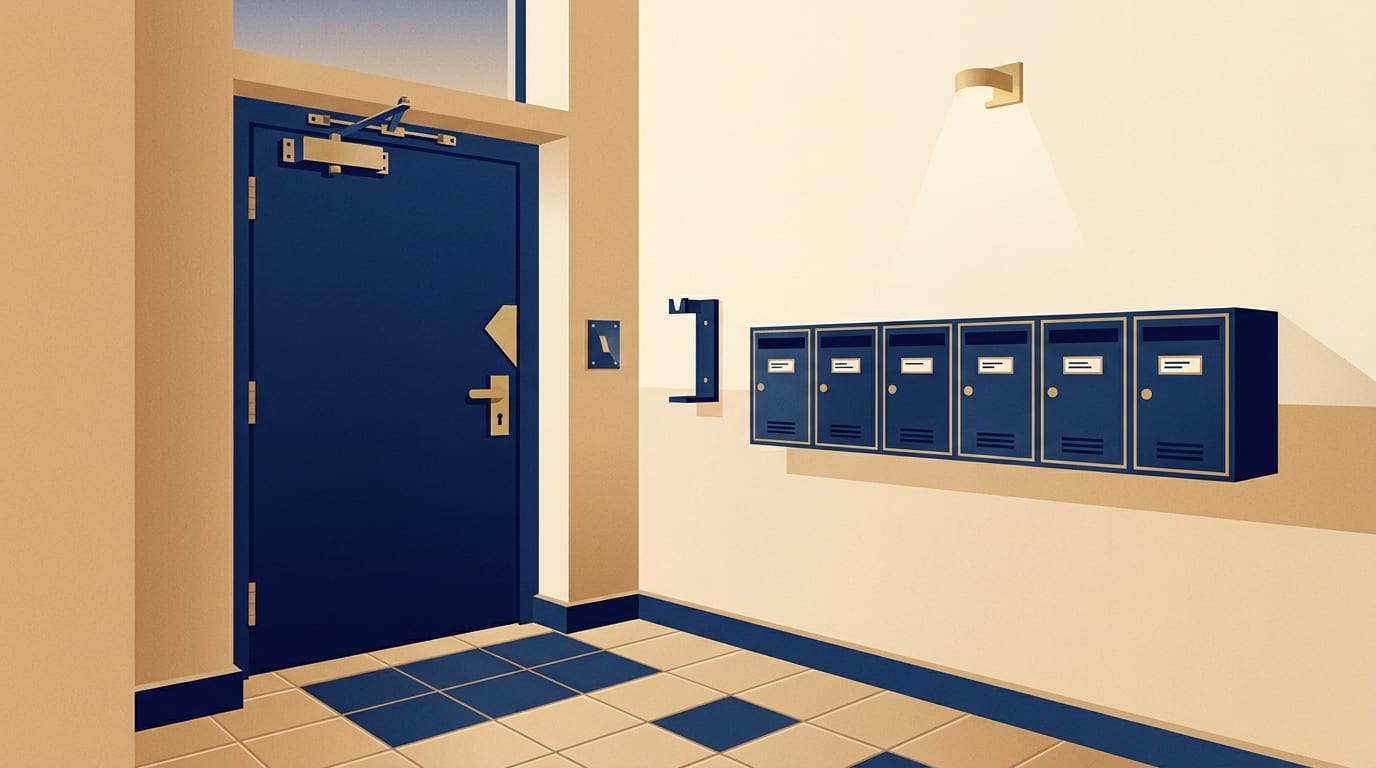
The most common type is the overhead closer. This features a metal body containing the mechanical parts, which is usually fitted to the top corner of the door. A surface mounted metal arm connects this body to the door frame above. When you push the door open, you bend the arm and compress the heavy spring inside the body. When you let go, the spring pushes back and the arm pulls the door shut.
Overhead surface mounted arm closers are what most people picture when they think of a self closing door. You will often see them on flat entrance doors and corridor doors. They are highly visible, which makes it easy to spot if they have been disconnected or damaged, and they are a job for a professional to adjust or replace.
For the main entrance to a block of flats, the door is used far more often than a single flat door. The police crime prevention handbook says the ideal communal door will be robust, security accredited and fitted with a good self closing arm. This ensures the building remains secure against walk-in theft while still meeting the daily demands of a busy residential block.
How to choose a closer for your door
A door closer must be right for the door's size and weight. A heavy, solid timber fire door requires a much stronger closer than a lightweight internal door. The width of the door also matters. A wider door creates more leverage against the closer mechanism, so it requires a higher power rating to pull it shut effectively.
When a closer is fitted to a certified fire door, it must be chosen to suit that specific door. Fitting the wrong type of closer can leave the door unsafe, so ask the supplier or fitter to confirm the closer suits your door.
You should ask the supplier or fitter to ensure the closer matches the door. The fitter should explain what the closer is rated for and why it is the correct choice for your door's weight and width. They will check the manufacturer instructions to confirm it meets the standard required for your specific fire door.
Environmental factors also play a part. In communal corridors and stairwells, air pressure and drafts can create strong resistance. A closer must be strong enough to overcome this air pressure and pull the door shut, but not so strong that residents cannot easily push it open. If you are replacing a closer on a flat entrance door, you should also check that the lock suits a fire door. You can find out more about these locks in our guide to locks suitable for fire doors.
What a locksmith or door fitter should do
Door closers are usually fitted by locksmiths, commercial locksmiths and specialist door fitters. The Master Locksmiths Association (MLA) lists commercial locksmith services covering business security among the services locksmiths offer, and locksmiths can work on both domestic and commercial properties.
Before fitting a new closer, the professional will carry out a full check of the door. They will check the following things to ensure the door is ready:
- That the door hangs properly on its hinges and swings freely.
- That the door has not dropped inside the frame.
- That the timber is not binding against the door frame.
- That the bottom of the door is not rubbing heavily on the floor carpet.
- That the hinges are completely secure and undamaged.
A closer cannot fix a door that is catching or dropping, so these issues must be resolved before any new closer is attached. The fitter will then fit the closer body and the surface mounted arm to suit that door.
Once fitted, the closer must be adjusted so the door closes fully. Adjustment is a precise job using small control valves on the closer body. The fitter will set the main closing speed so the door swings shut safely without rushing. They will then set the latching action, which gives the door a small burst of speed in the final few degrees of movement to overcome the resistance of the lock and push the door firmly into the frame.
On a fire door, the adjustment of speed and latch should always be left to the fitter. Incorrect adjustment can leave the door resting off the latch or slamming dangerously.
Looking after a closer and when to report a fault
Residents play a part in keeping the building safe. The guidance says residents should keep fire doors shut when they are not in use and should not tamper with self-closing devices. This means you should never disconnect the metal arm to make the door easier to open, and you should never prop a fire door open with a wedge or a heavy object.
If you notice a fault or damage to a door closer, you should report it immediately to the Responsible Person. Common signs of a faulty closer include:
- Hydraulic oil dripping from the closer body down the door.
- The door slamming violently instead of closing smoothly.
- The door stopping an inch short of the frame and failing to latch.
- The metal arm hanging loose or disconnecting completely.
- The door feeling completely weightless when you push it open.
The Responsible Person must ensure that information about fire doors and closers is given to new residents as soon as reasonably practicable. They are also required to ensure this information is reminded to all residents at intervals not exceeding 12 months.
You should also pay close attention to your main building entrance. The police handbook says to check that your communal door locks behind you. If it does not, report it to the management agent or landlord. A communal door is only effective if it is closed and secure.
Common questions
How do you adjust a door closer?
Adjustment of the closing speed and the latch is a job for the fitter. On a fire door it should always be left to a professional fitter, to make sure the door closes fully into the frame every time without slamming.
Why does my self closing door slam so hard?
A door usually slams if the closing speed or latching action has been set too fast, or if the hydraulic fluid inside the closer has leaked out. When the fluid leaks, the closer loses its resistance and the internal spring forces the door shut violently. A leaking closer usually needs to be replaced by a locksmith or door fitter.
Can a locksmith fit electronic access control with a closer?
Locksmiths can specify, supply and install electronic access control systems. Ask whether the system you are considering suits the door and its closer, and on a fire door ask for the fitter's advice before anything is changed.
What happens if a fire door closer is removed?
Removing or disconnecting a fire door closer leaves the door without an effective self-closing device, which the guidance says each flat entrance and common parts fire door should have. A door that does not close fully into its frame will not adequately hold back fire and smoke. Residents must never tamper with closers and should report any missing or disconnected devices to the managing agent immediately.
Can I fit a door closer myself?
While you can buy closers easily, fitting them to a fire door requires precision and an understanding of fire certification. The closer must be positioned to the millimetre and adjusted correctly to overcome the lock without slamming. If it is wrong, the door may not close fully, so it is always safer to hire a professional fitter.
What to do next
If you are responsible for a flat entrance door or communal fire doors, or if you simply live in a block of flats, these are the practical steps you should take:
- Check your tenancy agreement or lease document to see who is legally responsible for maintaining the door closer.
- Test your flat entrance door by opening it fully and releasing it, checking it closes fully into the frame.
- Test the door again by opening it to 15 degrees and releasing it, checking it still closes fully.
- Report any communal doors that fail to close and lock automatically to your managing agent immediately.
- Ask a professional door fitter or locksmith to supply and fit any new closer.
- Ask your fitter to make all final adjustments to the closing and latching speeds.
- Never disconnect the surface mounted arm or wedge a fire door open.
If your door is slamming, failing to latch or missing its closer entirely, a professional can supply and fit the correct device for your door's weight and fire rating. You can search our directory to find a locksmith near you who can check your door hangs correctly and install a new closer safely.
Find a top rated locksmith near you
1,831 locksmiths across the UK, each ranked on their Google rating and the number of reviews behind it. Start with your county: