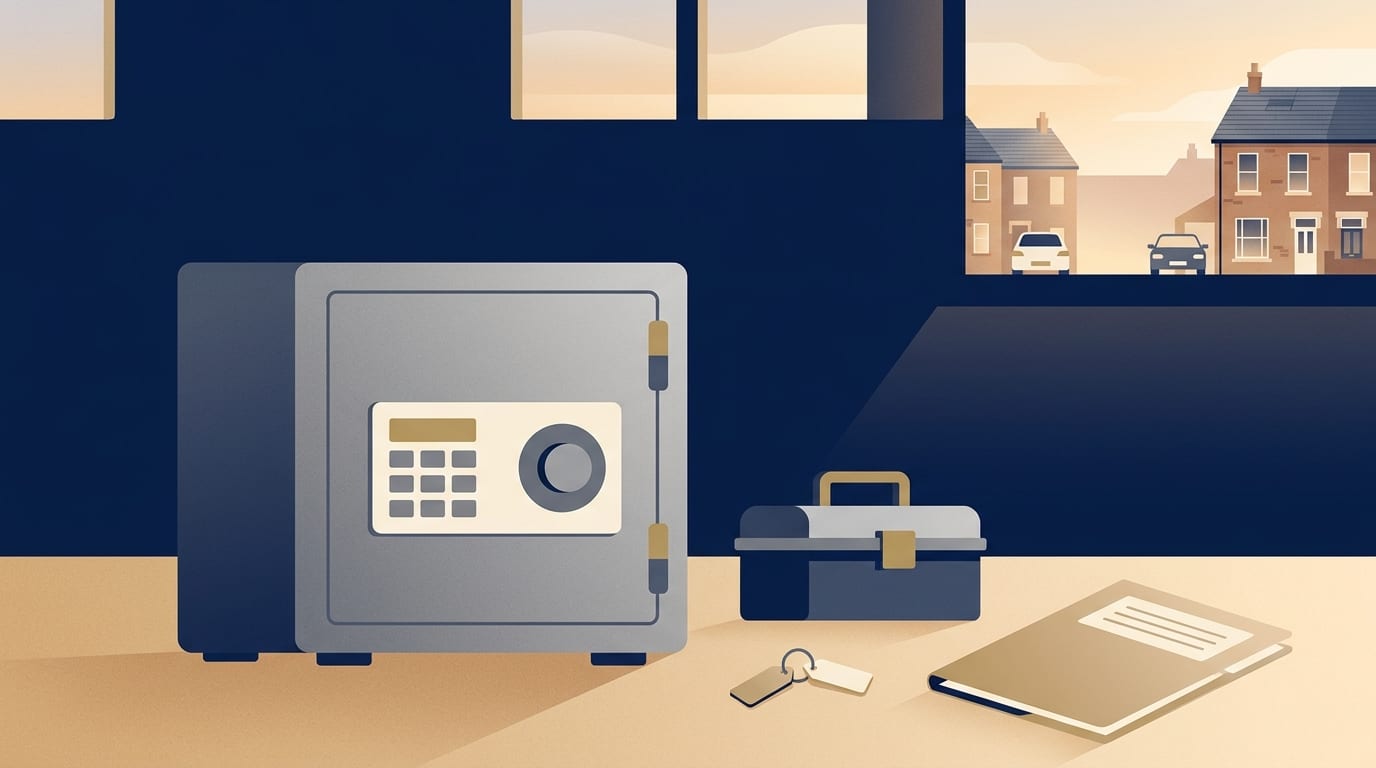
A safe engineer or a locksmith who handles safes can get into most domestic safes if you lose the key, forget the combination or have a dead electronic keypad. They will ask for proof that the safe and its contents belong to you before they start work. Typical 2026 prices for safe opening in the rest of the UK run from £100 to £300, while London and the South East cost more, at £130 to £350.
Who can open a locked safe
There is no government licensing of locksmiths in the UK. Anyone can trade as one, which is why vetting matters when you need someone to open a secure box containing your valuables. The Master Locksmiths Association (MLA) is the main trade association for the industry. It operates a voluntary approval scheme, rather than a licence or legal requirement, to ensure standards are met.
The MLA states that it has over 200 vetted safe engineers across the UK who can open digital, combination and key-lock safes. These safe engineers are criminal record checked, regularly inspected and have passed the MLA Qualification.
You should always use a professional to deal with a safe lock. The MLA notes that safe keys need to be cut by a professional locksmith, and that safes are heavy items so removal is not something to attempt yourself. Do not try to force the safe.
Safe engineer or ordinary locksmith
Most locksmiths spend their days working on the doors and windows of homes and businesses, for example replacing a euro cylinder, the barrel on uPVC and composite doors. Safe opening is a different job, and not every locksmith does it.
A safe engineer is a locksmith who works on safes. Some ordinary locksmiths do both, so ask whether the person you call handles safes. The MLA find-a-locksmith search allows you to enter a location, choose a distance from 3 to 60 miles, and select Safe Opening and Repairs to find the right expert. For outdoor key safes, the MLA notes that sometimes buying a new one is cheaper than paying a professional to open it, so it is worth weighing the cost before you book.
What to check before you call anyone
Before paying for a call-out, there are several self-help checks you can do. The first step is to contact the manufacturer of the safe. They may verify your ownership and supply a replacement combination, an override code or a new key. This can take time.
You should also look for a registered key number, which is sometimes stamped on the lock face or written in your original paperwork. Alternatively, look for a sealed combination card from the manufacturer or the dealer who sold it to you. Finding these documents may solve the problem without a visit.
If you are dealing with a digital safe and are locked out after typing the wrong code, stop entering codes immediately. Repeated attempts during a penalty lockout can extend the time the safe refuses to accept any input. If the lockout continues, call a professional.
If self-help checks fail, you must call a professional safe locksmith rather than forcing a jammed or damaged lock. You should also call an expert immediately if the lock is visibly jammed or tampered with, if the contents are time-sensitive, or if the safe is a high-security or commercial grade model.
Proof of ownership and what to have ready
Reputable safe openers usually ask for identification and evidence that you own the safe or the property it is in. Having your documents ready saves time and ensures the engineer can start work promptly.
- Identification, such as photographic ID
- Proof that you own the property where the safe is fitted
- Original documentation or receipts for the safe
- The make, model and serial number
- The security grade shown on the certification plate
Keep your ID, proof of ownership and any codes or paperwork ready, kept somewhere separate and secure.
If the safe is bolted down in a rented home, different rules apply to property access. A landlord who changes the locks to keep a tenant out without a court order commits illegal eviction, a criminal offence. Tenants should check their tenancy agreement and get the landlord's agreement before changing locks or drilling a safe that belongs to the property. If you are unsure of your rights, contact Citizens Advice or Shelter for guidance on your own situation.
What happens when a safe engineer attends
When the engineer arrives and checks your identification, they will assess the lock. The MLA states that its engineers try non-destructive methods first, and use drilling when needed. For digital safes, they can often override dead batteries.
If non-destructive entry is not possible, drilling is a common opening technique, and it may be needed for higher-grade safes. The MLA states that any forced entry by a good safe engineer will leave the safe in full working order once completed.
After a safe is drilled, it will need a new lock or a repair to the drill point to finish the job. This repair work is usually charged separately from the opening fee, so ask for the price of the repair before the work starts.
When you hire a locksmith, you are protected by the Consumer Rights Act 2015. This means the service must be carried out with reasonable care and skill, at a reasonable price if none was agreed, and within a reasonable time, with a right to have poor work put right or your money back. Under the Consumer Contracts Regulations 2013 there is normally a 14-day cancellation period for work arranged at home or by phone. However, this does not apply where you specifically asked for a visit for urgent repairs, although any extra work sold during that visit is not covered by the exception.
How much does it cost to get into a safe?
The MLA says there is no price structure that locksmiths have to follow for safe opening. Jobs are usually priced as labour plus parts, either by the hour or as a fixed price per job. The cost depends on the safe type and security grade, whether it can be opened non-destructively or must be drilled, why the safe will not open, and whether a repair is needed afterwards.
Price is also driven by location and the time of day. Evenings, nights, weekends and bank holidays cost more. An out-of-hours premium adds roughly £40 to £90 to the bill. Many locksmiths charge no separate call-out fee but some do, and VAT may or may not be included, so you must ask.
The table below shows typical 2026 safe opening prices.
|
Location |
Typical overall price |
|---|---|
|
Rest of the UK |
£100 to £300 |
|
London and the South East |
£130 to £350 |
These are 2026 estimates, and your local quotes will differ. Prices in London and the South East run higher than in the North of England, Wales and Scotland.
For the rest of the UK, the cost varies heavily by the type of safe you own. A domestic key or combination safe typically costs £100 to £180 to open. An electronic safe with a dead battery or lost code usually costs £100 to £200. A fire safe costs £150 to £280.
For higher security units, the prices rise. A high-security or cash-graded safe costs £200 to £350 or more to open. A deposit or commercial safe costs £250 to £500 or more. If the safe must be drilled, a new lock or repair to the drill point is usually £80 to £250 or more, charged separately.
Common problems and scams
When you search for a locksmith, be aware of common industry problems. One major issue is national call centres advertising as a local locksmith and passing the job to whoever is nearest. Another common scam is a very low price quoted on the phone that multiplies on the doorstep once the tradesperson arrives.
Bad practice involves drilling a lock that could have been opened without damage, or fitting cheap replacement cylinders at premium prices. In standard domestic work, a rogue trader might replace a whole multipoint mechanism when only the cylinder or gearbox had failed.
You should always walk away if a tradesperson refuses to give a price before starting work. You should also turn them away if they demand cash only, refuse to provide a written invoice, have no company name or address, or arrive in an unmarked vehicle with no identification.
What to ask before you agree a price
To avoid being overcharged, tell the locksmith the make and model of your safe and ask for a total price before work starts. Ensure this total includes parts, VAT and any out-of-hours charge. Ask if the quote covers just the opening, or if it includes the cost of a new lock and repairing the drill point.
Ask the engineer how entry will be gained and whether drilling is likely. A good engineer will plan for non-destructive entry first. Ask what standard the new lock meets if a replacement is needed. You should also check the business has a real local address and reviews over time.
Check any MLA approval claim on the MLA's own site to verify they are genuinely vetted. When the engineer arrives, ask for ID and ensure they provide a written invoice when the job is done. If you do not need what is in the safe immediately, it is often best to wait until normal working hours to avoid the out-of-hours premium.
Common questions
How do I reset a safe combination?
If you have lost the code, contact the manufacturer first, who may verify your ownership and supply a replacement combination, override code or key. Do not force the lock. If that fails, call a professional safe locksmith.
Can an ordinary locksmith open a safe?
Yes, but only if they have the specific training and tools for safes. Many standard locksmiths focus entirely on doors and windows, so you must ask them directly if they do safe opening, or use the MLA search to find a dedicated specialist.
What happens if a safe key is lost?
The MLA says its engineers try non-destructive methods first and use drilling when needed. Safe keys need to be cut by a professional locksmith.
Will drilling ruin my safe?
The MLA says any forced entry by a good safe engineer will leave the safe in full working order once completed. A new lock or a repair to the drill point is usually charged separately.
What to do next
If you are locked out of your safe, follow these sensible next steps to get the problem resolved cleanly and for a fair price.
- Check for a registered key number or a sealed combination card in your original paperwork.
- Contact the manufacturer to see if they can verify your ownership and send a replacement key or code.
- Gather your photographic ID, proof of address, and the safe's make, model and serial number.
- Decide if the job can wait until normal daytime working hours to save on premium rates.
- Read how to find a local locksmith and ask for a total price including VAT and repairs.
Dealing with a locked safe requires a specialist with the right tools and knowledge. When you are ready to get your valuables back, you can find a locksmith near you and ask whether they open safes.
Find a top rated locksmith near you
1,831 locksmiths across the UK, each ranked on their Google rating and the number of reviews behind it. Start with your county: