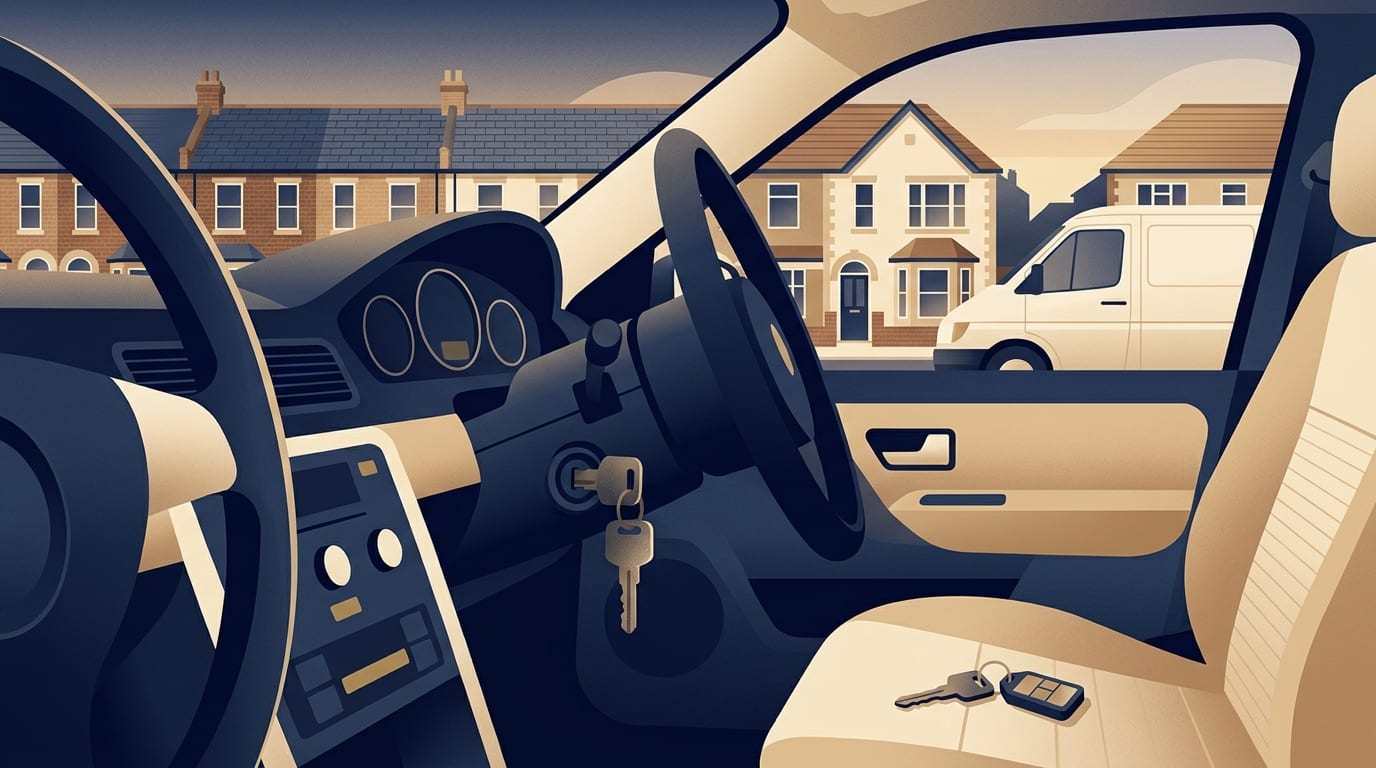
Whether your home insurance pays for a locksmith depends entirely on your exact policy wording. Most standard policies are built around theft and damage rather than lockouts, so you must check your documents before you arrange a repair. Many policies cover lost or stolen keys, but do not assume a lockout is covered.
Who pays for a locksmith
Check your policy wording to see what it says about locks and lockouts. Home emergency cover is a separate product that typically handles urgent problems that make your home unsafe, but excludes routine maintenance. You must know which type of cover you hold before you agree to pay a tradesperson.
There is no government licensing of locksmiths in the UK. Anyone can trade as one, which means you must vet whoever you call carefully. The Master Locksmiths Association (MLA) is the main trade association for the industry. Its approved companies are vetted, have criminal record checks, employ locksmiths who have passed the MLA exam and are inspected regularly. This is a voluntary approval scheme, not a legal requirement.
When you pay for a repair yourself, you are protected by the Consumer Rights Act 2015. Under this law, a service must be carried out with reasonable care and skill. The work must be done at a reasonable price if none was agreed beforehand, and within a reasonable time. You have a legal right to have poor work put right or to get your money back.
Lost or stolen keys
Insurance cover for lost or stolen keys is common, but it is not guaranteed. Which? found that if your keys are stolen, almost all home insurance policies include cover to replace your external door locks. The exceptions were two policies aimed at renters. Window locks are treated differently and are not covered by 63% of policies.
Many policies include loss of keys cover, which pays for the replacement and fitting of external door locks. This cover typically has limits ranging from £500 to £1,000 depending on whether you have a bronze, silver or gold level of cover. You must always check your policy documents to confirm your specific limit. Some home insurance policies cover replacement locks and keys, but if yours does not you may be able to buy lock cover as an add-on.
If you lose a key, a locksmith will usually recommend changing the locks to keep your home secure. A locksmith who is changing locks after lost or stolen house keys should fit locks that meet insurance requirements such as BS3621, so ask what standard they meet. Make sure that any new cylinders fitted to uPVC and composite doors meet the standards your insurer expects. If you lose your car keys, note that auto locksmiths are a separate specialism covering vehicle entry, key cutting, transponder and remote programming.
Locked out of your own home
Do not assume a lockout is covered by your home insurance. Most standard policies are built around theft and damage rather than lockouts, so check your policy before you ring. If you cannot confirm cover, expect to pay the locksmith yourself.
When you call a locksmith for a lockout, ask how entry will be gained. A good locksmith will say whether a lock can be opened without drilling it, which is called non-destructive entry. Most single lock changes and lockouts take well under an hour. If a locksmith drills a lock that could have been opened without damage, you will end up paying for a replacement lock that you did not need.
If you are locked out and need an emergency locksmith late at night, decide whether the job can wait until the daytime rate. Evening, night, weekend and bank holiday call outs cost more.
What home emergency cover is
Home emergency cover is a separate product from standard home insurance. It typically handles urgent problems that make your home unsafe, but excludes routine maintenance. Locksmith services might be included in this cover, so you must check your policy wording carefully. The average cost to add this cover to home insurance was £27 based on enquiries between the first of April and the first of July 2026.
Policies usually have a per incident claim limit typically around £1,000. Problems in unoccupied properties are excluded, as is any extra work beyond the emergency call-out. The items usually covered are:
- Boiler breakdown
- Burst pipes
- Sudden leaks
- Blocked drains
- Electrical supply failure
- Central heating failure
- Pest infestations
Whether a door that will not lock counts as an urgent problem depends on your policy. Ring your home emergency provider and ask before you book a locksmith yourself.
After a burglary or break in
Standard home insurance is designed to cover theft and damage. If a burglar forces your door or breaks a window, check your policy for what it covers, including repair and replacement of locks. Sometimes a damaged property requires boarding up, which means fitting secure timber panels over a broken door or window until permanent repairs can be made.
Insurers usually want proof of forced entry before they pay out. A burglary using an old key without forced entry could lead to a denied claim. Most insurance policies only cover burglary claims on an unoccupied home if there are signs of forced entry. This is a major reason for changing locks on a new house as soon as you move in, because previous owners or tenants might still hold keys.
You should check what type of lock was damaged before you ring a tradesperson. A mortice deadlock and sashlock are traditional locks fitted inside a timber door. A night latch or rim lock is the surface latch often called a Yale lock, and the rim cylinder is the part the key goes into on that surface latch. Modern uPVC doors use a multipoint locking mechanism, which is the strip of hooks and bolts worked by lifting the handle. The gearbox is the central part of that mechanism. A euro cylinder is the barrel on uPVC and composite doors. Lock snapping is an attack on this cylinder, which is why snap-resistant standards exist.
Limits excess and claiming costs
If your insurance does not cover the work, or your policy excess is higher than the locksmith bill, you will pay the cost yourself. Locksmith jobs are usually priced as labour plus parts, either by the hour or as a fixed price per job. Many locksmiths charge no separate call-out fee but some do, and VAT may or may not be included, so you must ask.
The table below shows MLA 2026 'from' prices including VAT for common jobs. Local quotes will differ.
|
Service |
Typical time |
Starting price (inc VAT) |
|---|---|---|
|
Locked out, unlock house and open door (mortice, rim or euro lock) |
About 30 minutes |
From £90 |
|
Replacing lost house keys |
About 1 hour |
From £100 |
|
Standard euro cylinder on a uPVC door |
Well under an hour |
From £105 |
Price is driven by the time of day, your location, the type and security grade of the lock, and how entry is gained. London and the South East cost more than other areas. You should ask a locksmith for a total price, including parts, VAT and any out-of-hours charge, before work starts.
What to check in your policy
Insurers often ask what locks are fitted to your doors and windows. You should check your own policy wording rather than guessing what insurers require. Current locks may not meet insurance policy requirements. You might also want new locks that are keyed alike, meaning multiple locks work from the same key, but you must ensure the standard remains high.
When checking home insurance lock requirements, look for specific standards. BS3621 is the British Standard for mortice and rim locks on timber doors, shown by a Kitemark on the lock faceplate. For euro cylinders the snap resistant standards are TS007 three star, or a one-star cylinder with two-star handles, and Sold Secure SS312 Diamond.
If you rent your home, check your tenancy agreement and get the landlord's agreement before changing locks. A landlord who changes the locks to keep a tenant out without a court order commits illegal eviction, a criminal offence. Tenants should point their concerns to Citizens Advice or Shelter for their own situation rather than acting without permission.
Calling a locksmith before you claim
If you need to call a locksmith in an emergency, you must choose carefully. Because the trade is not regulated, poor practice does happen. Look out for these common problems and scams:
- National call centres advertising as a local locksmith and passing the job to whoever is nearest.
- A very low price quoted on the phone that multiplies on the doorstep.
- Drilling a lock that could have been opened without damage.
- Replacing a whole multipoint mechanism when only the cylinder or gearbox had failed.
- Fitting cheap cylinders at premium prices.
- Refusing to give a price before starting.
- Demanding cash only, with no invoice, no company name and no address.
- Arriving with no ID and an unmarked vehicle.
Under the Consumer Contracts Regulations 2013 there is normally a 14-day cancellation period for work arranged at home or by phone. This does not apply where the customer specifically asked for a visit for urgent repairs. Extra work sold during that visit is not covered by the exception, so you still have cancellation rights for non-urgent upgrades.
Keeping records
Your insurer will need evidence of what happened and what you paid. Ask for a written invoice for any claim. Check the business has a real local address, reviews over time, and any MLA approval claim on the MLA's own site. Ask for ID on arrival.
Take photographs of any damage to the door or window before the tradesperson starts work. If there was forced entry, these photographs show it. Keep a copy of the final invoice showing the exact standard of the new locks fitted.
Common questions
Does home insurance cover a snapped key?
This depends on your policy wording, so check before you ring. Standard policies are built around theft and damage rather than keys that break in use, so do not assume it is covered.
Will my insurance pay if I leave my keys inside?
Leaving your keys inside is a standard lockout, and you should not assume it is covered. Check your policy, and if you have home emergency cover, ask whether locksmith services are included.
Do I have to use the locksmith my insurer chooses?
The rules differ between insurers and products, so ring your insurer or home emergency provider and ask whether you must use their contractor before you agree to any work.
Can I upgrade my locks after a break in?
You can upgrade your locks, but what your insurer pays for depends on your policy, so ask before you agree to the work. Make sure any new locks meet your insurer's requirements.
What to do next
Before you arrange a repair, take these steps to check your cover and pay a fair price:
- Check your policy documents to see if lost keys or locksmith services are included.
- Ring your insurer or home emergency provider before booking a tradesperson.
- Ask any independent locksmith for a total price, including parts, VAT and out-of-hours charges.
- Ask how entry will be gained and whether drilling is likely.
- Ask what standard the new lock meets and ensure it matches your policy rules.
If you are paying for the repair yourself and need someone reliable, find a locksmith near you to get a clear quote and a proper written invoice.
Find a top rated locksmith near you
1,787 locksmiths across the UK, each ranked on their Google rating and the number of reviews behind it. Start with your county: