Fishing for vehicle keys through the letterbox is a prominent method of stealing them. A thief uses a hook or a stick to reach inside and lift your keys from a hallway table or a hook near the door. You can stop this without spending money by moving your keys, or you can fit a letterbox guard.
How letterbox fishing works
The January 2026 edition of the police crime prevention handbook lists fishing for keys through a letterbox, a window or even a cat flap among the common ways burglars get in. A thief does not need to break your door or force the lock. What matters is whether keys are within reach and in sight.
If house keys, car keys or ID documents are left on a table or hanging on a hook near the door, they can be hooked out. Thames Valley Police warn residents to keep car keys away from windows and doors to prevent them from being fished through letterboxes using a hook. You can read their official advice on preventing vehicle crime.
Taking keys this way does not damage the door, so you may not notice until later. Stolen car keys can be used to take the vehicle, and stolen house keys can be used to get into the home.
This is why Croydon Council officially advises that you do not leave your car keys or ID documents near doors, the letterbox or windows in their burglary prevention guide.
Keep keys out of sight and out of reach
The first fix is free. Keep all keys, including car keys, out of sight and well away from the letterbox. If a device is pushed through the flap, it cannot hook what is not there.
Many people drop their keys on a console table or hang them on a peg the moment they step inside. This habit makes life easy for a thief. Move your keys into a drawer, a closed cupboard or a room at the back of the house. Keep bags away from the letterbox and cat flap, and remove valuables from open view.
If you have a keyless entry car, keeping your fob near the door creates a second risk. Keys kept near the door also make it easier for thieves to capture the signal from a smart key.
To stop this, keep your ignition fobs well away from windows or doors and never leave them close to the front door. Put them in a signal-blocking pouch such as a Faraday bag when you are at home. You can learn more about protecting your keyless car by storing your fobs properly. Remember to store your spare car fob in a signal-blocking pouch away from the front door too.
What a letterbox guard does
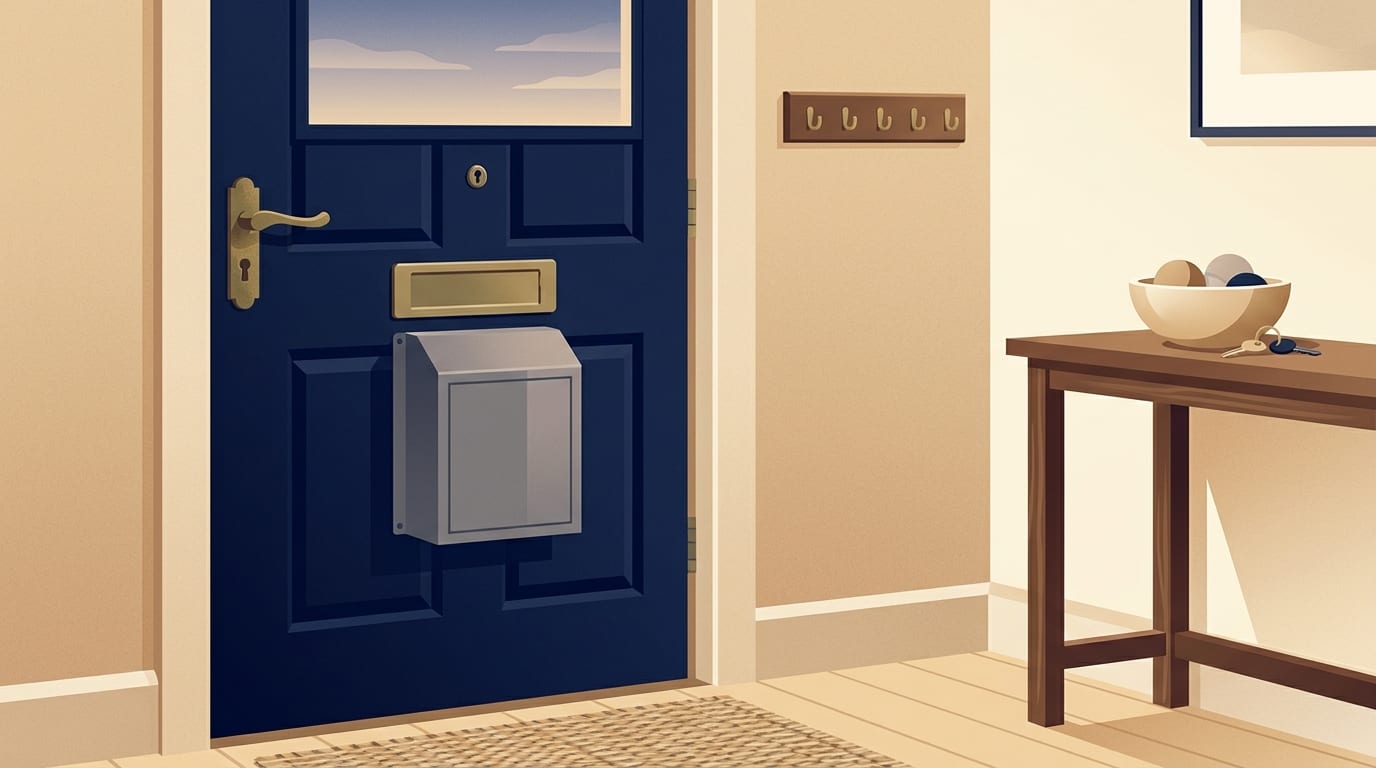
If your door has a letterbox, you can improve its security by fitting a guard. The police crime prevention handbook says a letterbox guard fitted to the rear of the door will prevent someone reaching in and opening the door or fishing for any items close by.
Guards come in different sizes and designs, so ask a locksmith or carpenter which suits your door.
Fitting a guard is a practical step, but it does not make a door burglar proof. You still need to lock your door properly at night.
Other openings to think about
The letterbox is not the only opening a thief can use to reach your keys. The police advise that burglars also use windows and cat flaps to fish for items. Position keys and valuables away from any opening in the door.
The same advice applies to cat flaps and ground floor windows. Keep keys out of sight and well away from them, and do not leave keys on a windowsill or worktop near an opening.
To make this clear, here is a comparison of the main ways to stop thieves fishing for your keys.
|
Security measure |
What it protects |
Main benefit |
|---|---|---|
|
Moving keys out of sight |
All doors and windows |
Costs nothing and keeps keys out of reach |
|
Letterbox guard |
Front door letterbox |
Prevents reaching in to open the door or fish for items |
|
Signal-blocking pouch |
Keyless car fobs |
Keeps the signal from a smart key harder to capture |
|
Keeping keys away from cat flaps and windows |
Other openings |
Keeps keys out of reach |
Prices for fitting a guard vary by door and by locksmith, so ask for a quote before work starts.
What a locksmith can and cannot do
If you want a letterbox guard fitted but do not have the tools to do it yourself, a locksmith or a carpenter can fit one for you. Auto locksmiths cover vehicle entry and key cutting, so you need a general locksmith for this job.
A locksmith can also check the general security of your door while they are there. If you have a timber door, they will look at your mortice deadlock and your sashlock, which are fitted inside the wood of the door. They will check if these meet the BS3621 British Standard, shown by a Kitemark on the lock faceplate. They may also inspect your night latch or rim lock, the surface latch often called a Yale lock.
If you have a uPVC or composite door, the locksmith will examine your euro cylinder, which is the barrel where you insert the key. They will check if it is vulnerable to lock snapping. The standard for snap-resistant cylinders is TS007 three star, or a one-star cylinder combined with two-star handles. Another standard is Sold Secure SS312 Diamond. They will also test your multipoint locking mechanism, the strip of hooks and bolts worked by lifting the handle, and the gearbox, the central part of that mechanism.
Jobs are usually priced as labour plus parts, either by the hour or as a fixed price per job. The price you pay is driven by several factors:
- The time of day, with evenings, nights and weekends costing more.
- Your location, as London and the South East typically cost more.
- The type and security grade of the lock being fitted.
- How entry is gained if you are locked out.
Many locksmiths charge no separate call-out fee, but some do, and VAT may or may not be included. Fitting a letterbox guard is not an emergency, so you should always book this work during the day to avoid out-of-hours charges.
How to spot a rogue locksmith
You must know what bad advice looks like. Watch out for national call centres advertising as a local locksmith. They often pass the job to whoever is nearest and quote a very low price on the phone that multiplies on the doorstep.
A rogue locksmith might insist on drilling a lock that could have been opened without damage. A good locksmith will say whether a lock can be opened without damage, which is called non-destructive entry. You should watch out for these common warning signs:
- Replacing a whole multipoint mechanism when only the cylinder or the gearbox had failed.
- Fitting cheap cylinders at premium prices.
- Refusing to give a total price before starting the work.
- Demanding cash only and refusing to provide a written invoice.
- Arriving with no ID in an unmarked vehicle.
Always tell the locksmith to give a total price, including parts, VAT and any call-out fee, before work starts. Ask what standard any new lock meets. Check the business has a real local address and look for customer reviews over time to ensure they are a genuine local firm.
Trade regulation and your consumer rights
There is no government licensing of locksmiths in the UK. Anyone can trade as one, so vetting matters. The Master Locksmiths Association (MLA) is the main trade association. It runs a voluntary approval scheme, not a licence or a legal requirement. Its approved companies are vetted, have criminal record (DBS) checks, employ locksmiths who have passed the MLA exam and are inspected regularly. You can check any MLA approval claim on the MLA's own site.
When you pay for a locksmith, you are protected by the Consumer Rights Act 2015. This states that a service must be carried out with reasonable care and skill, at a reasonable price if none was agreed, and within a reasonable time. You have a right to have poor work put right or get your money back.
Under the Consumer Contracts Regulations 2013, there is normally a 14-day cancellation period for work arranged at home or by phone. However, this does not apply where you specifically asked for a visit for urgent repairs, such as being locked out on the doorstep. Extra work sold during that visit is not covered by the exception.
Insurers often ask what locks are fitted to your doors. You should check your own policy wording to see what your home insurance expects.
If your keys may already have been taken
If you cannot find your keys and suspect they may have been fished through the letterbox, you must act quickly. Report the theft to the police immediately, especially if your car or any identifying documents are also missing.
If a thief has your house keys, they have a way into your home. You should strongly consider changing your locks to secure the property. Most single lock changes take well under an hour. If you have multiple doors, you can ask for the new locks to be keyed alike, which means one key opens all of them.
If you rent your home, check your tenancy agreement before doing anything. Tenants should get the landlord's agreement before changing locks. A landlord who changes the locks to keep a tenant out without a court order commits illegal eviction, which is a criminal offence. Keep these legal points in mind and speak to Citizens Advice or Shelter for your own situation.
If you are unsure whether your keys were stolen or just misplaced, it is always safer to replace the locks. You can read our guide on what to do about lost or stolen house keys for more details.
Common questions
Does a letterbox guard stop draughts?
Reducing draughts is not what a guard is for. Its job, according to the police crime prevention handbook, is to prevent someone reaching in and opening the door or fishing for items close by.
Can a thief open the door through the letterbox?
The police crime prevention handbook says a guard fitted to the rear of the door will prevent someone reaching in and opening the door. If you are worried about your door, ask a locksmith to look at it. Do not change how the door locks without thinking about how everyone would get out quickly in a fire.
Will a guard stop my post getting through?
Guards differ, so check with the locksmith or carpenter how post will get through before you buy one.
Do I need a locksmith to fit a guard?
A locksmith or a carpenter can fit a guard, and that is the simplest way to avoid damaging the door. Prices vary, so ask for a quote.
Quick checklist
Securing your keys against letterbox fishing is straightforward if you build good habits. Follow these steps to protect your home and your car:
- Keep all house keys, car keys and ID documents out of sight in a drawer or cupboard.
- Never leave keys on a hallway table or hanging on a hook near the front door.
- Store keyless car fobs in a signal-blocking pouch to prevent signal capture.
- Keep your spare car fobs in a signal-blocking pouch away from the front door too.
- Move coats and bags containing keys away from the letterbox and the cat flap.
- Consider a letterbox guard fitted to the rear of your door.
- Always get a total price including parts, labour and VAT before asking a locksmith to fit a guard.
Moving your keys out of the hallway is the easiest first step. If you decide to add a guard or upgrade your locks, make sure you vet the tradesperson first. When you are ready to get the work done, you can find a locksmith near you to check your door.
Find a top rated locksmith near you
1,787 locksmiths across the UK, each ranked on their Google rating and the number of reviews behind it. Start with your county: