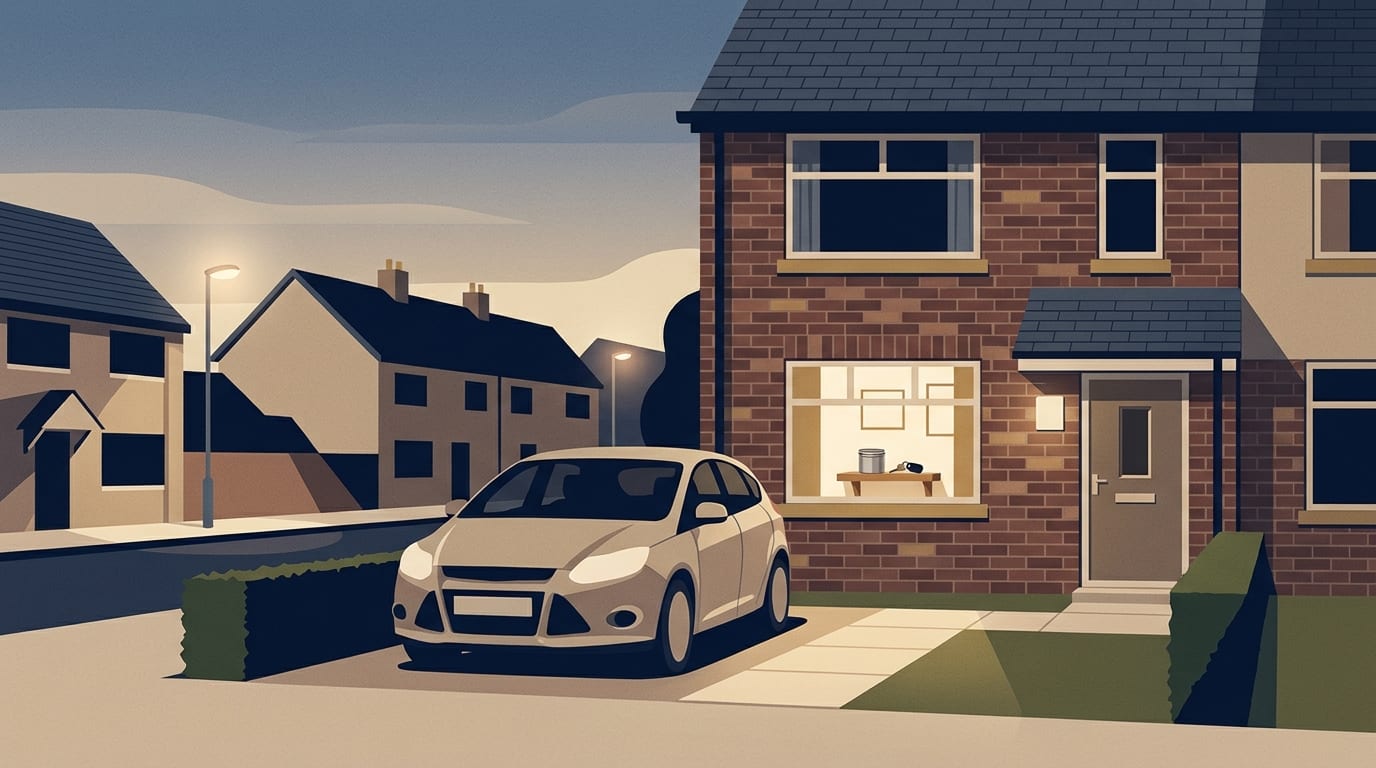
Modern vehicles often use electronic key entry systems that communicate constantly with the car. In normal use, you walk up to your vehicle with the key in your pocket, the car detects the nearby signal and the doors unlock automatically. This convenience is exactly what relay theft targets on the driveway.
In a relay attack, thieves use a device to extend the signal from your key so that the car thinks the key is nearby and unlocks and starts. Which? reported in January 2019 on tests by the German motoring club ADAC in which thieves could easily trick 230 keyless cars into thinking the key was closer than it really was.
How to check if your car is actually keyless
Many drivers confuse a standard remote control key with true keyless entry. It is a vital difference, because relay theft only works on cars that open without any key press at all.
If you have to press a button on your key fob to unlock your doors, your car is not vulnerable to a relay attack. That type of key only transmits a signal when you physically press the button. While it sits on your hallway table, it is silent and emits nothing for a thief to capture.
True keyless entry systems are always awake and waiting to talk to the car. You simply pull the door handle to get in, and you push a button on the dashboard to start the engine. The key never leaves your pocket or bag.
Here is how to tell if your car uses a true keyless entry system:
- You can unlock the doors by simply touching or pulling the exterior door handle.
- You do not need to take the key out of your pocket to open the boot.
- The engine starts by pressing a button on the dashboard while the key remains inside the cabin.
- The vehicle automatically locks itself when you walk a certain distance away.
If your car unlocks automatically as you approach or pull the handle, you need to take precautions at home. An auto locksmith can advise on key and immobiliser problems if your fob stops working, and you can read more in our guide on whether to use an auto locksmith or main dealer for replacement car keys.
Where to leave your car key at home
The physical layout of your house plays a big part in how vulnerable your car is.
According to guidance from Which? published in January 2019, you should always keep your key out of sight at home and as far away from your front door as possible. Keys left near the front door are easier for a relay device to reach than keys kept further inside.
You should apply the exact same rule to your spare keys. A spare key left in a kitchen drawer near a back door or a ground floor window is just as vulnerable as your main everyday key. Guidance from Ageas in March 2020 states that you must keep your car keys, including any spares, well away from doors and windows at all times.
Keep your keys out of sight in a part of the house that is as far from the doors and windows as you can manage.
Signal blocking pouches and how to test them
A signal blocking pouch, often called a Faraday bag, blocks the signal from a keyless entry fob. A pouch only helps if it works, so test it.
Secured by Design advises drivers to store electronic keys in a security pouch that blocks signals from keyless entry fobs. A What Car? article updated in May 2026 reported a test of Faraday pouches with the key of a keyless 2016 car. The test found that every single pouch successfully blocked the key, leading the reviewers to describe a pouch as a must-have security accessory.
Prices for the pouches in the What Car? test ranged from £3.00 to £29.99, showing that you do not need to spend a lot of money to secure your key. You can also use a simple metal case to block a keyless signal, such as a tin container. However, Which? notes that any metal case must completely enclose the key with no gaps at all. A gap can mean the signal still gets out.
A pouch that fails over time is useless, so Secured by Design says you must test it every few months to ensure it is working. To do this, put your key in the pouch, seal the flap completely, and stand directly next to your locked car on the driveway. Pull the door handle. If the door opens, the pouch is not blocking the signal and needs replacing.
Finally, Which? advises checking that the doors are locked after using the remote button on the key, in case the signal is being blocked.
The table below sets out the common options and who advises them.
|
Security measure |
Primary purpose |
Test or advice source |
|---|---|---|
|
Faraday pouch (£3.00 to £29.99) |
Blocks keyless signal |
What Car? (2026) |
|
Tin container |
Blocks keyless signal |
Ageas (2020) |
|
Steering wheel lock |
Visual deterrent |
Secured by Design |
|
OBD port lock |
Prevents reprogramming |
Secured by Design |
|
Tracking device |
Helps vehicle recovery |
Secured by Design |
The pouch price is the range What Car? reported for the pouches it tested.
Switching off keyless entry at night
Many vehicle manufacturers allow you to temporarily disable the keyless entry function entirely. Check whether your car allows this.
Ageas advises turning off your keyless entry system overnight, and checking your car manual if you are unsure how. This can reduce the risk, but nothing guarantees against theft.
The method for switching the system off varies between cars, and not every car allows it.
Check your car manual if you are unsure how to disable the function on your specific model. If the manual does not mention it, ask a dealer whether your car has the option.
Adding a visible lock to the steering wheel
Electronic security cannot be seen from the pavement. A visible steering wheel lock is a different kind of deterrent.
Lichfield District Council points out that there are lots of simple and effective ways to keep your vehicle secure, particularly if you have a keyless car. They note that if they see a steering wheel or pedal lock, they are more likely to give up and look for an easier target on another street.
Secured by Design also recommends a steering wheel lock as an effective visual deterrent. What Car? suggests combining a signal blocking pouch with a steering wheel lock to provide overlapping layers of defence, covering both the signal and the physical steering wheel.
A steering wheel lock clamps around the wheel so it cannot be turned. It does not stop a keyless car being unlocked or started, so it works alongside a pouch rather than instead of one. You can learn more about how they work and what security standards to look for in our guide covering whether steering wheel locks are worth buying to stop car theft.
Other security layers for the driveway
The onboard diagnostic (OBD) port is a computer socket in the car that mechanics use to plug in diagnostic tools.
Secured by Design says a lock fitted to the OBD port can prevent the vehicle being reprogrammed by thieves.
Lichfield District Council says that if thieves see a steering wheel or pedal lock, they are more likely to give up. A pedal lock is a similar visible type of lock that attaches to the pedals.
Finally, if a theft does occur despite your best efforts, finding the vehicle quickly becomes the main priority. Secured by Design advises that tracking devices can help recover a stolen vehicle. A tracker will not stop the car being taken, but Secured by Design says it can help recover a stolen vehicle.
What to do if your car is stolen
If you wake up to find your car missing from the driveway, you need to act quickly. Report it as soon as you can.
Take these steps in order if you discover your vehicle has been taken:
- Call the police on the non-emergency number to report the crime and get a crime reference number.
- Contact your tracking company immediately if you have a device fitted, so they can monitor the location.
- Call your car insurance provider to report the theft and supply the police reference number.
- Check with your neighbours to see if their doorbell cameras or CCTV captured the theft happening.
- Contact the DVLA to inform them that the vehicle has been stolen.
Do not attempt to track the car yourself or confront anyone if you spot the vehicle later. Leave the recovery entirely to the police.
Common questions
Will a signal blocking pouch protect against every type of theft?
No. A pouch only stops relay attacks by blocking the signal between your key and the car. It offers no protection if a thief breaks into your house to steal the physical key, or if they tow the vehicle away. No single measure guarantees against theft, which is why overlapping layers of security are best.
Can I use a tin container instead of a pouch?
Ageas suggests a tin container or a Faraday bag, and Which? says a metal case can block a keyless signal if it completely encloses the key with no gaps. Whichever you choose, test it by putting the key inside and standing next to the car with the door locked. Pull the handle, and if the door opens, the container is not blocking the signal. Test it again every few months, as Secured by Design advises for pouches.
Does wrapping the key in foil work?
Use a signal blocking pouch or a metal case that completely encloses the key, with no gaps, and test it by standing next to the locked car. A product that does not work is no use, however cheap it is.
Do I need to protect my spare key too?
Yes. Your spare key transmits exactly the same signal as your main daily key. If you leave a spare key unprotected near a window or door, thieves can use a relay device to capture its signal and steal your car just as easily as they could with the main key.
Next steps to secure your keyless car
Securing a keyless car relies on forming good habits at home. Start with the easiest changes today and add physical security devices for peace of mind.
- Move your main and spare keys away from all doors and windows.
- Put the keys in a Faraday pouch or a tin container that fully encloses the key as soon as you get home.
- Test your pouch by standing next to the car to check the doors stay locked.
- Check your vehicle manual to see if you can switch off the keyless entry overnight.
- Fit a visible steering wheel lock before you go to bed.
If your car keys have been lost or stolen during a break-in, you should contact a professional to secure your home locks and advise on your next options, so find a locksmith near you and ask for a total price before work starts.
Find a top rated locksmith near you
1,787 locksmiths across the UK, each ranked on their Google rating and the number of reviews behind it. Start with your county: