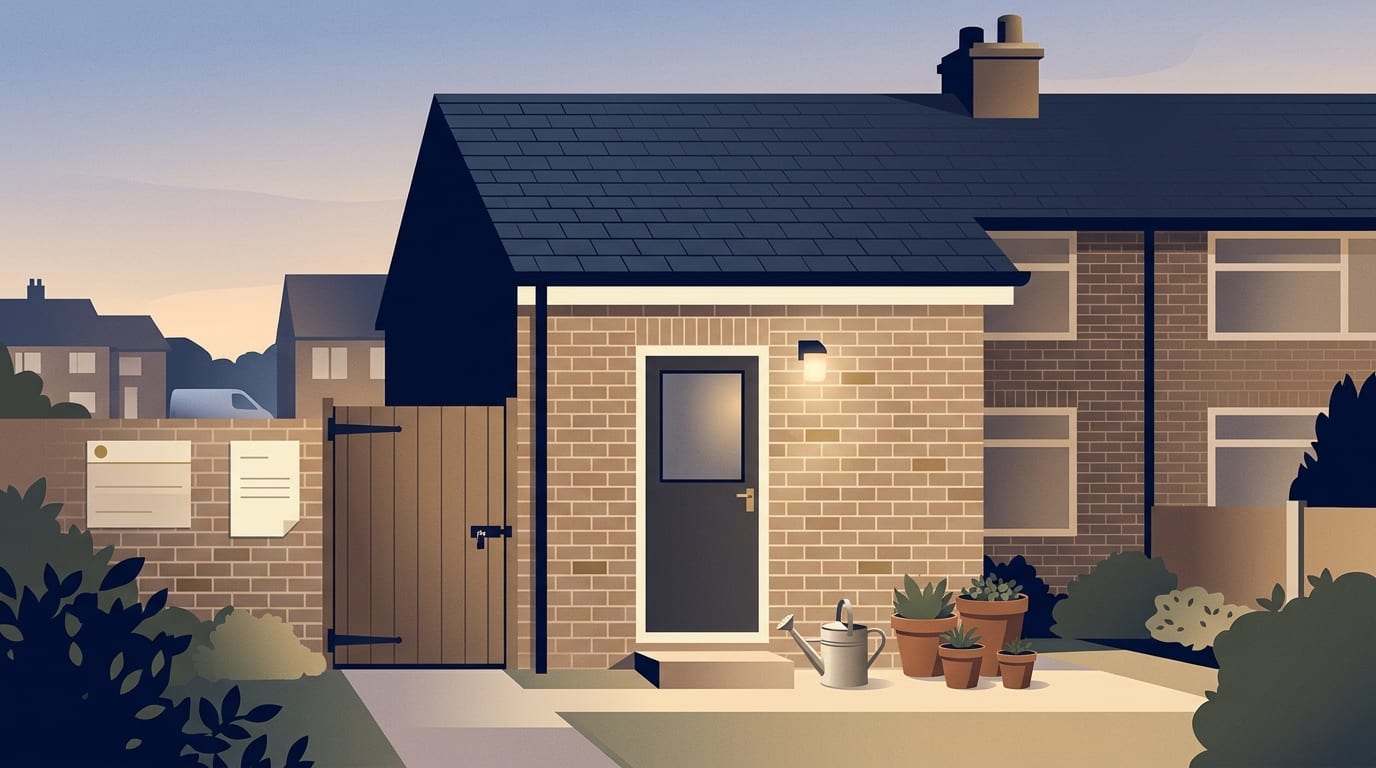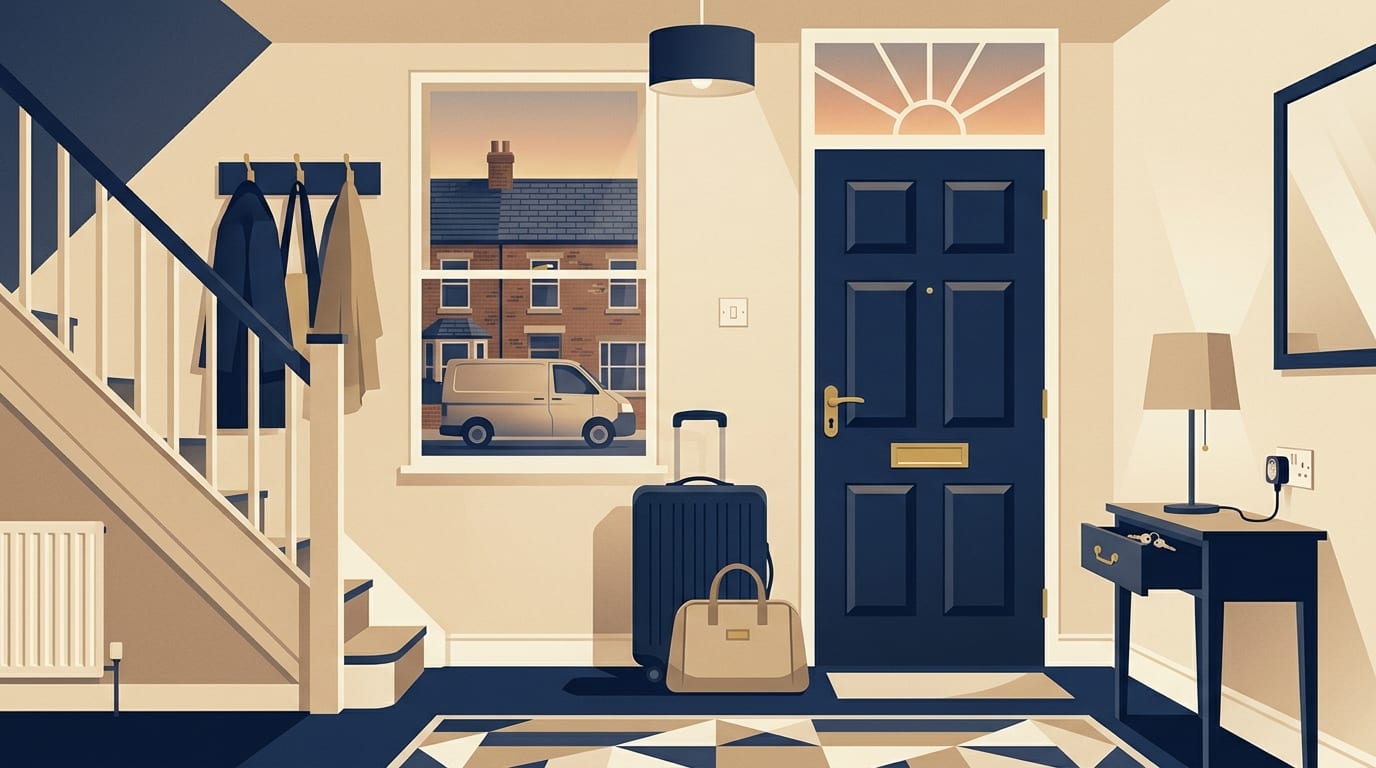
The majority of burglaries occur when there is nobody at home and most are not planned but committed by opportunists. Sorting out your home security before a holiday means making the house look occupied and ensuring it is hard to get into quickly. Taking basic steps to lock up properly and manage your post will help while you are away, although no measure prevents burglary.
Why empty homes are targeted
Most burglaries are committed by opportunists, so it helps to avoid the signs that a house is empty. Secured by Design advice points to these:
- Post building up on the doormat or in a visible letterbox.
- Curtains that are never opened or closed.
- No lights on when it is dark.
- Unkempt lawns and overgrown hedges.
- Valuable items such as laptops and jewellery left in view of windows.
Burglars also target empty homes to steal keys to high value vehicles left on the driveway. According to a Thames Valley Police vehicle crime leaflet, burglaries to steal keys to high-value vehicles can take place while homeowners are away on holiday. Making your house look occupied is one step that helps protect both your property and your car.
Lock every door and window properly
You must ensure doors and windows are in good repair with good quality locks or bolts on all outside doors. Croydon Council advises that you should close and lock all your doors and windows, even if you are only going out for a few minutes. Before a long trip, check that all locks are in good working order and are properly locked.
If you have uPVC or composite doors, they usually feature a multipoint locking mechanism. This is the strip of hooks and bolts worked by lifting the handle. The central part of that mechanism is called the gearbox. To double lock uPVC doors, you must lift the handle and turn the key.
The barrel on uPVC and composite doors is called a euro cylinder. If you are upgrading your locks before you travel, look for standards which offer resistance against lock snapping. The recommended standards for euro cylinders are TS007 three-star or Sold Secure SS312 Diamond. Alternatively, a one-star cylinder can be fitted alongside two-star security handles.
Timber doors use different hardware. A mortice deadlock or a sashlock is fitted inside a timber door. The standard to look for is BS3621, which is the British Standard for mortice and rim locks on timber doors. You can identify this by checking for a Kitemark on the lock faceplate. Timber doors often also feature a night latch or rim lock, which is the surface latch often called a Yale lock. This operates using a rim cylinder on the outside.
Keys and spare keys
Remove the keys from all windows and doors and put them in a safe place when you leave. Do not leave a spare key hidden outside, and take keys out of window and door locks so they cannot be reached from outside.
You must keep car keys and house keys out of sight and away from the letterbox. Keys can be fished through a letterbox with a hook, so do not leave keys on a hall table.
If you are leaving your vehicle at home while going away, consider leaving your car keys with a trusted neighbour or relative. Taking the car keys out of the house means a burglar who breaks in will not find them, although no measure guarantees against theft.
If you are worried about losing keys or having too many spares to manage, a locksmith can supply locks that are keyed alike. This means multiple doors operate using the same single key, reducing the number of spare keys you need to leave with trusted friends.
Making the house look lived in
An empty house sitting in darkness is an obvious target. You should make use of timer plugs with lamps and radios to make your house seem occupied. Set the timers so that lights come on in rooms you would normally use during the evening, such as the living room or a bedroom.
Leave some lights on if it will be dark before you get home.
Ask a trusted neighbour or friend to open and close your curtains at the normal times each day.
Post, deliveries and neighbours
A pile of post or deliveries can show that nobody is home. Cancel milk and newspaper deliveries before you go. Cancel any other regular deliveries if you will be away for days or weeks at a time.
Ask a trusted neighbour or friend to collect your post and empty the postbox. Moving the mail out of sight stops it building up where a burglar might spot it through a glass panel or letterbox.
Only tell people who need to know you are going away, such as a trusted friend or neighbour. You can ask this trusted neighbour to keep an eye on the property and collect any unexpected deliveries that arrive while you are away.
Garden, garage and shed
Your outdoor space needs as much attention as the house itself. Consider cutting the lawn and hedges before you leave so the garden does not look unkempt. Overgrown grass suggests the house has been empty for some time.
Put away all gardening equipment, tools and ladders. Putting tools away helps stop them being used to get in. You must lock garages and sheds using good quality locks to protect your belongings and stop criminals accessing heavy tools.
Make sure you secure gates leading to the side or rear of your property. A secured gate makes access to the back of the house harder. You should also activate any external security lighting so that anyone approaching the house at night is brightly lit.
Social media and what you say
Never post on social media about going on holiday before you travel or while you are away. Advertising an empty house to a wide audience is a significant risk.
You should avoid advertising a holiday on social media until you return. If you must post updates, make sure only trusted family and friends can view them by checking your privacy settings. Do not share countdowns, airport check-in statuses or holiday photos until you are safely back at home.
Insurance while you are away
Most insurance policies only cover burglary claims on an unoccupied home if there are signs of forced entry. Read your policy wording before you leave to see what it says about forced entry.
You must read your own policy wording carefully to check how long a home can be left empty and to understand any specific security conditions. Insurers often ask what locks are fitted to your doors and windows.
If you have a burst pipe or boiler breakdown while you are away, your cover might also be affected. Home emergency cover excludes problems in unoccupied properties. Checking your policy documents will tell you exactly what is expected of you while the house is empty.
Checking and repairing locks before you leave
If you notice a window lock is jammed or a door is difficult to secure, you should have it fixed before you go on holiday. A locksmith can check your locks before a long trip and repair or replace faulty parts without any sales talk.
There is no government licensing of locksmiths in the UK, meaning anyone can trade as one. Vetting is therefore very important when hiring someone to work on your home security. The Master Locksmiths Association is the main trade association. Its approved companies are vetted, have criminal record checks, employ locksmiths who have passed the exam and are inspected regularly.
This is a voluntary approval scheme rather than a legal requirement. When booking a locksmith, be aware of national call centres advertising as a local locksmith and passing the job to whoever is nearest. You should look out for a very low price quoted on the phone that multiplies on the doorstep, or a firm refusing to give a price before starting. Check the business has a real local address and reviews over time, and if they claim MLA approval, verify this on the MLA's own site.
A rogue operator might insist on cash only, provide no invoice, and have no company name or address. Always ask for ID on arrival and check they do not turn up in an unmarked vehicle. If a repair is needed, a poor tradesperson might recommend replacing a whole multipoint mechanism when only the cylinder or gearbox had failed. They may also fit cheap cylinders at premium prices, or resort to drilling a lock that could have been opened without damage.
Good locksmiths will provide a written invoice and explain exactly what standard the new lock meets. To avoid being overcharged, your quote should include:
- A total price including parts and labour.
- Confirmation of whether VAT is included.
- Any separate call-out fee.
- Any out-of-hours charge if the work is done at night or on a weekend.
Prices vary by location, with London and the South East costing more. The price is also driven by the time of day, as evenings, nights, weekends and bank holidays cost more. If your lock repair is not urgent, scheduling it for a weekday daytime will avoid these higher out-of-hours charges.
Under the Consumer Rights Act 2015, a service must be carried out with reasonable care and skill, at a reasonable price if none was agreed, and within a reasonable time. You have a right to have poor work put right or your money back. Under the Consumer Contracts Regulations 2013, there is normally a 14-day cancellation period for work arranged at home or by phone. This does not apply where you specifically ask for a visit for urgent repairs, although extra work sold during that visit is not covered by the exception.
If you return from holiday and find yourself locked out, ask the locksmith how entry will be gained and whether drilling is likely. Most single lock changes and lockouts take well under an hour to resolve.
The last two minutes on the doorstep
Develop a habit of following a set procedure when locking up so nothing is forgotten. Going through the same routine every time you leave ensures every window and door is checked. A typical locking routine involves these steps in order:
- Check every window is closed and the key is removed.
- Lock the back and side doors and remove the keys.
- Set the intruder alarm if you have one.
- Step outside, shut the front door and double lock it.
Take a quiet couple of minutes on the doorstep just before you set off to check you have done all you had to do. If you have an intruder alarm, make sure it is set before you close the front door.
Common questions
Do I need to turn off my water supply before a holiday?
Check your policy wording for any rules about heating and water while the house is empty. Home emergency cover excludes problems in unoccupied properties, so do not assume it will help.
Can I rely on a smart doorbell instead of a neighbour?
Secured by Design advises asking a trusted neighbour or friend to collect post and to open and close curtains, and cancelling regular deliveries. Keep those arrangements in place whatever else you install.
What happens if a window is broken while I am away?
If a window or door is broken, a locksmith can provide boarding up, which means temporarily securing the opening. Ask a trusted neighbour to let you know if they see any damage while you are away.
Should I hide my valuable items in the bedroom?
Secured by Design advises not leaving valuable items such as laptops and jewellery in view of windows, so put them out of sight before you go.
Next steps before you leave
Use this short checklist in the days before your holiday to help secure your property:
- Cancel milk, newspapers and any other regular deliveries.
- Ask a trusted neighbour to collect your post and open and close your curtains.
- Cut the lawn, put away tools and ladders, and lock your shed and garage.
- Set up timer plugs for your lamps and radios.
- Remove keys from all doors and windows and put them in a safe place.
- Double lock all uPVC doors by lifting the handle and turning the key.
- Take two minutes on the doorstep to check everything and set the alarm.
Taking the time to secure your home properly gives you peace of mind while you travel. If you discover a faulty door mechanism, a broken window latch or a lock that is difficult to turn, you should get it repaired before you leave. To arrange a repair or a security check with a vetted professional, find a locksmith near you.
Find a top rated locksmith near you
1,787 locksmiths across the UK, each ranked on their Google rating and the number of reviews behind it. Start with your county: