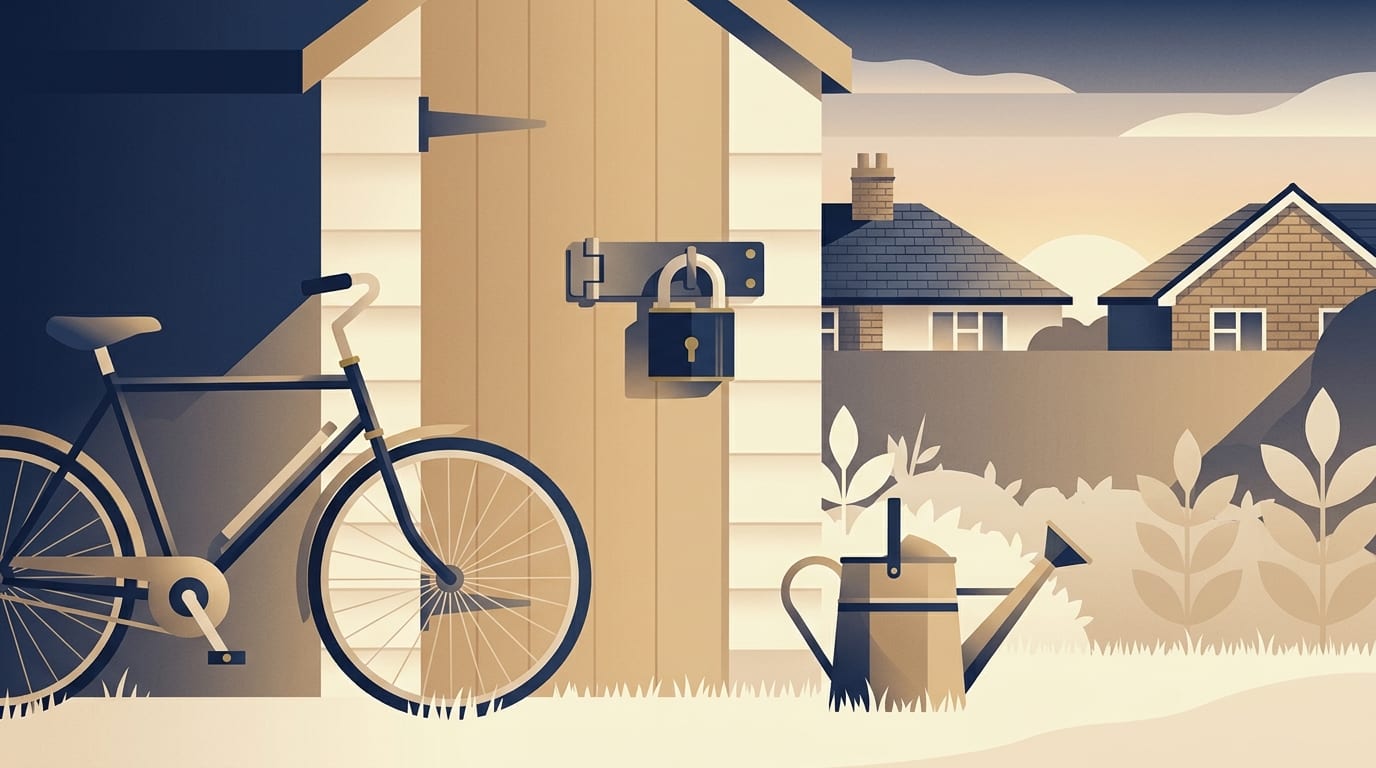
A strong padlock is often the only thing standing between a thief and the bikes or tools you keep outside. Finding the best padlock means looking past a wall of similar products and matching the right metal shape to your door. A strong padlock on a weak hasp, or a good lock on a thin door, protects little, so the whole fastening matters.
Why the padlock is often the weak link outside
Many criminals target sheds and outbuildings to steal tools and they use these tools to break into your home. A shed often holds tools, so keeping it secure helps protect the house too.
The padlock is only one part of the fastening. You might buy a heavy padlock but attach it to a weak fitting, or secure a solid door with a basic lock. A padlock is only as strong as the hardware holding it in place.
Common mistakes when securing an outbuilding include:
- Fitting a heavy padlock to a thin metal hasp.
- Using short screws that easily tear out of soft wood.
- Relying on a single lock in the middle of a tall door.
- Leaving hinge screws exposed on the outside.
If the metal loop the padlock passes through is thin, or the screws holding the plate to the door are short, the lock itself will not stop a break in. The whole fastening matters just as much as the padlock you choose.
Open shackle and closed shackle padlocks
The shackle is the curved bar that goes through the hasp. Padlocks are built with either an open shackle or a closed shackle, and the difference dictates how much metal is exposed to an attack.
An open shackle padlock leaves the U-shaped bar fully exposed. Police advice favours closed shackle padlocks on hasps and staples.
A closed shackle padlock is built so the body shields most of the bar. The metal casing extends upwards around the shackle, leaving only enough room for the locking loop to pass through. This leaves less of the bar exposed.
Police advice is to use closed shackle padlocks on substantial hasps and staples. You should fit one near the top and one near the bottom to reduce leverage points. Because a closed shackle padlock has a much smaller clearance space, you must make sure the loop on your door will fit inside the shielded gap before you buy it.
What Sold Secure ratings mean for a padlock
Sold Secure is an independent test body established in 1992 by Northumbria and Essex Police with the backing of the Home Office. It is now owned and administered by the Master Locksmiths Association. They test locks against a tool list for a specific amount of time to see how long they can resist an attack. There are numerous different standards that relate to different types of products and it is important that the relevant approval is sought.
The ratings are Bronze, Silver, Gold and Diamond. Silver has a longer attack test time than Bronze, and Diamond uses a more enhanced tool list than Gold. Sold Secure does not publish test durations on its ratings page.
The ratings are different for each product type, such as a padlock, cycle lock or cylinder. A product can carry different grades under different categories, for example Gold for one use and Diamond for another. This means you must check the padlock listing and not just the grade. Padlocks and fittings are approved to diamond, gold, silver and bronze standards.
The table below shows the four rating levels and how Sold Secure describes the resistance of each.
|
Rating |
What Sold Secure says |
|---|---|
|
Bronze |
Good level of resistance against the opportunist thief |
|
Silver |
Greater level of resistance against the more determined thief |
|
Gold |
Very Good level of resistance against the dedicated thief |
|
Diamond |
Top level of resistance against the most determined thief |
These descriptions come from Sold Secure itself. Bronze is for a normal risk environment, tested against a basic tool list. Silver is for a higher risk environment with an enhanced tool list. Gold is for a high risk environment with a dedicated tool list. Diamond is for the highest threat level environments with a specialist dedicated tool list. Diamond for padlocks is listed on the Sold Secure padlock page.
Match the padlock to the hasp and staple
A hasp and staple is a two piece fastening for doors which can be secured by a padlock. The staple is the metal loop the padlock passes through, and the hasp is the hinged plate that folds over it.
Your padlock must match the hasp and staple it attaches to. The Sold Secure padlocks and fittings category page has filters for both hasp and staple and padlock. Listed products include open shackle, closed shackle and slide bolt styles.
If you fit a heavy closed shackle padlock to a weak hasp, the fastening is only as strong as its weakest part. Upgrade both parts together.
Sheds
Shed doors can be secured externally with two substantial hasps and staples with closed shackle padlocks. You should fit one towards the top and one towards the bottom to reduce leverage points.
External hinge screws should be replaced with security screws, which are often called one way screws. This is police advice for shed doors.
Make sure a smaller shed is firmly anchored into the ground so it cannot be lifted. A shed shackle can prevent items being stolen from wooden sheds. You can chain items such as power tools or bikes to the shed shackle using a Sold Secure approved chain and padlock. Always keep the shed locked when not in use. You can read more about keeping your shed secure to understand other weaknesses in wooden outbuildings.
Garages and double doors
Wooden garage double doors can be secured the same way as sheds, with two substantial hasps and staples and closed shackle padlocks. Ensure your contents insurance covers items stored in your garage, shed or outbuildings, as these areas often hold high value items.
Metal up-and-over garage doors can be secured with purpose made locks to either side, approximately 300mm up from the floor. Alternatively, you can secure them with an external floor mounted locking T bar with a closed shackle padlock.
Garage doors can be made more secure with padlocks to give multiple locking points or floor mounted T bars. The aim is to give the door more than one fixing point.
Gates and outbuildings
For doors to outbuildings, the Master Locksmiths Association Guidelines for minimum security requirements for domestic property advise using a heavy duty padbar bolted to the door and frame.
This heavy duty padbar should be fitted with a padlock and fittings certified to EN 12320 Grade 3. The MLA says the padbar should be bolted to the door and frame.
If you are securing a side passage, you can read advice on making a side gate secure for the best padlock placement. Keep outbuildings locked when not in use.
Check your insurance wording
Insurers set their own conditions on locks for outbuildings and garages. You should always read your own policy wording and ask your insurer what they expect you to fit. Never assume that a standard padlock will satisfy an insurance claim if a specific standard is listed in your documents.
A Financial Ombudsman Service decision regarding a commercial property policy shows how specific these rules can be. The insurer's security condition for the second closing leaf of double timber final exit doors named a mortice deadlock conforming to BS3621 with matching boxed steel striking plate, or a substantial padlocking bar and good quality close shackle padlock.
This shows that insurer conditions can name the padlock type and the exact hardware it must attach to. Policies differ widely, so check your own wording and ask your insurer.
Looking after a padlock outdoors
A padlock used on a shed or gate will face rain, frost and dirt all year round. Police advice is to keep outbuildings locked when not in use.
To keep your padlock working smoothly outdoors:
- Keep the padlock locked when not in use.
- Check the padlock operates smoothly each time you use it.
- Ensure the hasp and staple remains firmly bolted to the timber.
Weather and dirt can make a padlock stiff over time.
Check that the padlock operates smoothly each time you use it, and ask a locksmith to look at it if it does not.
Common questions
What is the difference between an open and closed shackle?
The shackle is the curved bar that goes through the hasp. An open shackle leaves the U-shaped bar fully exposed, while a closed shackle padlock has a body that extends upwards and shields most of the bar. Police advice is to use closed shackle padlocks on substantial hasps and staples and to fit one near the top and one near the bottom to reduce leverage points.
Do I need a Diamond rated padlock?
Diamond is the top level of resistance against the most determined thief, tested for highest threat level environments with a specialist dedicated tool list. Not every door needs a Diamond rating. You should assess the risk to your outbuilding and check your insurance policy wording to see what level of security they expect you to fit.
Can I use a cycle padlock for my shed?
A cycle lock is designed to loop through a bike frame and a fixed post, not to secure two flat doors together. The ratings are different for each product type, so a padlock and a cycle lock are tested differently. You can read advice on sold secure bike lock ratings if you need to secure a bicycle inside the shed.
What is a hasp and staple?
A hasp and staple is a two piece fastening for doors which can be secured by a padlock. The staple is the metal loop the padlock passes through, and the hasp is the hinged plate that folds over it. If you upgrade your padlock, you must ensure your hasp and staple is equally strong.
How do I secure a metal up-and-over garage door?
Metal up-and-over garage doors can be secured with purpose made locks to either side, approximately 300mm up from the floor. You can also use an external floor mounted locking T bar with a closed shackle padlock. These methods give extra locking points.
Next steps
Before you buy a new padlock for your shed, gate or garage, check these points:
- Read your home insurance policy wording to see if it names a specific lock standard or padlock type for outbuildings.
- Check the hasp and staple on your door to see if it is thick enough to match a heavy padlock.
- Measure the clearance on your hasp to ensure a closed shackle padlock will fit over it.
- Look at the Sold Secure padlock page to find models that hold a Bronze, Silver, Gold or Diamond rating.
- Plan to fit two closed shackle padlocks, one near the top and one near the bottom of the door to prevent leverage.
- Replace external hinge screws on shed doors with security screws, as police advice recommends.
A local expert can supply and fit heavy duty padbars and closed shackle padlocks that meet the right standards. You can search the directory to find a locksmith near you who can upgrade your outbuilding security and ensure your doors are anchored firmly.
Find a top rated locksmith near you
1,787 locksmiths across the UK, each ranked on their Google rating and the number of reviews behind it. Start with your county: