The best bike locks in the UK carry a Sold Secure rating that tells you how long they are expected to resist attack. Sold Secure is an independent test house, and its ratings mean you can compare different locks without having to trust the marketing claims printed on the packaging. Insurers often ask for a specifically rated lock before they will cover your bicycle against theft, and understanding the Bronze, Silver, Gold and Diamond levels helps you buy the right protection.
What the Sold Secure rating is
The Sold Secure scheme helps you compare locks by putting them through a standardised set of physical tests in a controlled environment. The scheme was originally founded in 1992 by two UK police forces.
Today the scheme operates as a not-for-profit company. All testing is completely voluntary, meaning manufacturers choose to submit their locks to prove their quality. The scheme is now owned by the Master Locksmiths Association, which is the main locksmith trade association.
How the testing lab works
All of the physical testing takes place in a dedicated laboratory located in Rugby. During the testing process, the lab tests the submitted locks against a range of attacks.
The tools and methods the laboratory staff use include:
- Angle grinders
- Drilling
- Cutting
- Levering
- Lock picking
Locks are then rated Bronze, Silver, Gold or Diamond.
Bronze rated locks for brief stops
The Bronze rating is the entry level standard in the scheme. This rating is mostly awarded to lighter cable locks and compact folding locks. These products are designed primarily to deter opportunist thieves who are walking past and looking for a quick, easy target. They will not stand up to determined, experienced thieves who are carrying heavy tools.
A Bronze lock is meant to resist a physical attack for one minute. This short resistance time makes it suitable for brief stops in busy areas where a thief would be easily noticed by passers by. You should not rely on a Bronze lock for long periods of parking. They are also not suitable for quiet areas with no witnesses, or for leaving your bicycle outside overnight.
Silver rated locks for everyday security
A Silver rating marks a clear step up in physical resistance. This level is designed to balance solid security with the overall cost of the lock. These locks are built to resist an attack for three minutes.
Silver locks provide a little less protection from a determined thief than the top tier Gold or Diamond ratings. One cycle insurer accepts a Silver or Gold lock, depending on the value of the bicycle.
Gold rated locks for higher risk areas
Gold rated locks protect against a wide range of aggressive attacks and are meant to resist a thief for around five minutes. This higher level of security suits longer stays in public places or higher risk areas where thieves are known to operate. Cycling UK advises cyclists to make sure their locks are Sold Secure and to choose Gold if they can afford it.
You must still be realistic about what a Gold lock can achieve in the real world. Even a Gold rated lock can be broken in under a minute by a determined thief equipped with large bolt croppers or a bottle jack. Despite this, good locks still deter opportunists.
Diamond rated locks for maximum protection
Diamond is the highest rating available in the Sold Secure scheme. It offers the highest level of security available and resistance to prolonged attacks.
This top rating is recommended for high value bikes and e-bikes in high risk places such as public racks.
Comparing the four security ratings
This table shows the four rating levels alongside the time they are meant to resist attack and the parking situations they suit best.
|
Sold Secure Rating |
Expected Resistance Time |
Best Suited For |
|---|---|---|
|
Bronze |
One minute |
Brief stops in busy areas |
|
Silver |
Three minutes |
Balancing security and cost |
|
Gold |
Around five minutes |
Longer stays in higher risk areas |
|
Diamond |
Prolonged attacks |
High value bikes in public racks |
These are the typical published testing times and recommendations for the current year, though local risks and your own insurance rules will always differ.
Why pedal cycles and powered cycles are rated differently
The Sold Secure scheme uses different testing criteria depending on whether the lock is meant for a standard pedal cycle or a powered cycle. Powered cycles and e-bikes have much higher average values than standard bicycles.
To reflect this increased risk, the testing criteria for powered cycles are stricter. A lock that passes the toughest tests for a standard bicycle might earn a Diamond rating in the pedal cycle category. That exact same lock might only achieve a Gold rating when tested against the stricter powered cycle criteria. You must check which specific category the lock is rated for before you buy it to ensure it meets your needs.
How cycle insurance policies view your lock
Most home and specialist cycle insurance policies require a Sold Secure lock as part of their standard locking requirements. If you use a lock that does not meet your policy's locking requirements, your insurer may refuse to pay out if your bicycle is stolen. You should always read your own policy wording carefully and never assume which rating your insurer needs.
One cycle insurer requires either a Silver or Gold lock, depending entirely on the financial value of the bicycle. They insist the lock must go through the frame of the bike and attach to an immovable object. If you fail to do this, your cover could be invalidated and your claim rejected.
Checking your household insurance limits
You also need to check exactly how your household insurance covers bicycles. Some household policies cover bikes only up to a low value, around £300 in one example. If your bicycle is worth more than this limit, you will not receive its full value if it is stolen.
Other household policies only cover the bicycle while it is physically kept at your home address. These policies may not cover the bike when you ride it to the shops or to work, so check the terms. Reading the terms of your home insurance lock requirements will help you understand where you are covered and avoid a rejected claim.
The rules for keeping your bike at home
Insurers can have different rules for bicycles stored at home. One cycle insurer does not require locking for a bike kept at home, provided certain conditions are met.
That insurer's conditions are:
- The bicycle must not be visible from the outside of the property
- The storage area must not be accessible to anyone outside the household
- Your own policy may set further conditions, so read it
If your shed or garage has clear windows, or if other people have access to a shared residential hallway, you will likely still need to lock the bicycle to an immovable object using a rated lock.
Choosing between D-locks and cables
Many cyclists buy combined sets that include a heavy metal D-lock and a flexible steel cable. When you buy one of these sets, you must remember that the Sold Secure rating applies only to the D-lock. The rating does not apply to the cable included in the pack.
Cables can usually be cut easily by a thief with basic hand tools. One specialist cycle insurer clearly states in their rules that security cables must never be relied upon to secure bikes. Cycling UK also advises riders to avoid cable locks because they are easier to cut. You should use the rated D-lock to secure the main frame of the bike and only use a cable as a secondary measure.
How to choose a secure anchor point
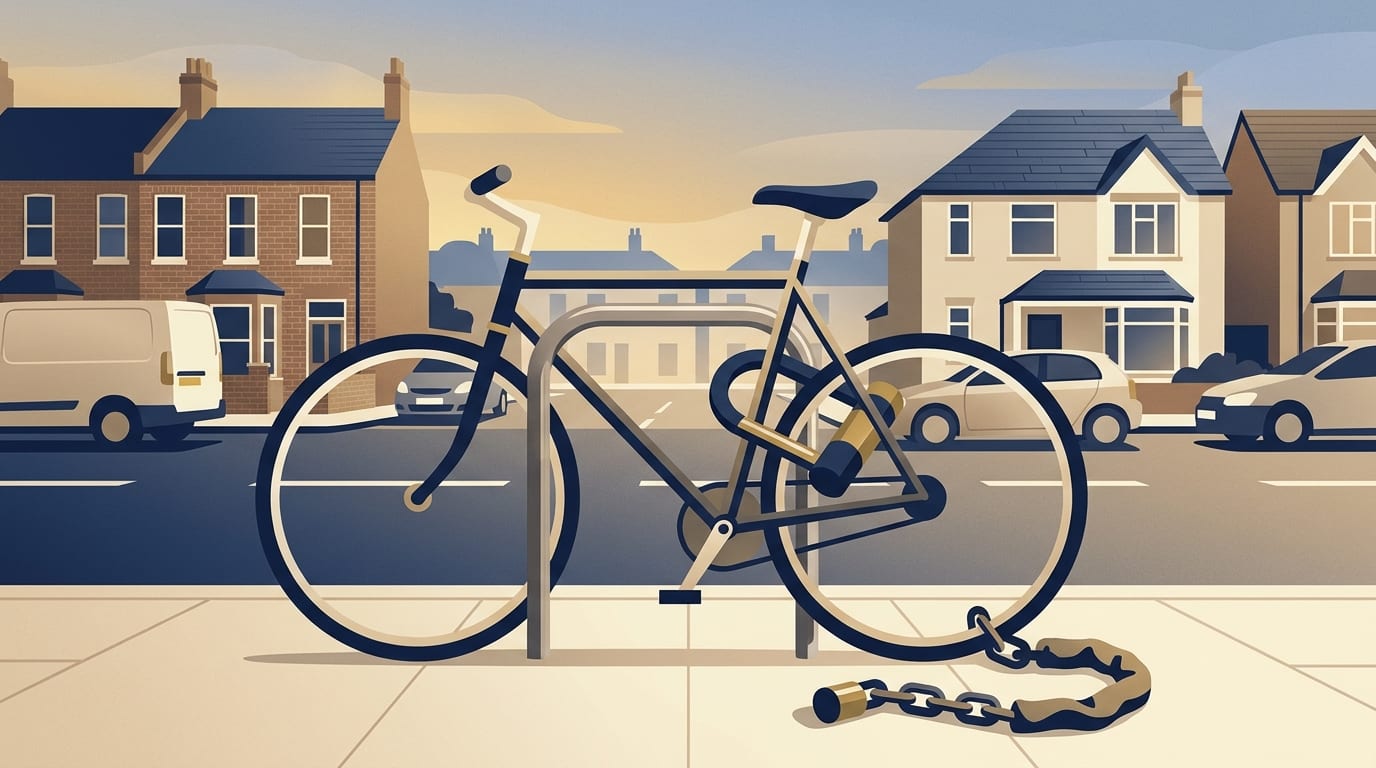
Buying a highly rated lock is only half the job. Poor locking technique makes it easy for a thief to defeat an expensive lock or simply walk away with the bicycle. You must always lock the frame of your bicycle to a solid fixed object.
The fixed object you choose must form a closed loop. This ensures the bicycle cannot simply be lifted over the top of a short post or a broken railing. You must also avoid flimsy anchors that a thief could easily cut or remove from the ground. A Diamond rated lock is of little use if it is attached to something flimsy.
How to position the lock properly
When you attach a U-lock, position it low down on the bicycle. The best places are low on the bottom bracket or around the seat tube. You need to fill the shackle of the lock with as much of the bike and the fixed object as possible.
If you have to use a chain lock to secure your bike, make sure you keep it fairly taut.
What to do if your bike gets stolen
If you return to where you parked and find your bike has gone, you need to act quickly. Your first step is to call 101 to report the theft to the local police. They will record the details of the incident and give you a crime reference number.
You must keep this crime reference number safe because you will need it to make an insurance claim. Contact your insurer as soon as possible to start the claims process. They will ask for the crime reference number and may ask about the lock, so keep any proof of purchase.
Common questions
What are the best bicycle locks for a quick stop?
For brief stops in busy areas, a Bronze rated lock is usually sufficient. These are mostly lighter cable and folding locks that deter opportunist thieves looking for an easy target. They are not meant to resist a determined attack and should not be used for long periods of parking.
Which are the best cycle locks for an e-bike?
A Diamond rated lock is recommended for high value bikes and e-bikes because it offers the highest level of security and resistance to prolonged attacks. You should check that the lock holds the Diamond rating specifically for powered cycles, as the testing criteria for these are stricter than for pedal cycles.
Are bike locks best bought as a combined set?
Buying a D-lock and cable set is common, but you must remember that the Sold Secure rating applies only to the D-lock. Cables can usually be cut easily and should never be relied upon to secure the main frame of the bike. Always use the rated D-lock to secure the frame to an immovable object.
How long does a Gold rated lock last against a thief?
A Gold lock is meant to protect against a wide range of attacks over durations of around five minutes. However, it can still be broken in under a minute by a determined thief using heavy tools like bolt croppers or a bottle jack. Despite this, they remain a strong deterrent against opportunists.
Next steps
Before you spend money on a new lock, follow these practical steps to make sure you buy the right protection for your bicycle.
- Read your bicycle or home insurance policy to see exactly which rating is required for the value of your bike.
- Check whether your insurer insists on the lock being attached to an immovable object at all times.
- Look for the Sold Secure logo on the lock packaging and check whether the rating applies to pedal cycles or powered cycles.
- Choose a D-lock over a cable lock, aiming for a Gold or Diamond rating if you can afford it.
- Plan where you will park and make sure the locations have solid, closed loop anchors that cannot be easily broken.
If you are checking your overall home security alongside your bicycle storage, you might need professional advice. You can easily find a locksmith near you to inspect your shed, garage and external doors.
Find a top rated locksmith near you
1,787 locksmiths across the UK, each ranked on their Google rating and the number of reviews behind it. Start with your county: