The words Do Not Copy stamped on a key only mean something if the key system itself is protected. The Master Locksmiths Association states that only a key with a patent can truly be called a restricted key. While a standard restricted key relies on an unusual shape to slow down copying, a patented key brings legal protection and a strict supply chain.
What a Do Not Copy key really means
Many property owners hand out keys stamped with the words Do Not Copy or Do Not Duplicate. They assume this instruction is legally binding and prevents anyone from getting a spare cut at a local high street shop. In reality, the words only mean something if the key system itself is protected. They show that a landlord or owner fitted the lock with the intention of stopping copies being reproduced, but the stamp alone does not make the key legally protected.
If the key is a standard blank that is freely available to the trade, any key cutting shop can physically duplicate it. The person cutting the key might choose to respect the stamp and refuse the job, but they are not breaking the law if they go ahead. The security of the system relies entirely on the goodwill of the shop and the person holding the key.
This means you cannot rely on a stamped message to control who has access to your property. If you want genuine control over your keys, you need a system that prevents unauthorised copying by design. This is where restricted keys and patented keys come in, offering two very different levels of security.
Restricted keys and patented keys are different
When locksmiths talk about stopping unauthorised duplication, they divide keys into two tiers. The first tier is a restricted key. This is usually not legally protected and relies instead on an unusual key blank or a strange shape. Because the blank is not freely available, only a limited number of people or specialist locksmiths have the equipment and the blanks to cut it.
A standard restricted key means fewer people can cut a copy, but it is not a guarantee.
The second tier is a patented key. Only a key that has a patent can truly be said to be restricted. A patented key has legal protection, making it illegal to copy without authorisation. Only approved dealers with proof of ownership and a proof of card can cut it.
Patented keys need to be supplied by the originating centre, which has a licence agreement with the manufacturer to supply the keys. This creates a supply chain that is meant to make copies only for the registered owner.
Why a patent matters
A patent protects your key system through the law and the supply chain. It means the key has legal protection and can only be supplied through the originating centre.
Because only approved dealers can cut a patented key, the locksmith will ask for proof that you are the owner of the system.
This protection also extends to your lock warranty. For one make of patented key, the manufacturer states that only genuine keys should be used and that using a copy key invalidates the warranty. The MLA says locksmiths who are dealers for that range can cut the keys.
Ultimately, a patent takes the decision out of the hands of the person holding the key. It replaces a polite request not to copy with legal protection and a controlled supply chain.
What a locksmith asks for before cutting a spare
Because patented and restricted key systems are designed to limit copying, a locksmith may ask for proof that you have the right to request a copy.
The exact proof of ownership required depends on the lock manufacturer and the locksmith who registered the system. You may be asked for one or more of the following:
- A security card supplied with the locks when they were first purchased.
- Business headed notepaper stating the request.
- A formal letter of authorisation from the system owner.
- Photographic ID such as a driving licence or a passport.
- A recent utility bill or official document showing your current address.
The Master Locksmiths Association recommends contacting the locksmith beforehand to check exactly whether ID is required and what format they expect. Their official guidance confirms that approved dealers will refuse to cut a patented key if you cannot supply the right proof of ownership and a proof of card.
If you have moved into a new property and you do not know who the originating centre is, your local locksmith should be able to obtain the keys for you. They will still need a letter of authorisation to obtain the keys.
Keys with a code or card
Some patented and restricted key systems are supplied with a security card when the locks are bought. The card is part of the proof of ownership, so keep it safe.
Some keys are stamped with a specific code rather than relying on a separate card. If you see a key marked with the code MLA followed by three numbers, this has a very specific meaning. It means a locksmith holds the licence to that key and is the only person who can replace it. If you need a copy of an MLA coded key, the Master Locksmiths Association can tell you exactly who the licensee is so you can contact them directly.
A master key system means you do not have to carry large bunches of keys, as certain keys are pinned to open certain locks. For example, somebody in accounts can only open the front door and the accounts office door, while a director can open all locks with their single key. You can read more about how these setups work in our guide to keyed alike locks and master key systems.
Whether you have a code stamped on the metal or a plastic security card in a drawer, these details are your proof of ownership. Keep your security card and any key code safe and do not share them.
Who might want restricted keys
Restricted and patented key systems are highly useful for anyone who needs to lend keys out but wants to maintain strict control over who can access a building. They suit anyone who wants more control over who can have copies made.
These systems are commonly fitted by people who need to manage multiple keys, including:
- Landlords and letting agents who want to secure a property between tenancies without changing the cylinder.
- Small business owners managing staff access to premises and stockrooms.
- Families handing spares to tradespeople, cleaners or dog walkers.
- Shops and offices that use a master key system to control access to different departments.
A patent makes unauthorised copying harder, which matters when a tenant moves out, but an owner cannot normally tell whether an original key has been duplicated.
The same applies when staff leave a business or tradespeople have borrowed a key.
What it costs to cut a security key
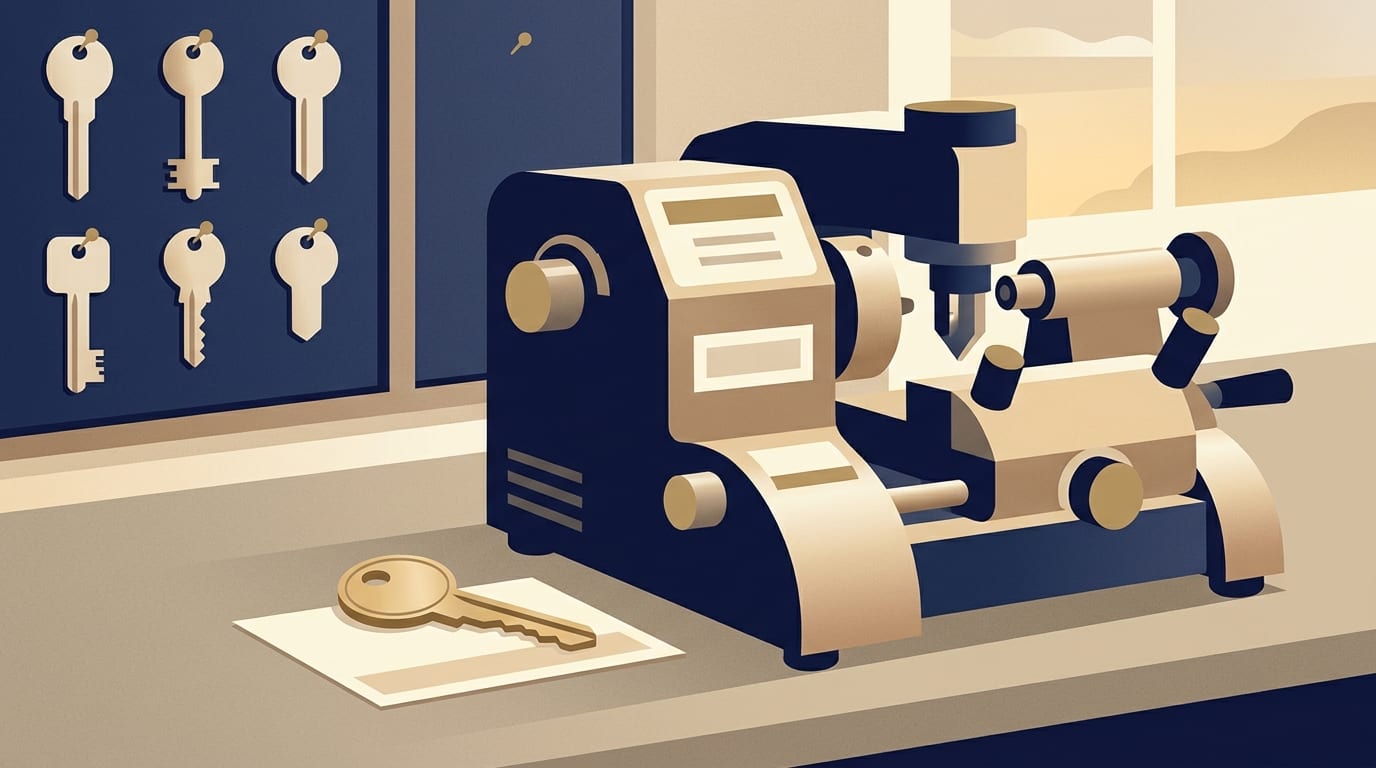
Cutting a security key costs more than a standard key. This is because security keys take longer to cut. Sometimes, keys have to be ordered from somewhere else entirely if the local locksmith is not the originating centre.
The price you pay depends on the type of lock, the complexity of the key, and whether it is a standard restricted blank or a fully patented system. You will also pay more if the locksmith has to order the key directly from the manufacturer on your behalf.
The table below shows MLA estimates for cutting different types of front door and mortice keys.
|
Key type |
Typical price |
|---|---|
|
Normal front door cylinder key |
From £5.25 |
|
Standard mortice lock key |
From £7 |
|
Security key |
Up to £20, around £20 on average |
These are MLA estimates and prices vary by area. A key that has to be ordered from somewhere else can cost more. You can find more detail on typical prices in the guide on how much key cutting costs in the UK.
What restricted keys cannot do
It is vital to understand the limits of any security system. As the Master Locksmiths Association points out, basically, there is no key in the world that would be impossible to copy. A patent creates a legal barrier and a supply chain barrier, but it does not make copying impossible.
A patent makes copying harder through the law and the supply chain, but the MLA is clear that it cannot make copying impossible.
Another limitation is tracking. Any experienced locksmith can identify a copied key. However, it is not normally possible to identify if an original key has been duplicated. If you hold an original key, you cannot look at it and tell whether someone has secretly ordered a spare using your security card. This is why keeping your security card and authorisation details locked away is just as important as securing the physical key.
Finally, a restricted key does not make the lock itself unbreakable. A patented key system stops people cutting spare keys, but it does not stop a burglar attempting to force the door. You still need to ensure your euro cylinders are snap-resistant and your mortice locks meet the BS3621 standard.
Questions to ask before you fit a system
If you are upgrading your locks and want to stop people copying your keys, you need to ask your locksmith the right questions before you buy. Do not just ask for a restricted key, as you might end up with a lock that has an unusual shape but no legal protection.
Start by asking if the key is fully patented. The best way to prevent anyone from copying your keys is to fit a patented system, as this means keys can only be copied with proof of ownership. Ask the locksmith how long the patent lasts, as patents eventually expire.
Ask who the originating centre will be. If the locksmith fitting the lock is the originating centre, you will need to go back to them every time you want a spare key. Check that they have a physical premises and are likely to be trading for years to come. If they close down, your local locksmith should be able to obtain keys for you with a letter of authorisation.
Finally, ask exactly what proof of ownership you will need to provide when ordering spares. Find out if it relies on a plastic card, a written letter, or just photographic ID, and make sure you have a safe place to store those documents.
Common questions
Can a locksmith still open a restricted key lock?
A locksmith can often open a lock without damage if you are locked out, aiming for non-destructive entry rather than drilling. The restriction applies to copying the key, not to whether a professional can get you back in.
What happens if I lose my security card?
If you lose the security card for your patented locks, you must contact the locksmith who originally supplied the system or the manufacturer directly. They will ask for proof of ownership, which may include a letter of authorisation and ID, so ring them first to ask what they need.
Is it illegal to copy a Do Not Copy key?
It is not illegal to copy a key simply because it has Do Not Copy stamped on it. The MLA says only a patented key has legal protection, and it is illegal to copy a patented key without authority, which is why only approved dealers with proof of ownership can cut it.
How long does a key patent last?
Patent protection does not last for ever, so ask the locksmith or the manufacturer how long it runs for the system you are considering. Once a patent ends, the legal protection ends with it.
Can I get a restricted key cut at a high street shop?
You usually cannot get a patented key cut at a standard high street shoe repairer or hardware shop, as they will not have the restricted blanks or the licence to use them. You must go to an approved dealer for that specific lock brand and provide your proof of ownership.
Next steps
Before you pay for a new key system or try to get a restricted key copied, run through this short checklist:
- Check your existing key for a stamp or code. If it says MLA followed by three numbers, the Master Locksmiths Association can tell you who the licensee is.
- Locate your proof of ownership. Find your security card, letter of authorisation or business headed paper before you contact a locksmith.
- Ring the locksmith before you travel. Ask them exactly what photographic ID and proof of address they need to see before they will cut the key.
- Ask for a total price. Get a quote that includes the cost of the security blank, the cutting fee and VAT.
- Keep your security card safe. Treat the card like a bank card and never leave it lying around where someone could photograph the code.
If you need a spare security key cut, or you want to upgrade your property to a patented system, you will need a vetted professional with the right equipment. You can find a locksmith near you to discuss the best way to secure your doors and control who has access to your keys.
Find a top rated locksmith near you
1,787 locksmiths across the UK, each ranked on their Google rating and the number of reviews behind it. Start with your county: